Researchers have developed an innovative approach to improving the aroma of alternative high-protein foods made from fermenting leftover bread crusts with forage grasses, traditionally used to feed livestock.
Smell plays a crucial role in how people perceive taste and the research shows how natural fungal fermentation processes can be used to fine tune the aroma of novel foods produced to help feed the world’s growing population.
By combining surplus bread crusts with protein from perennial ryegrass and fermenting the mixture for up to 72 hours, the team from Aberystwyth University’s Institute of Biological, Environmental and Rural Sciences (IBERS) successfully enhanced both the aroma and nutritional quality of the product.
The study identified and analysed more than 150 different aroma compounds produced through using solid-state fermentation, a process widely used in Asia to create plant-based proteins like tempeh from surplus legumes, beans and cereals.
Newly published in the peer-reviewed journal npj Science of Food, the findings highlight the potential of developing appealing, sustainable foods which meet the growing demand for alternative proteins while addressing both food waste and food security challenges.
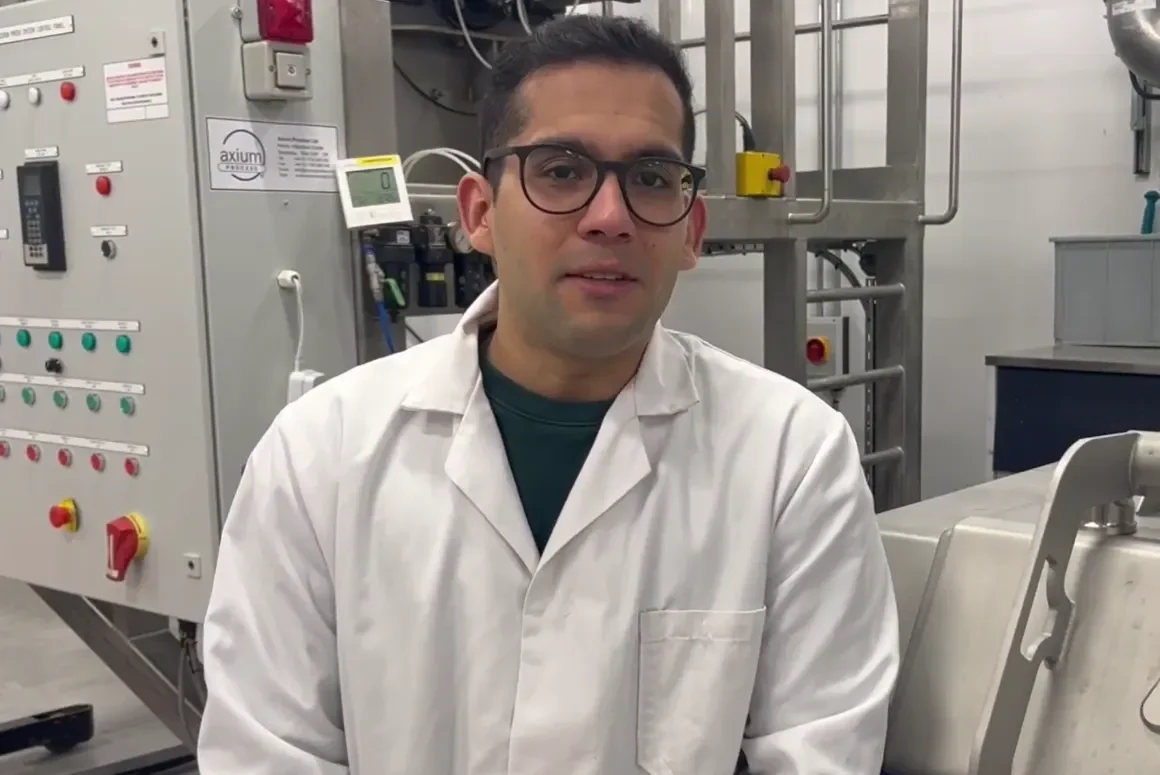
Juan Felipe Sandoval Rueda, the lead author of the study, said:
“Smell is essential to our enjoyment of food. By understanding how aroma compounds develop during fungal fermentation, we can turn unconventional ingredients into novel food products that are more sustainable and more appealing to consumers. We found that fermenting the bread crusts with different types of fungi produces different odours – some can be very alcoholic, others more cheesy or earthy.
“After fermentation, the material is dried and made into a protein-rich powder which can be added to other foods such as wheat flour, for example, and used to make protein enriched bread. Our study also discovered a new mathematical method of predicting the odour of new food products at an early stage in the process, with potential time and cost savings for industrial food manufacturers.”
Reading University was also involved in the study, which was funded by the UKRI Biotechnology and Biological Sciences Research Council (BBSRC) and industrial partners Samworth Brothers, one of the UK’s leading food manufacturing firms which employs more than 12,000 people across 15 bakeries, making sandwiches for supermarkets as well as pork pies, Cornish pasties and other products.
Dr David Bryant, Senior Research Fellow at IBERS – a BBSRC strategically supported research institute said:
“IBERS scientists are part of a wider, four-year collaborative project to develop microbial foods in a sustainable way and help feed a world where the population is continually increasing. One of the main base ingredients we have been using are surplus bread crusts from the baking and sandwich-making industry and we ferment these with protein from perennial ryegrass, which is traditionally fed to livestock.
“As people are not used to eating grass, we carried out this study to show how different types of fungal fermentation can be used to affect and enhance the aroma of the final product. The result is a more fragrant alternative protein that enhances the nutritional value of surplus bread while being environmentally friendly.”
Professor Joe Gallagher, project co-supervisor at IBERS, added:
“In this process, only the juice from pressed grass is used, leaving the remaining fibre available, for example, as an animal feed. Work at IBERS has shown that this fibre is easily ensiled (made into sileage) and having been through a screw press, is made highly digestible. This process could therefore create a new potential market for grasses and contribute further to the development of a circular economy.”
The study’s fermentation processing was carried out at the pilot-scale biorefining facility at AberInnovation, which is based alongside IBERS on Aberystwyth University’s Gogerddan Campus. Further work is continuing here on refining taste and texture as well as scaling up the process to make it viable for commercial use.
The researchers’ findings can be read in full npj Science of Food, which is part of the Nature Portfolio of peer-reviewed academic journals.
Feature image: Juan Felipe Sandoval Rueda