Karen Foy visits a picturesque haven for wildlife and discovers the amazing story of sacrifice by a whole village community.
As a county, Powys has a whole host of intriguing landmarks and natural beauty spots to be proud of, but one which must rate high on the list is a man-made feature the magnificence of which, despite blending effortlessly into the surroundings, has come at a price.
Lake Vyrnwy – or Llyn Efyrnwy in Welsh – is a Victorian reservoir whose stone built dam, constructed in the 1880s, enabled Liverpool and Merseyside to have access to supplies of fresh water. This mammoth task required the head of the Vyrnwy valley to be flooded, completely submerging the little village of Llanwddyn.
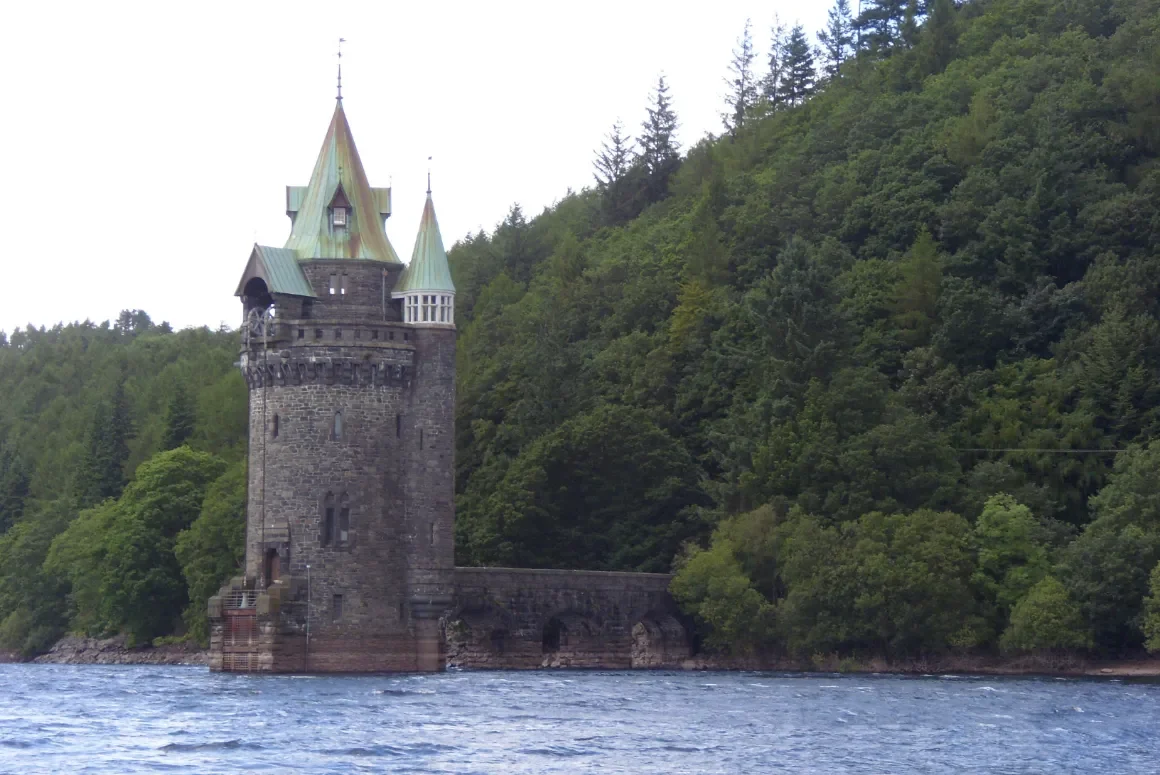
Feature image: Lake Vyrnwy Tower – Clausgroi, CC BY-SA 3.0, Source
A Picturesque Parish
Just like any other village, Llanwddyn was a bustling little community, with homes, a rural church, inns and a post office. In 1833, Samuel Lewis’s Topographical Dictionary of Wales described Llanwddyn as a parish in the hundred of Llanfyllin in the county of Montgomery, containing 668 inhabitants and situated near the river Owddyn, in a mountain flanked, sheltered spot. Lewis goes on to detail the nearby slate quarries at Gallt Forgan and Lluestwen, where some of the villagers would have been employed, and also mentions the fairs that were held annually on 8th May and 2nd October, principally to sell cattle and horses. The church – dedicated to St John the Baptist but originally to the Knights Hospitallers – is referred to as well as the churchyard’s ‘remarkably fine yew trees’ which sadly were to meet a similar fate to the rest of the submerged village. Critically, Lewis states that the valley ‘is frequently covered with water during the winter months, but, if drained, would be one of the most picturesque and fertile in this part of the principality’. This natural flooding perhaps prompted the drastic action that was to befall the area in years to come.
Clever Construction
During the late Victorian era, Liverpool’s rapidly increasing population – due to the expanding workforce of the Industrial Revolution – meant that it was desperate for water for its inhabitants and to power the steam driven machinery. It was decided that a dam would be built to collect the pure water from the Welsh mountains, water which could then be piped to the city.
Designing the structure began in 1879 with plans drawn up and submitted to Parliament by the engineer Dr George Deacon. Not only did the Liverpool Corporation purchase land for the dam, they also secured 24,000 surrounding acres to control the purity of the water and enhance the scenic beauty of the area. Construction began in 1881 and was completed seven years later. As the UK’s first stone built dam it was partly assembled from Welsh slate blocks and measured 4.75 miles long by 0.65 miles wide.
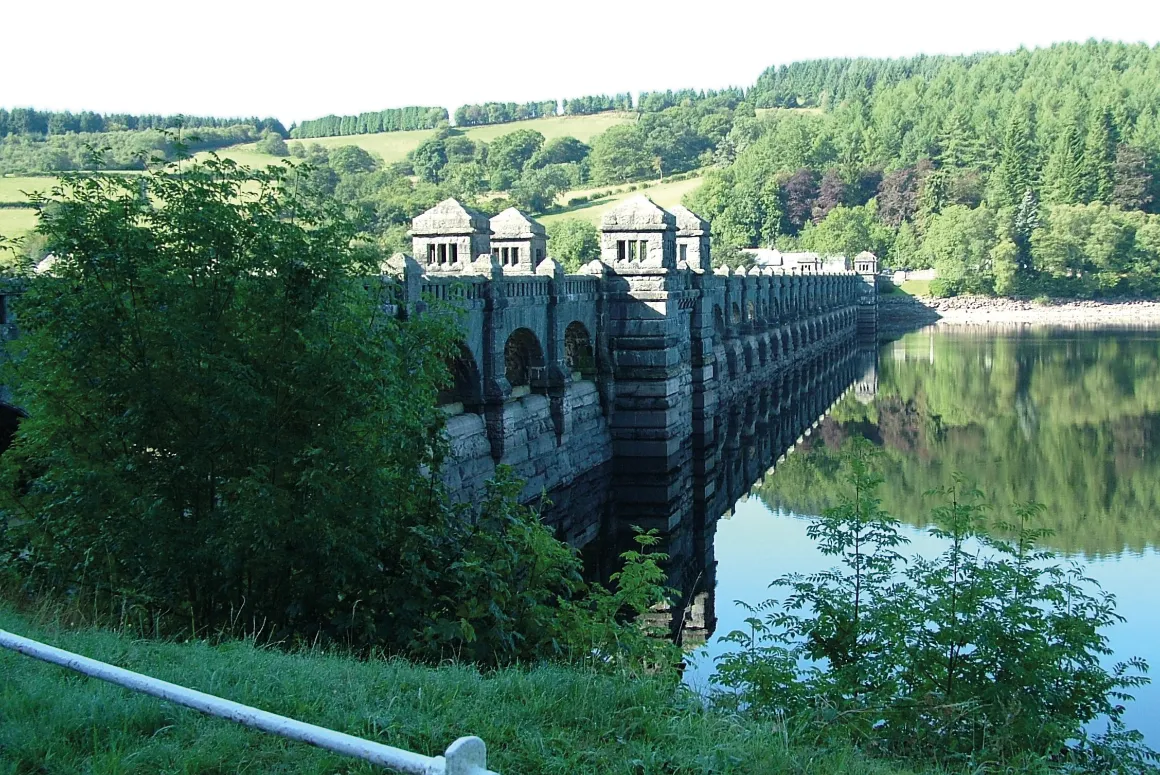
As well as a 12 mile road around the lake, a road bridge runs along the top, decorated with two small turreted towers and twenty-five stone arches. Perhaps most impressive is the Straining Tower – 160ft high (48 metres), with 50ft (15 metres) of the structure underwater. Although resembling a beautiful gothic castle, it is in fact an essential power house where the water is filtered before it begins its long journey to the city.
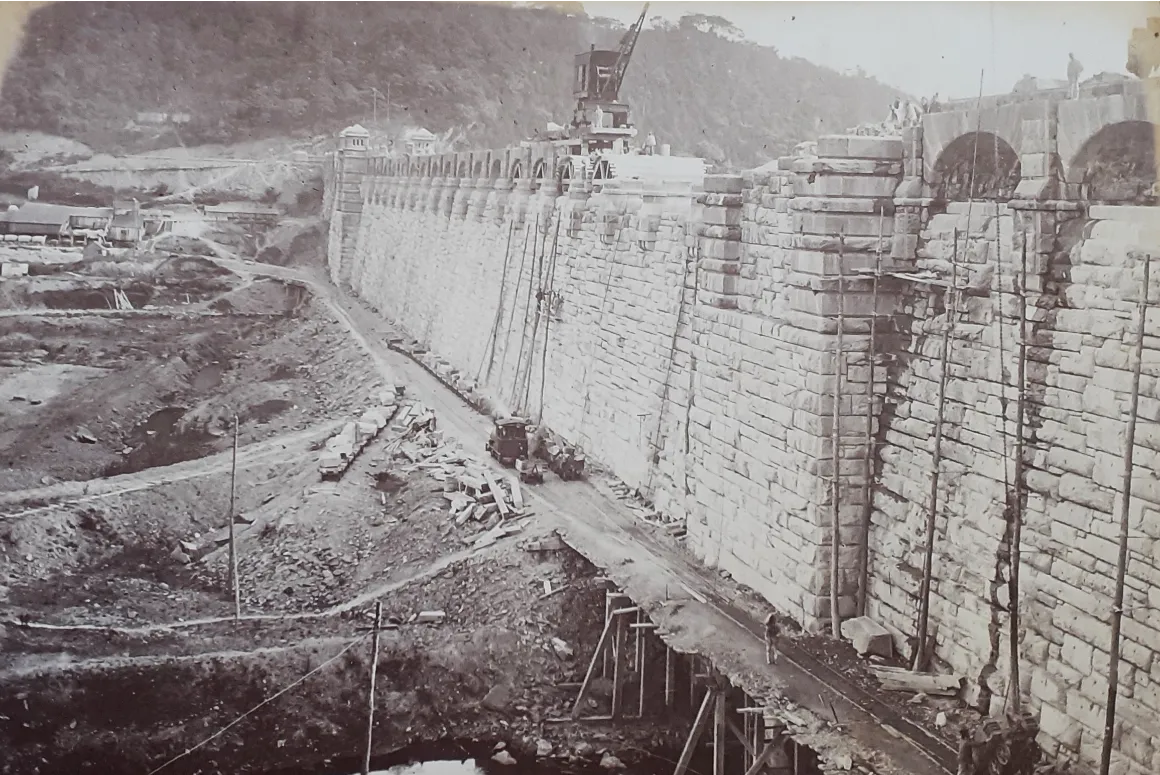
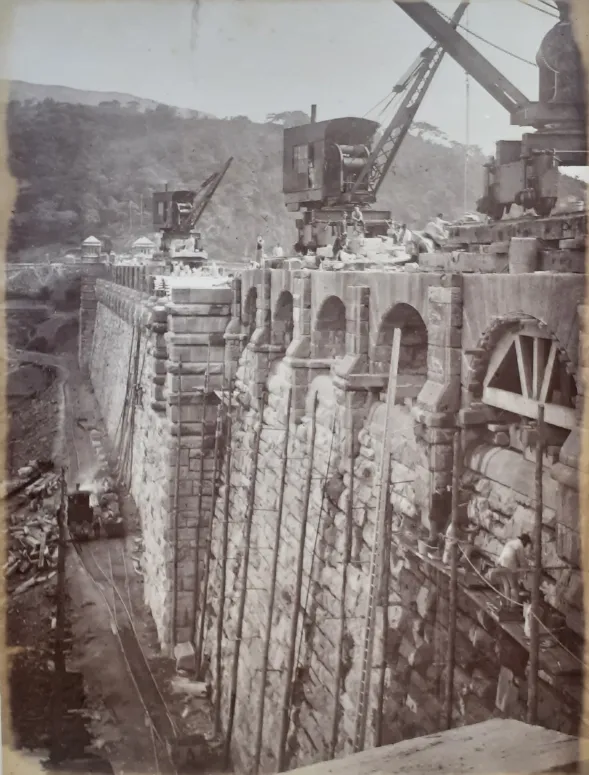
The lake took two years to fill. An amazing sixty-eight miles of aqueduct helped Liverpool experience the first flow of fresh water in 1891. It wasn’t until 1910 that an official ceremony – presided over by HRH the Prince of Wales – took place to mark the completion of the works. Providing accommodation for visiting dignitaries and sightseers, the quarried stone Lake Vyrnwy Hotel was built 900ft above sea level and remains a popular location for walkers, birdwatchers and cyclists. In 1889, the lake was stocked with 40,000 Loch Leven trout and continues to attract fishermen, keen on the sport, to this day.
An Enormous Sacrifice
In order for the project to go ahead, the people who lived in the catchment area of the dam needed to be re-homed, so it was agreed that a ‘new’ Llanwddyn would be created farther down the valley and adjacent to the dam, ready for the villagers to move into when the flooding took place. It would have been a huge upheaval for all concerned and a very emotional time for those who had lived in the area for generations. Thirty-seven houses, ten farmhouses, three inns and two chapels were lost. Those buried in the cemetery were reburied near the new church, but Eunant Hall – the home of the Sir Edmund Buckley – was demolished before the area was submerged.
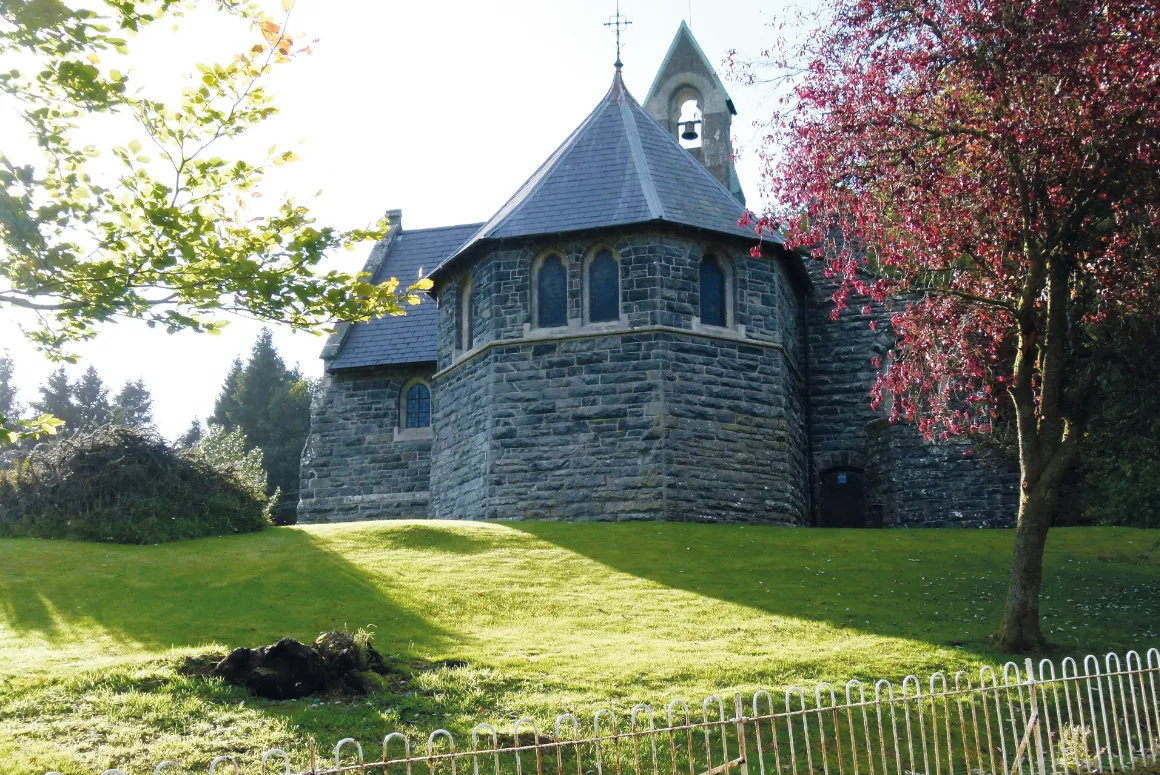
The church of St John The Baptist was rebuilt on the hill north of the dam and continues to serve the villages and hamlets around Lake Vyrnwy and Abertridwr. It was renamed St Wddyn’s – perhaps as a nod to a new era – and very little of the old church was incorporated into the new design as it had to be built and ready for worship within a week of the old one being flooded. It is believed that the lectern, carved choir stalls and timber panels behind the communion table were moved from the old building and although the turret may resemble that of St John’s, St Wddyn’s was given an altogether ‘new’ feel, constructed in the latest ‘Arts and Crafts’ style under the leadership of architect F.W. Holme. One of the benefits of being funded by the Liverpool Corporation was that the building received free hydro-electric power, making it one of the first churches to receive electricity. The stained glass windows and memorials provide a lasting tribute to those involved in the overall Vyrnwy project.
Today, there is a real sense of unity, with inhabitants of Llanwddyn using the post office facilities, community centre and craft workshops as well as the gift shops and cafes. Despite its somewhat ‘tragic’ past, Llanwddyn has a rosy future. The village boasts some of the most beautiful scenery in Wales and is a real hotspot for the hundreds of tourists who descend on the region every year to enjoy both the tranquillity and the country sports on offer. There is welcoming accommodation in the hotel and local bed and breakfasts. Keen to promote conservation, Vyrnwy is a Nature Reserve with a number of RSPB bird hides situated around the lake. To add interest to any walk, there is a Sculpture Trail with numerous wooden carvings created by artists from as far afield as Australia and Eastern Europe.
It’s a small yet thriving ‘neighbourhood’. You only have to visit the community website llanwddyncc.co.uk to see how proud the villagers are of their heritage. The well organised online pages illustrate Llanwddyn as a place which has survived despite mammoth changes. A detailed history sits comfortably beside downloadable copies of the local newsletter describing the varied activities of the village today.
Although inextricably linked to the past, Llanwddyn and its residents have overcome numerous obstacles to forge a new future for many generations to come.
Fascinating Fact
In September 1933, a drought caused water levels in the dam to become very low and the remains of the village were exposed for the first time.
Words: Karen Foy
Image attributes:
Images by Annette Griffiths except;
Lake Vyrnwy Tower – Clausgroi, CC BY-SA 3.0, Source
Under construction images courtesy of Severn Trent
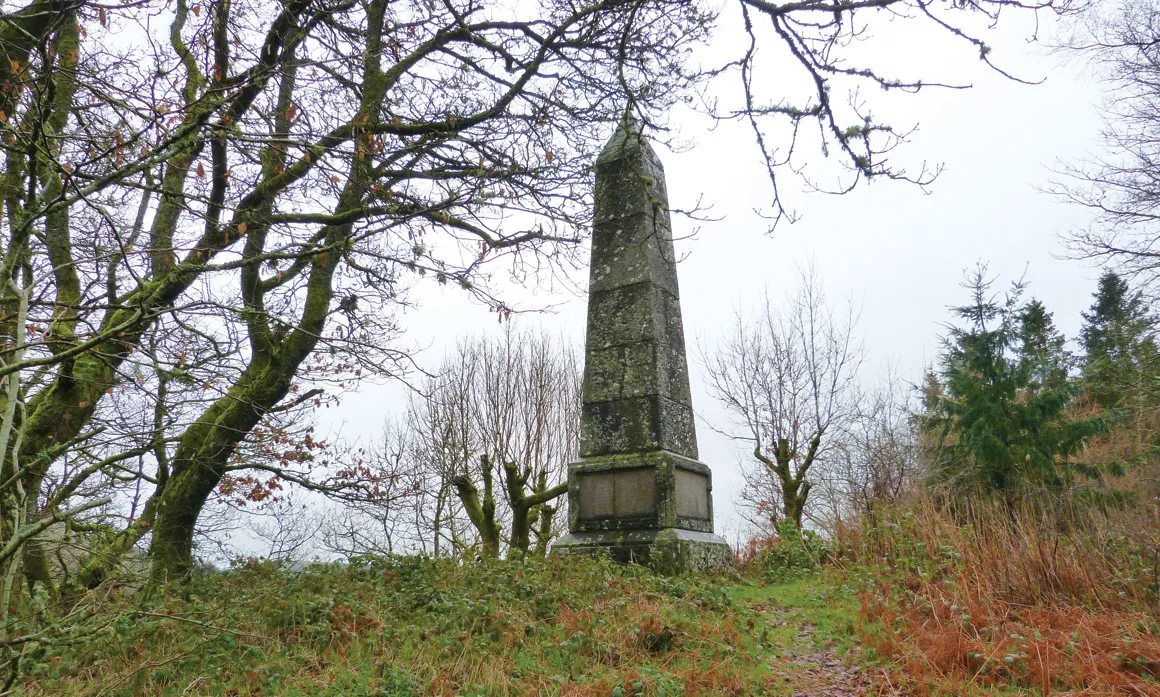
The Lake Vyrnwy Obelisk, Geoff Brookes