Accessible transport is not a luxury; it is a lifeline. For people living with visual impairment, buses, trains, and airlines are essential for work, education, leisure, and independence. Yet too often, the design of services, digital platforms, and staff practices create unnecessary barriers that prevent equal access. These barriers are not just inconveniences—they can limit opportunities, cause anxiety, and compromise safety.
This article examines the common challenges faced by people with visual impairments across various modes of transportation. Through real-life case studies, we highlight the human impact of these barriers, and we offer practical solutions. Finally, we demonstrate how transport providers can design services that are accessible, inclusive, and compliant with legal requirements.
Common Barriers Across Transport Modes
Although buses, trains, and airlines differ in operation, many of the accessibility challenges are similar. We can group them into four main categories: information barriers, physical barriers, digital barriers, and staff awareness gaps.
Information Barriers
For passengers with visual impairment, information is often inaccessible. Platform changes on trains may only be displayed visually, bus stops may lack audible announcements, and airline gate changes may be announced only on screens. These practices leave visually impaired passengers dependent on others or at risk of missing critical information.
Case Study: Missing a Train
Mark, a commuter with sight loss, regularly takes the train to work. One morning, the platform for his service changed at the last minute. The announcement was displayed only on the departure board. Without audio support, Mark stood on the wrong platform and missed his train. This made him late for work and caused avoidable stress. Simple measures, such as clear audible announcements, would have prevented this.
Physical Barriers
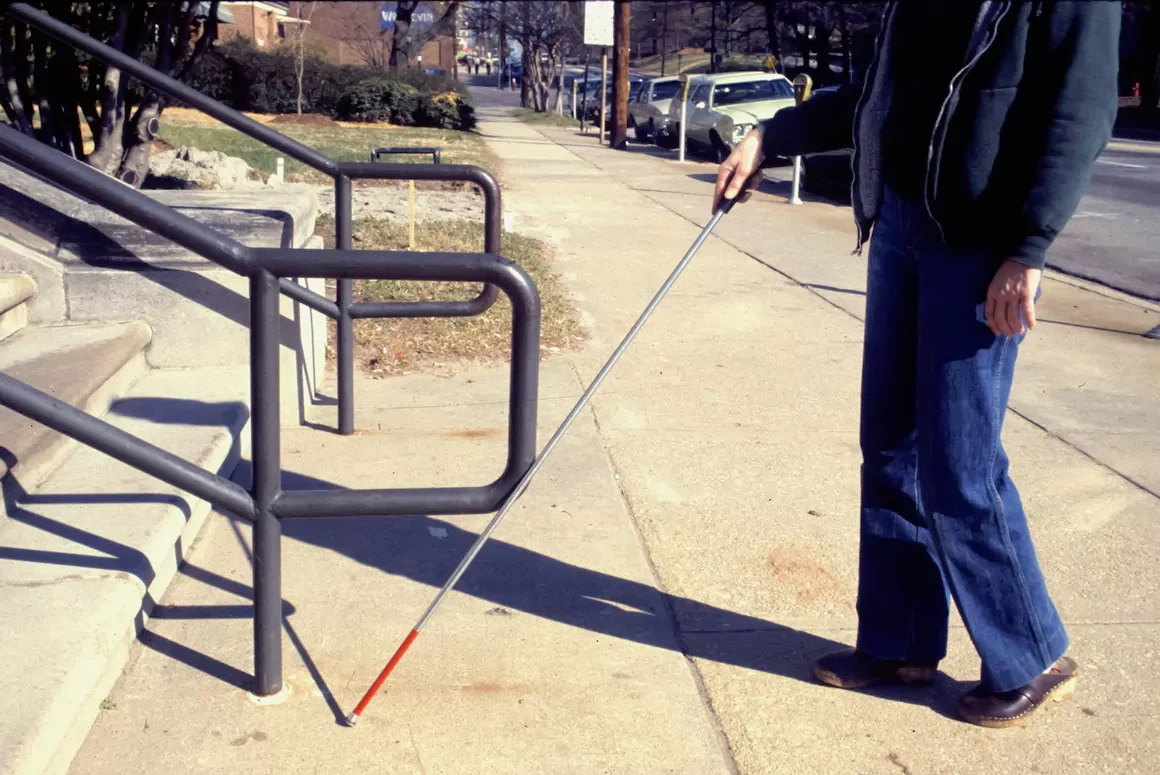
Stations, airports, and bus interchanges are often designed with sighted passengers in mind. Low-contrast signage, cluttered concourses, and inconsistent placement of help points create confusion. Poorly lit walkways and a lack of tactile paving can make navigation dangerous. These environments can feel hostile rather than welcoming.
Case Study: Finding the Bus Stop
Sophie, who has a visual impairment, relies on her local bus to visit friends. The bus station layout had recently changed, but the signage was small print and poorly contrasted. Without staff nearby, Sophie walked in circles trying to find the right stand. This undermined her confidence, making her hesitant to travel independently in future.
Digital Barriers
In an era of digital ticketing and travel planning, inaccessible websites and apps pose a significant issue. Ticket machines may lack tactile keys or audible guidance. Mobile booking apps may not work with screen readers, leaving passengers unable to book or check in independently. These barriers are particularly pronounced in the airline industry, where online check-in is becoming increasingly mandatory.
Case Study: Airline Check-In
David, a visually impaired holidaymaker, tried to check in online for his flight. The airline’s website did not work with his screen reader, preventing him from entering passport details or selecting a seat. At the airport, staff were rushed and unprepared to assist. This left David feeling excluded and dependent on others, when the process should have been seamless.
Staff Awareness Gaps
Even when physical and digital systems are improved, staff behaviour remains critical. Too often, frontline staff receive little training on how to support passengers with visual impairments. Misunderstandings can lead to embarrassment, frustration, or even unsafe outcomes. Simple confidence in communication—such as offering an arm or giving clear verbal directions—can transform the travel experience.
Case Study: Boarding Assistance
Anna, a visually impaired traveller, requested assistance to board her flight. The staff member assigned was unsure how to guide her and spoke only to her companion, ignoring Anna herself. This made Anna feel invisible. Awareness training could have empowered the staff to provide respectful and practical assistance.
The Consequences of Inaccessible Transport
The cumulative effect of these barriers is profound. People with visual impairment may avoid travel altogether, limiting their independence and opportunities. Stress and anxiety can undermine confidence. Missed journeys and safety risks create unnecessary hardship. For transport providers, the consequences include reputational damage, customer complaints, and potential breaches of equality law.
Solutions: Creating Inclusive Transport
The good news is that solutions exist—and many are straightforward to implement. Transport providers can make immediate improvements by:
- Ensuring real-time information is always available in both audio and visual formats.
- Installing high-contrast signage and consistent tactile paving to aid navigation.
- Designing websites and apps to WCAG accessibility standards and testing them with real users.
- Providing clear, confident staff training on how to support passengers with sight loss.
- Engaging with visually impaired communities to co-design services.
Conclusion
Accessibility in transport is not optional. Every passenger deserves to travel with dignity, confidence, and independence. By breaking down barriers—whether informational, physical, digital, or attitudinal—transport providers can open their services to all. Case studies demonstrate the profound human impact of exclusion, while also highlighting how even small changes can make a significant difference.
By Dan Morgan-Williams, Founder of Visualise Training and Consultancy