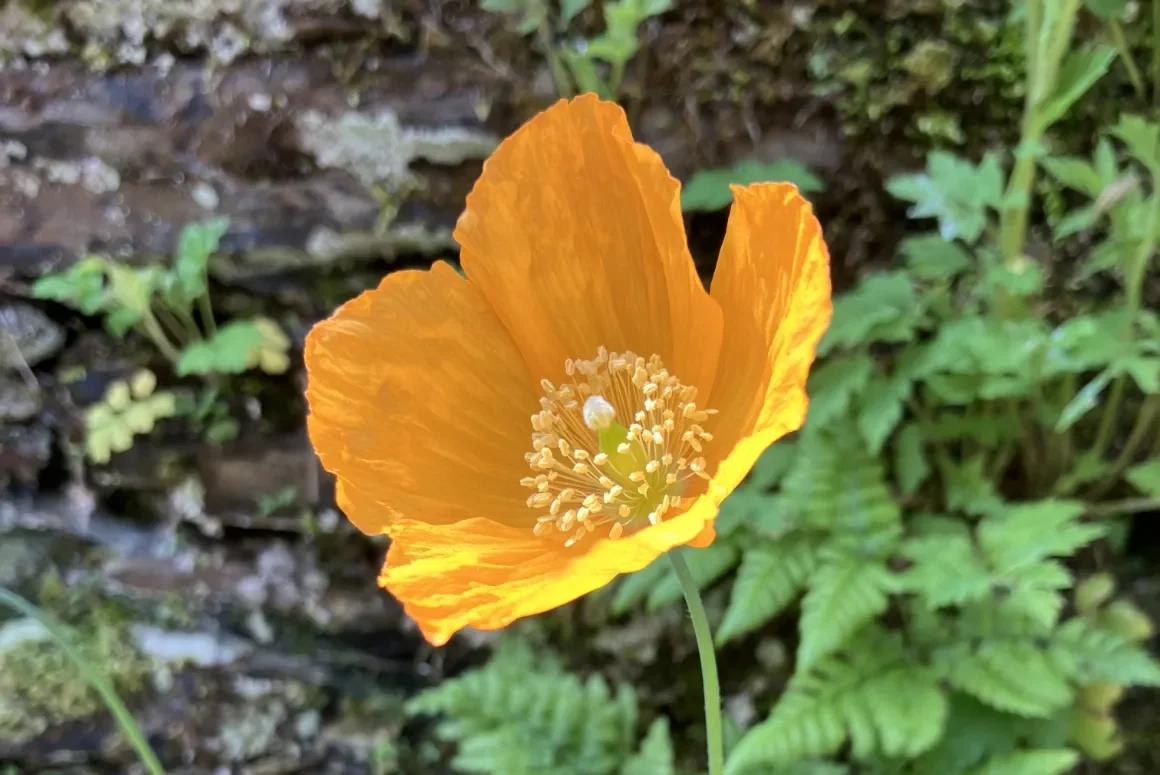
The Welsh Poppy a tap rooted perennial with yellow or orange 2in (5cm) flowers, flowering from late spring to early autumn.
Known officially from the Royal Horticultural Society (RHS) as Papaver cambricum it does have a synonym of Meconopsis cambrica.
It is reported that the Welsh Poppy was created by a French Botanist Louis Viguier, seemingly a poppy specialist, and named Meconopsis cambrica in 1814.
But Swedish botanist Carl Linnaeus (1707 – 1778) had called this poppy Papaver cambricum.
Carl Linnaeus, also known as Carl von Linné after his ennoblement, was also a biologist that is cited as the creator of the now recognised binomial nomenclature, the modern system of naming organisms.
Feature image: Orange Welsh Poppy by ArthurTheGardener, CC0, Source
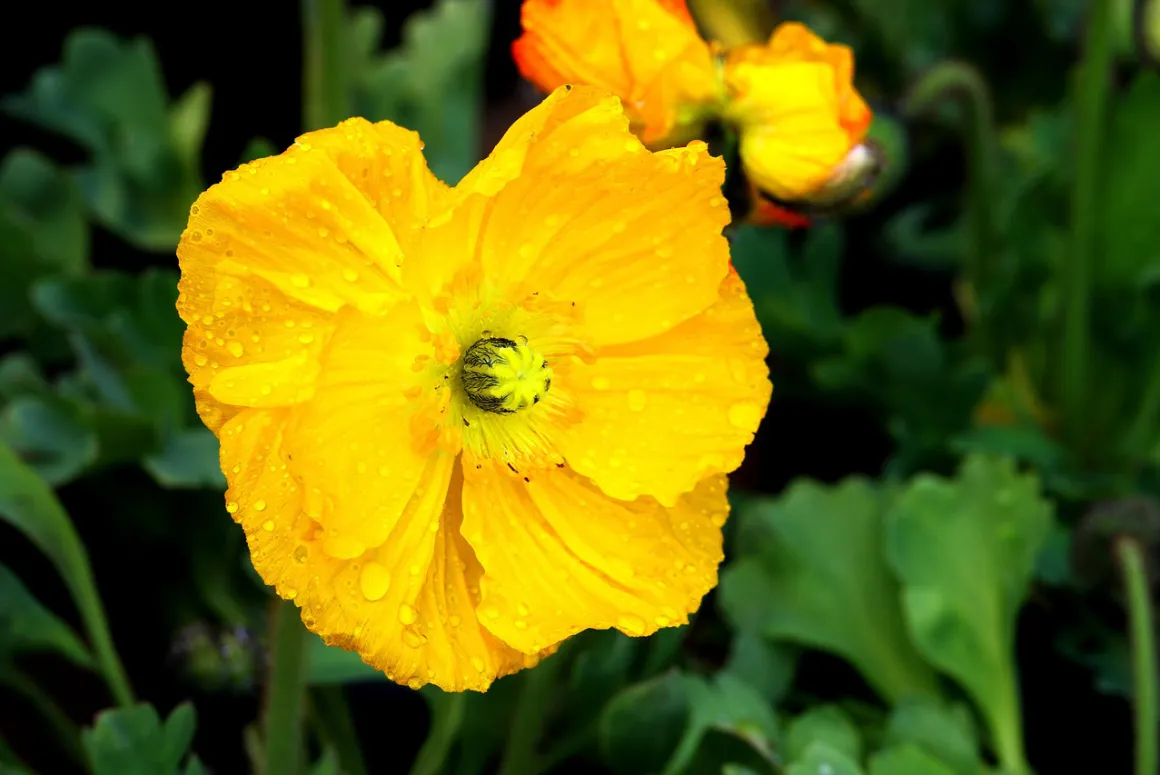
So why a name & synonym? Only modern science in this century solves this riddle.
Meconopsis is a plant genus derived from the Greek (mekon poppy, opsis alike), and this plant genus in some ways looks far more like the Welsh poppy hence Louis Viguier changing its Latin name. Generally though the Meconopsis group of poppies are based around the Himalayas.
It was phylogenetic studies at the end of the 20th century that discovered that the Welsh Poppy was not that closely related the Asiatic Meconopsis plants and the original Papaver genus was restored being a Genus of more temperate climates.
The Welsh Poppy can be bought from nurseries but is often described as a wildflower and one of the plant world’s survivors often turning up in gardens with no effort of the owner what so ever.
It was described as a wild flower in the newspaper the Llangollen Advertiser Denbighshire Merionethshire and North Wales Journal of October 1884. As ever in the newspapers of this age stories tended to be slightly historic as this quote come from an article, “At the Gate of North Wales a Midsummer Holiday.”
“Among other characteristic plants of the neighbourhood are the Welsh poppy (Meconopsis Cambrica), dwarf elder (Sambuous Ebulm), etc. The Eglwyseg rocks and the gorges which here and there run up into them,-notably that beauti- ful cul-de-sac called The World’s End,”—are very rich in various plants and ferns.”
The Eglwyseg Rocks is long steepish ground part of the Clwydian hills around 5 miles north of Llangollen.
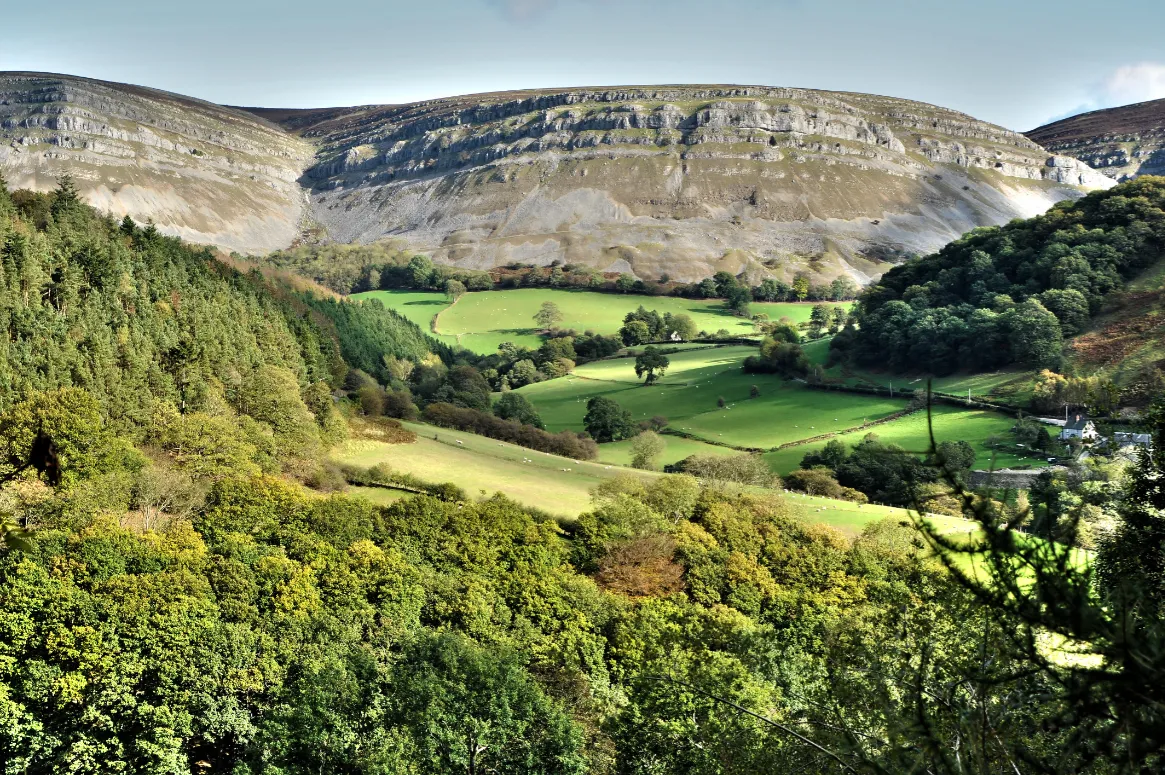
Eglwyseg Valley [1]
In the Denbighshire Free Press of the 23rd June 1906 in a regular article “Rural Life” by ‘A son of the soil’ the author states:
“The double variety of the Welsh Poppy flower all the summer, and they are really beautiful, the blooms being a rich yellow. The plants are splendid for naturalising and they will seed themselves, producing a small percentage of double and semi-double flowers.”
But it was not just North Wales where comments were made about the Welsh Poppy.
On 15th July, 1915 ‘Builth Naturalists’ reported on a visit to Aberedw about the flora of the district in The Brecon Radnor Express Carmarthen and Swansea Valley Gazette and Brynmawr District Advertiser
“The Welsh poppy is not uncommon on the volcanic slopes of Llanelwedd.”
Further south around Merthyr Tydfil it was reported in The Pioneer in June 1915 by Certificated teacher Richard Davies in his article “The Flora of Merthyr Tydfil.”
“The Welsh poppy and stone bramble are rare. They are to be seen together with the Marjoram and spurge laurel between the Dowlais quarry and the railway at Vaynor.”
The Welsh Poppy was used as a badge or logo as far back as 1892 cited by The North Wales Express in September of that year.
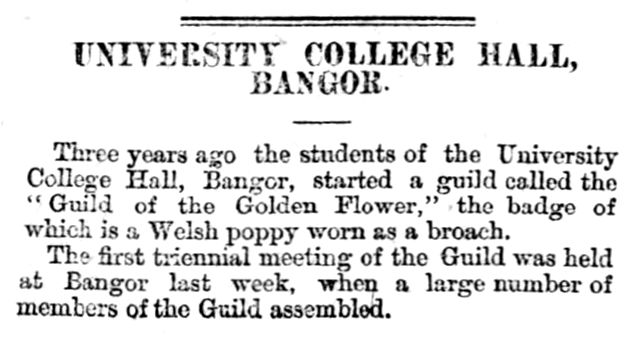
The North Wales Express [2]
Five days later in the third edition (those were the days) of the region Cardiff based newspaper The Evening Express:
“There was recently formed at the “Hall” connected with the University College of North Wales a guild known as the Guild of the Golden Flower.” Its badge is the Welsh poppy-Mecanopsis Cambrensis—to be worn as a brooch. The principal object of the guild is to form a lasting link between past and present female students.”
We cannot find any more information about the Guild of the Golden Flower and it is over 100 years before the Welsh poppy is used as a logo again this time for the political party Plaid Cymru.
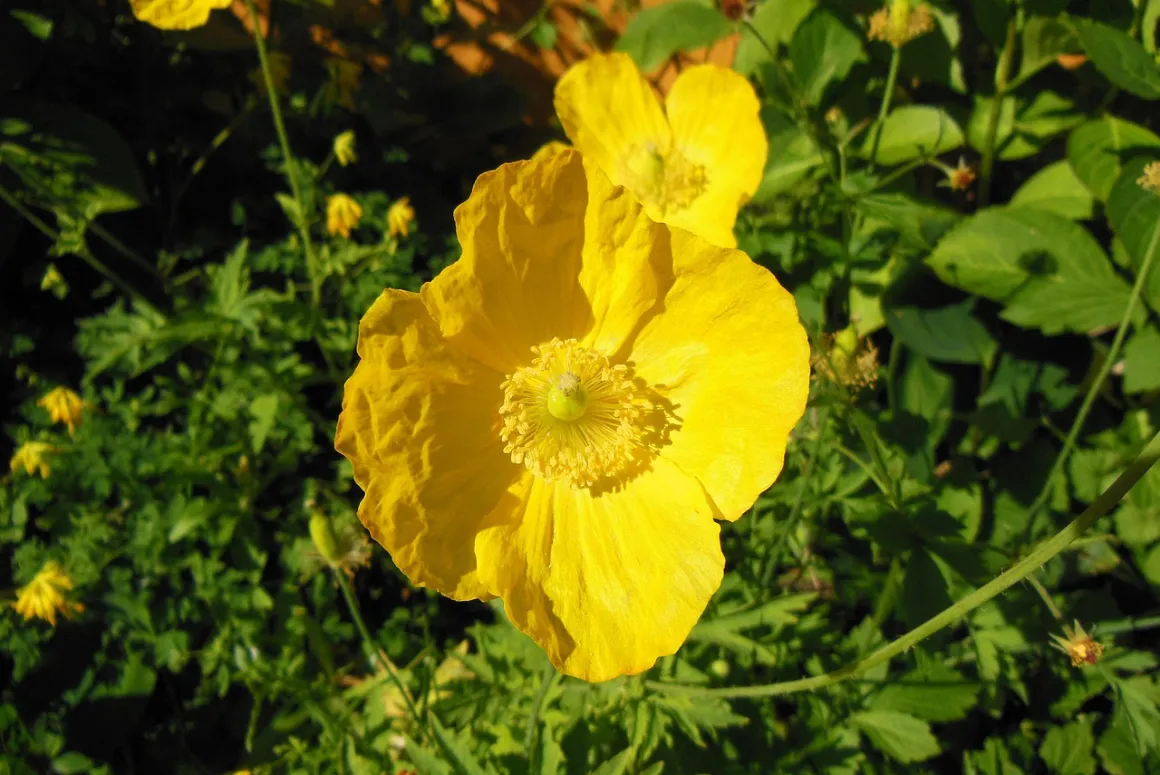
Launched as their logo on 24th February 2006 it was described by some as having a distinct similarity to the then BP logo.
Designed by Cardiff creative company Departures whose creative director Aled Phillips commented:
“Eventually we settled on the Welsh poppy, a flower that is unique to Wales. It thrives in cold conditions as well as in warm – it’s robust, adjusting to the environment.”
The Welsh Poppy as folklore has it is particularly associated with fairies and is able to ward off and protect from evil. There was a folklore belief that the Welsh Poppy could not survive outside Wales, but this is roundly disproved by it thriving across the lower half of England especially the south west.
But what about Welsh Poppies in your garden?
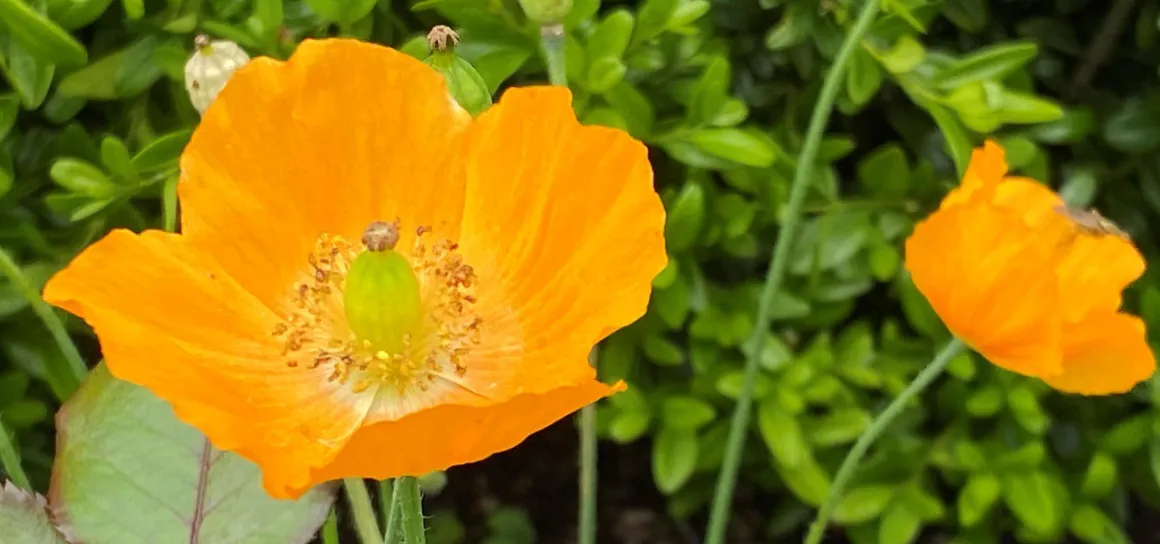
Welsh Poppies are perennials so once planted return year on year becoming dormant during the winter months.
But Welsh Poppies can be sown from seed as well. Either planted directly where one wants them to establish or starting in compost trays and transplanted once established.
The best time to sow is from late August till October.
Words: Welsh Country
Images:
[1] Eglwyseg Valley by Geir Hval (www.MacWhale.eu), CC BY-SA 4.0, Source
[2] National Library of Wales, Source