
It all started when they decided to exhume the pig, but we shall come to that in a moment.
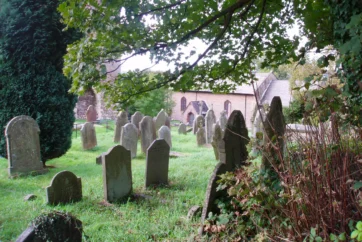
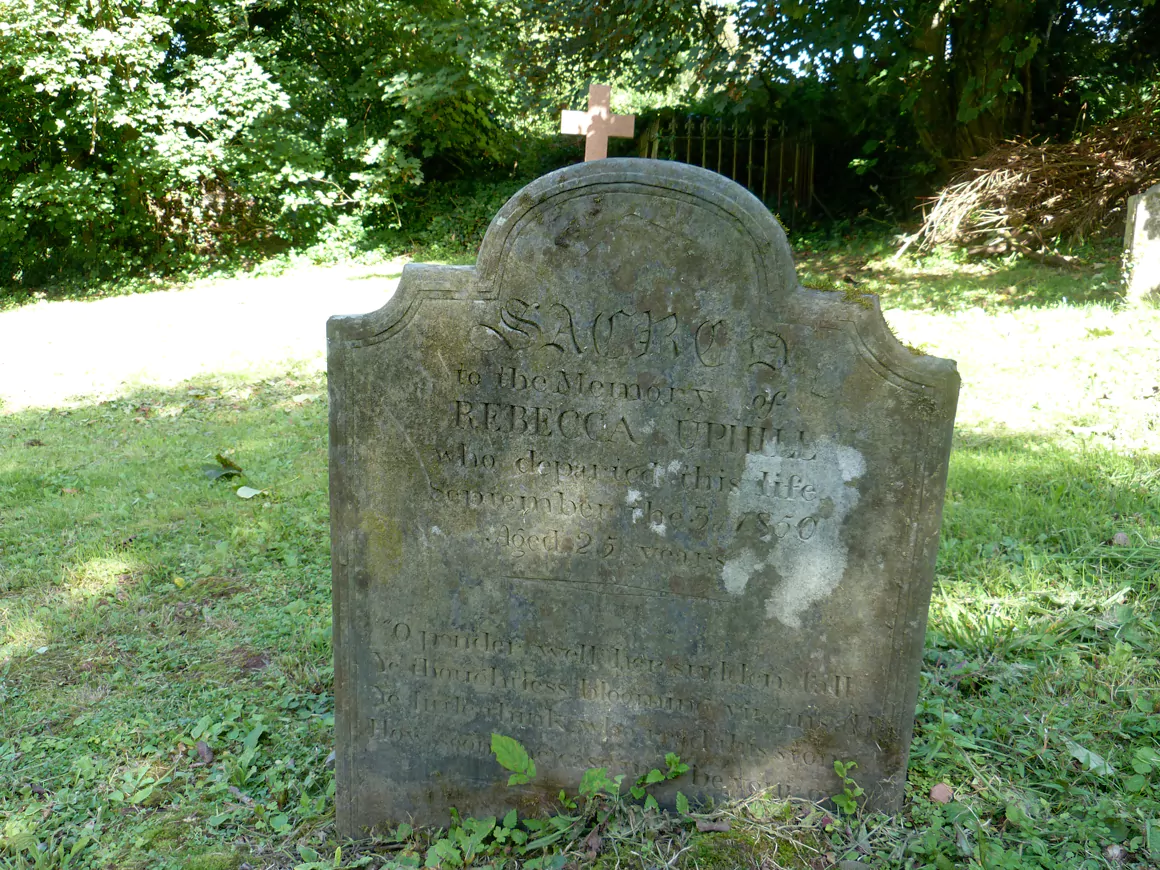
This story time takes us back to Brixton Farm near Laugharne in Carmarthenshire in 1850. The farm is still there, a grade 2 listed building and in 1850 the tenants were Thomas and Mary Ann Severne, who managed a busy farm with a small clutch of domestic servants. One of them was Rebecca Uphill and she is buried in the beautifully remote church of St Odoceus in Llandawke, at the top of the narrow lanes above Laugharne. Her grave represents this quite remarkable story, standing alone in the grass, displaying this inscription.
O ponder well her sudden fall,
Ye thoughtless blooming virgins all.
Ye little think who read this stone
How soon the case might be your own.
What does that mean? Don’t forget your mortality? Or perhaps it means – Beware! You may be poisoned.
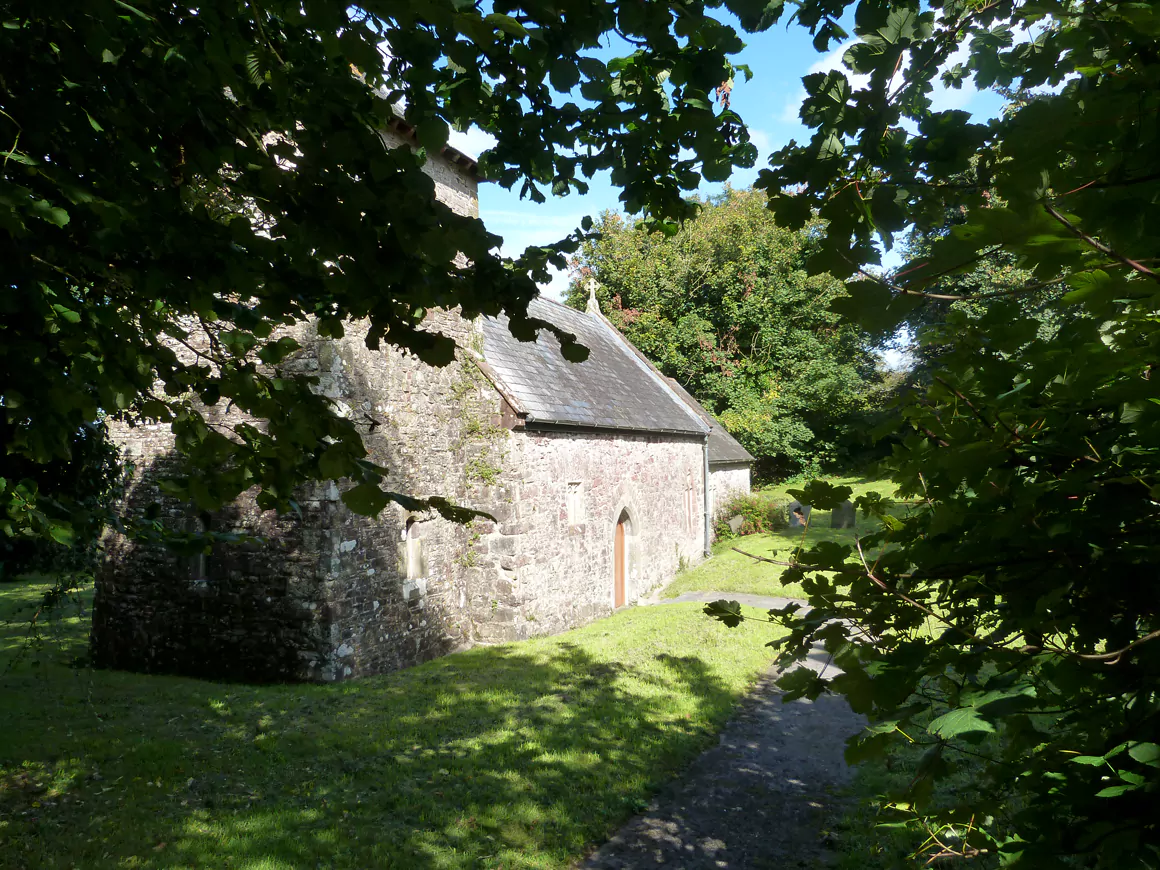
On Sunday 1 September 1850 Rebecca Uphill, a servant at Brixton Farm, “was convulsed by violent purging and vomiting” and died in agony on the following Tuesday. The doctor decided that it was “English cholera” and so she was buried hastily in the graveyard of Llandawke Church on Friday. But another servant, Ann Beynon, had been afflicted, survived and in the following 10 days there was growing concern about Rebecca’s death. The two servants had eaten the same broth, the remains of which were given to the pigs, including the healthy old sow who had promptly died in her sty. When she was eventually exhumed, according to the butcher, her liver showed signs of poisoning.
So Rebecca herself was then exhumed and her body examined on the altar of the church, after which her parts were dispatched for analysis. “We are given to understand,” said the press, “that the body of the unfortunate young woman has shown such rapid symptoms of decomposition as to excite the suspicions of her relatives and neighbours.”
Consequently another death in the household was re-examined – that of the mistress of the farm, Mary Ann Severne – nine weeks previously in July. So they dug her up in Laugharne churchyard and her viscera were delivered, in a jar within a pig’s bladder, to the analyst Mr Herapath in Bristol, who confirmed that she too had been poisoned with arsenic.
Mary, 30 years old, had been in delicate health for a while, suffering from ‘bilious attacks’. She could never have been described as robust; eating had always been a problem for her. On 21st July 1850 she was ill in bed, only picking at the rabbit broth that the cook, Betsy Gibbs had made for her. Mary was not well enough to go to church on Sunday morning, so her husband Thomas went on his own and saw some of the domestic staff there, including Rebecca the house maid. It was her job to care for Mary, but Betsy had insisted on staying behind at the farm, alone, to look after her.
After church, Thomas found that Mary’s condition had deteriorated dramatically. She was producing yellow vomit and was very busy on the commode. Her face seemed blue and she complained that she could not see. Mary died later that evening. Given her previous illnesses, it was assumed that she had died of natural causes but of course, after Rebecca died they realised she had been poisoned.
Suspicion naturally fell upon Betsy Gibbs. At the inquest into Rebecca’s death, Ann Beynon said that she had felt the broth burn her throat. She had asked Betsy about it who blamed the pepper she had sprinkled on a stale mutton chop she’d added. When the remains were put out for the sow, there was a noticeable white deposit on the base of the saucepan which Betsy said was oatmeal. Both Rebecca and Ann were violently and repeatedly sick and of course the pig died. Betsy herself said, rather lamely, that she had been sick too, early in the morning, but no one else in the house was inclined to believe her. Suddenly the other employees on the farm refused to eat anything Betsy prepared for them.
The inquest was unanimous. After deliberating for fifteen minutes the jury returned a verdict of wilful murder against Betsy and she was taken to Carmarthen prison to await trial. She denied everything and kept on doing so. What seems to have happened is that Betsy had ingratiated herself with Mary to the extent that she asked her to be her husband’s second wife as she didn’t expect to live for very long. Betsy had already indicated to the other servants which of Mary’s dresses she would wear for the wedding. Betsy might have decided to help the sickly woman on her way.
But events ran out of control. Once Thomas’ sister-in-law, Mrs Severne of Craigyburion, took over domestic management for him and heard of Betsy’s ambitions, she decided that she must be dismissed to be replaced by Rebecca’s sister, Jane Evans. That was when Rebecca was murdered.
Whilst held in prison on remand Betsy confessed to the prison governor’s domestic servant that she had given Mary arsenic in her camomile tea. When she came to trial in March 1851 there were other stories about her too. She was wilful, argumentative, insolent and presumptuous. Betsy described Rebecca as a “devil” who would “make me leave my place.” She said that the decision to dismiss her made her “angry in my heart. There will be somebody dead in a short time.” She said that Ann and Rebecca “should go from Brixton in the same way as my mistress did.” She wanted to take a knife and “rip open Ann’s guts.”
She tried to deflect attention by talking about seeing corpse candles going from the door of the house and down the road, indicating the imminent route of a coffin. She claimed she could predict death, then suggested that she was possessed. “The devil is here every night, putting me to sleep.”
When the case went to the assizes in March 1851 it seemed that Betsy was doomed. But she was found not guilty and for one very simple reason – the lack of conclusive evidence. The prosecution were unable to prove that Betsy had access to arsenic. Thomas Severne confirmed that there was some on the farm but no one knew where it was. Perhaps it had been wrongly labelled. They couldn’t find anyone in the area who remembered selling arsenic to Betsy.
Margaret Lewis, a local woman known to everyone as Benny the Blacksmith’s Widow, sometimes worked on the farm doing odd jobs. She was questioned but denied ever buying arsenic, anywhere, for anyone. The chemist’s wife in Laugharne however was sure that she had bought some from her.
Everyone suspected that Billy the Blacksmith’s Widow had bought it for Betsy on the pretence of dealing with a rat infestation in her cottage. But it could not be proved and Betsy was released.
Laugharne however did not believe she was innocent. It was said that she was attacked by a cow in the street that tried to gore her, which was seen as God’s indication that she was guilty. An angry mob gathered outside her home and a trial was held. An effigy of Betsy was paraded through the streets, hanged from some gallows and then burnt as a witch. The next evening a mock funeral procession paraded along the street which they renamed ‘Scape-the-Gallows-Street.’ Shopkeepers refused to deal with her family. Eventually Betsy left Laugharne to live with her sister in Merthyr and Thomas Severne gave up his tenancy of the farm and moved away.
But the story wasn’t over. There was an unexpected epilogue. You will remember Jane Evans, Rebecca Uphill’s sister, who was in line to succeed Betsy as cook. She was a widow, about 30 years old, with two children by her first husband. She was engaged to be married to Thomas Evans, who was 19 and by whom she was pregnant. Thomas was ready to marry her and adopt her children. The banns were published, despite opposition from his family who felt he was much too young, but he could not be dissuaded.
Sadly Jane died suddenly, a week after Betsy’s acquittal. The greatest fear of course was that she too had been poisoned, perhaps by those hostile to her marriage. But there was no evidence. They decided she had a seizure, which the inquest interpreted as “Death by the Visitation of God.”
What happened to Jane’s children is not known.