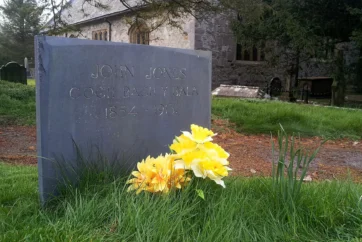
Her grave stands in a prominent position at the very back of St. Cranog’s churchyard in Llangrannog, right in the centre of the village. Between Aberystwyth and Cardigan, down a steep hill from the busy A487 the village looks out at the sea. Hers is an imposing tomb topped by a black urn, a symbol in Victorian graveyards of generosity, which is so appropriate for a woman who gave so much to others. Now she looks down towards the narrow little streets like a benevolent teacher, which is, of course, what she was.
The inscription is quite rightly in Welsh. It reads…
She stood on her own amongst the women
and wives of the nation in genius and talent.
Her character was without blemish and she lectured,
preached and wrote for over 50 years.
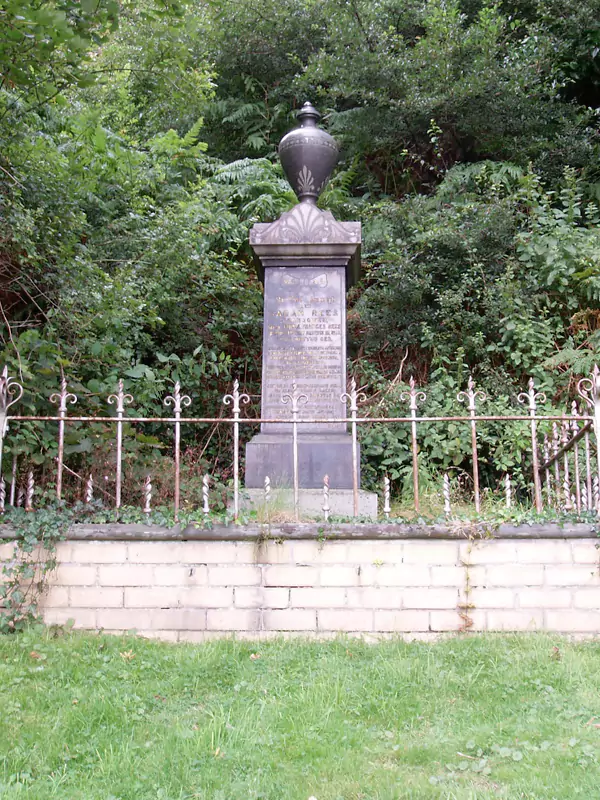
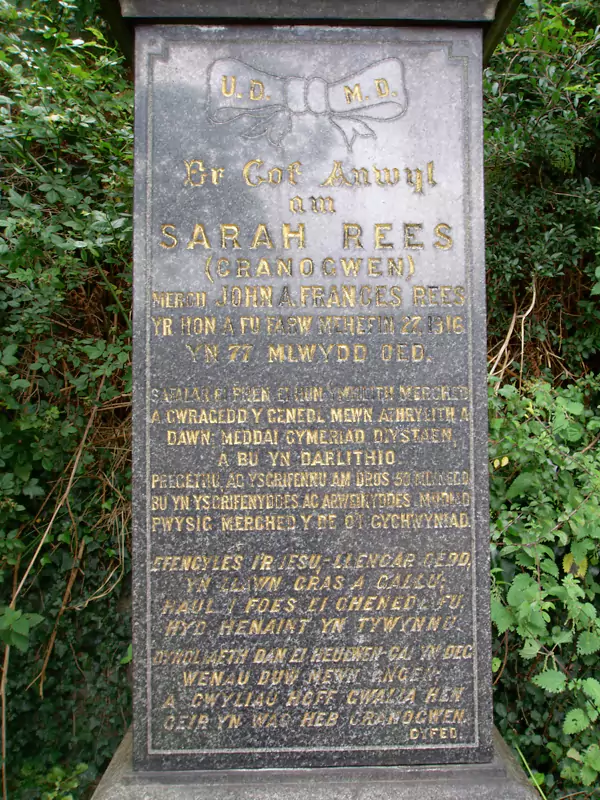
Sarah Jane Rees’ imposing tomb [1 & 2]
The tight and narrow community of Llangrannog tumbles down steeply to a pebble beach and rough seas. An isolated place, intense perhaps, and when you look at the sea crashing on to the rocks it is hard to imagine that anyone could actually launch a boat from this little cove, let alone navigate around the dangerous coastline. Yet Sarah could. It was here that she started.
She was a great achiever and those who rush down to the sea in this pretty village don’t give her a second glance. Yet she was a remarkable woman. Master mariner, teacher, a crowned bard, preacher, lecturer. Given her humble origins her achievements are astonishing.
It is no surprise that she is still remembered today. South Wales folk singer Andrew McKay has a song about her, “The Navigator Lady.”
Now she’s on shore and the Old Man’s dead,
She’s setting up a school in the parlour instead,
She’ll teach you lots of things that you might find queer,
Like how to drink tomato juice instead of beer,
But to learn to get from Montreal to Mumbles Pier…
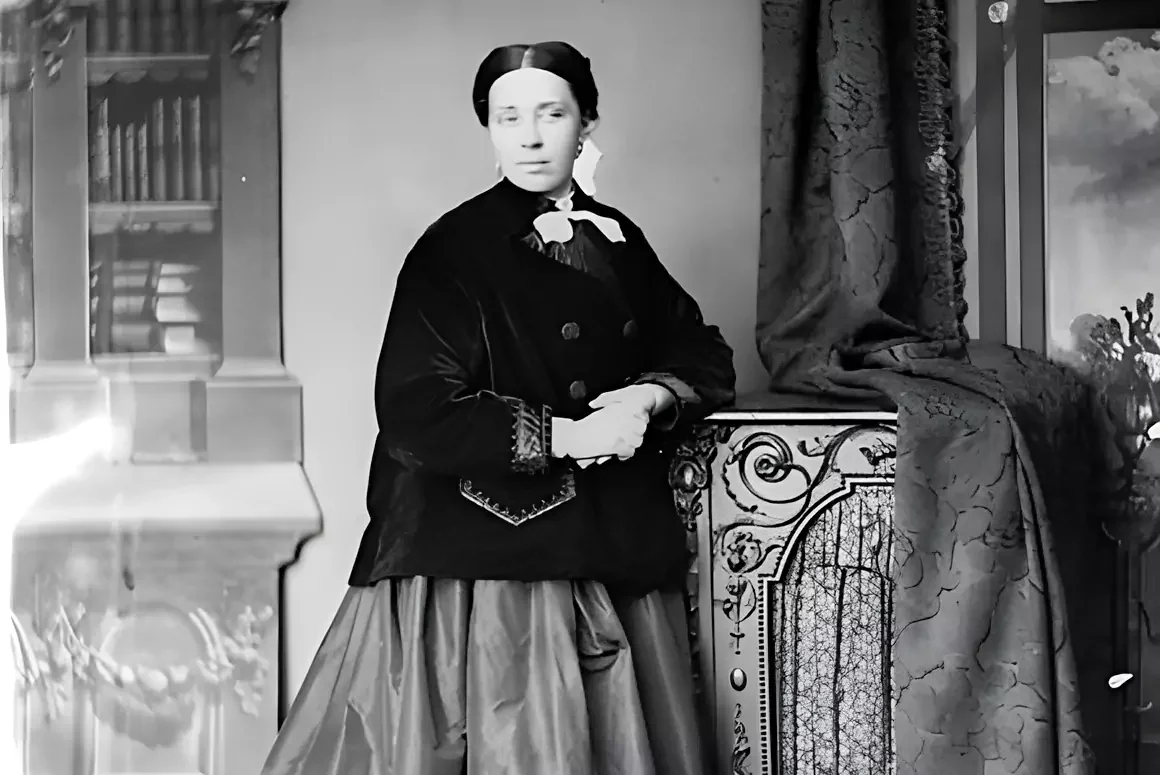
She died in 1916 at the age of 77 after a lifetime defined by a mission to educate and improve the lives of those around her. In her photograph you see a proud woman, confident and comfortable but with an undeniable spark in her eyes. Ready to confront expectations. She was a prominent member of her own community and of the wider world of West Wales. No one could accuse her of wasting her life.
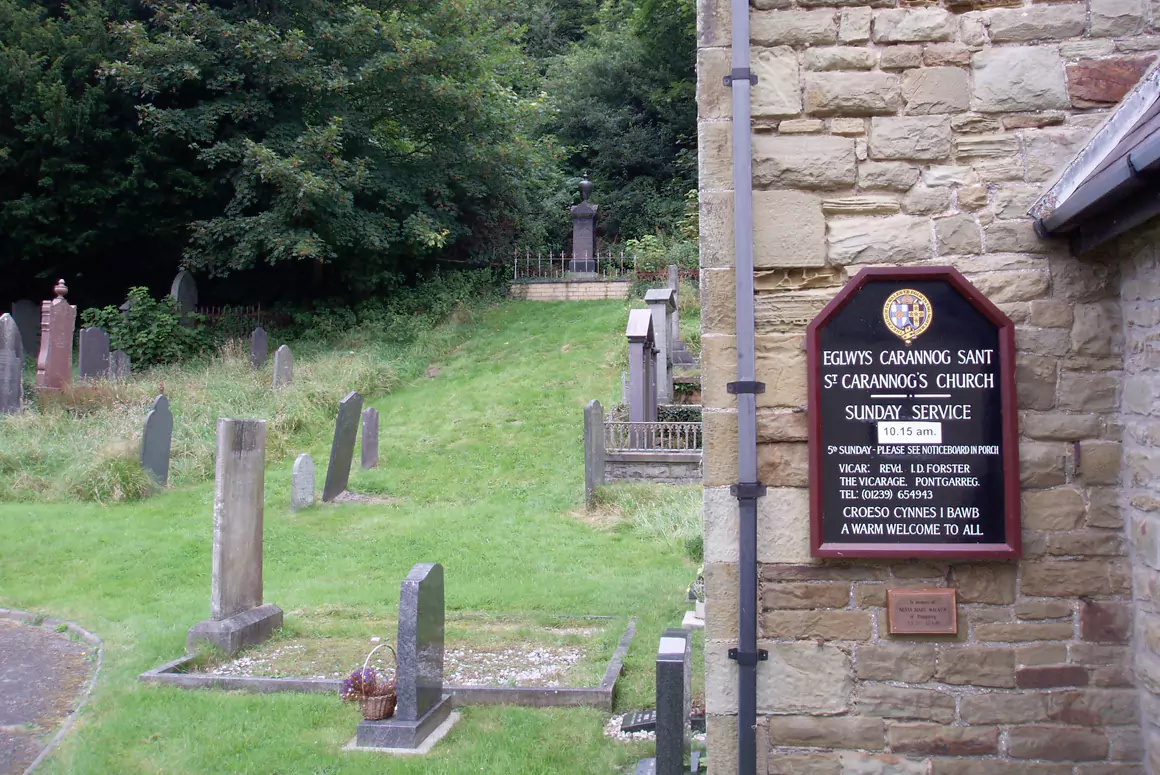
St. Cranog’s churchyard, Llangrannog [3]
She was born in 1839 into a confined life on a small farm but at least her horizons were not as narrow as those of many of her contemporaries. Her boundaries encompassed the sea.
Her father navigated a small boat up and down the coast as a small time trader. He was a successful one and the family soon moved up in the world. They wanted her to become a dressmaker but her ambitions were far more exciting. Sarah wanted an education. She became a Band of Hope leader and a Sunday School teacher. She went to colleges for Ladies in Liverpool and Chester and then finally to a nautical school in London. And as a result she qualified as a sea captain and was awarded a master’s certificate. Indeed, she was the first British woman to get a Board of Trade ticket. She was a highly skilled navigator and the theory she acquired filled in the background to all those practical experiences she had with her father on his boat as a child.
As a result she became a prominent figure when she returned to live in her own community. She commanded considerable respect in this old fashioned world, male dominated world.
She became a teacher at Pontgarreg School and later head teacher. She was a particularly talented teacher of music who supported vigorously the Tonic Sol-fa system of notation that helped reluctant Sunday School singers for generations. All her life was devoted to others, especially women and the under privileged. So she took education out into the community, teaching in barns and other farm buildings and village halls. The arrival of train lines in West Wales opened up this isolated part of the country to the rest of the world and it was important that the horizons of the people expanded in a similar way through education. The old ways, that restricted women and denied opportunities to children, needed to change. Sarah saw that expanding education was the way in which to do this.
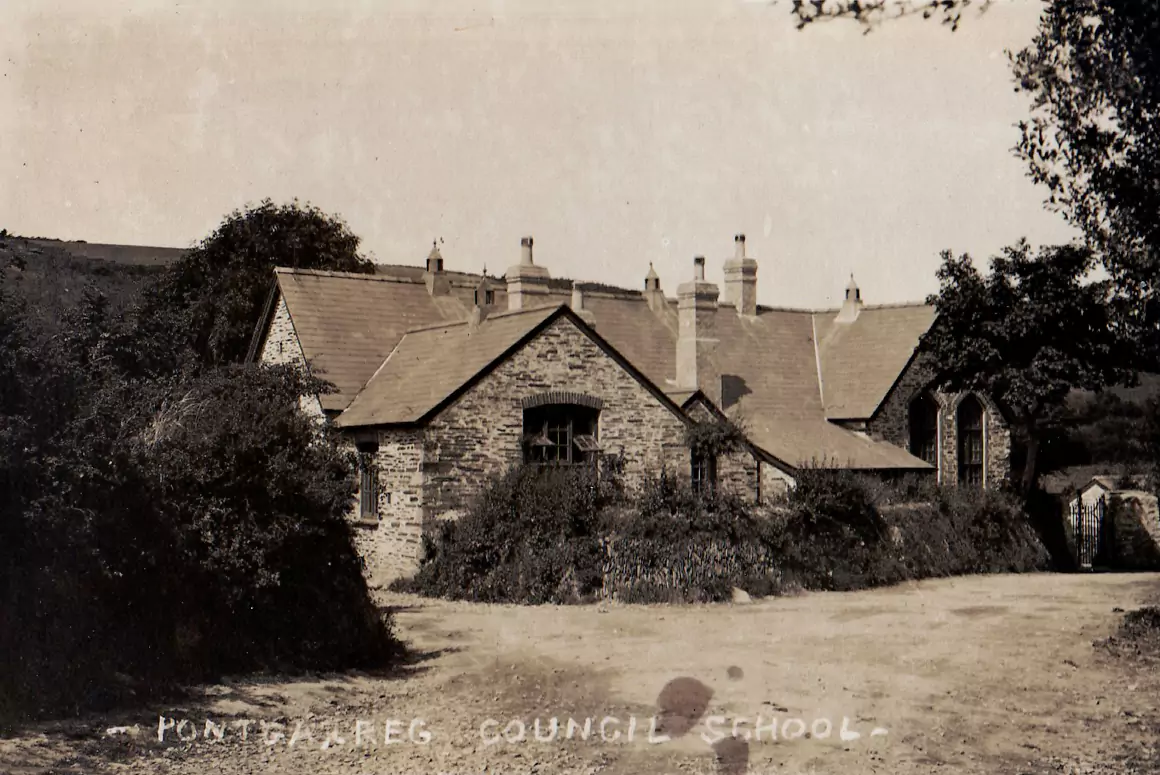
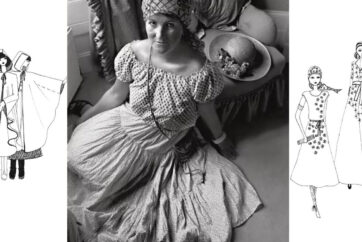
Pontgarreg School [4]
So she taught basic literacy and numeracy skills to farm boys and advanced navigation to sea captains who came to the school after the children had gone home. She had both the theory and the background of sailing along the dangerous and rocky coast. It was a risky fragile future. Always watching the weather, the tide. And yet who was the best navigator? Who was the best teacher? Who knew the channels and the currents better than anyone else? Sarah Rees. And in this hard-drinking world, Sarah promoted temperance.
She became very exercised by the role that alcohol played in these remote and isolated communities as others did. Many welsh women campaigned against alcohol blaming it for all moral and social ills. It was seen as a drain on limited finances of the poor. Money for food was allegedly spent in pubs. There were always grim days out in the west when the weather closed in and there was only the drink. In these tiny little communities linked only by the sea, domestic violence was not unusual.
The North Wales Temperance Union was set up in Blaenau Ffestiniog and it spread. Protests in pubs and on the street were organised. It was very much a feminist issue. She started the Women’s Temperance Union in South Wales in 1901, travelling as far as Tregaron in her pony and trap to promote her message. She was confident, firm of purpose. Her seamanship had already shown her that she could confront male expectations. Temperance became very much a feminist issue. She had never accepted the isolated and claustrophobic world of a remote Welsh village nor had she ever embraced a forgotten life of drudgery. She believed quite firmly that women deserved better. It wasn’t that she was concerned to ban alcohol all together, but the excessive consumption was intimately wedded to domestic violence, the abuse of women and the neglect of children.
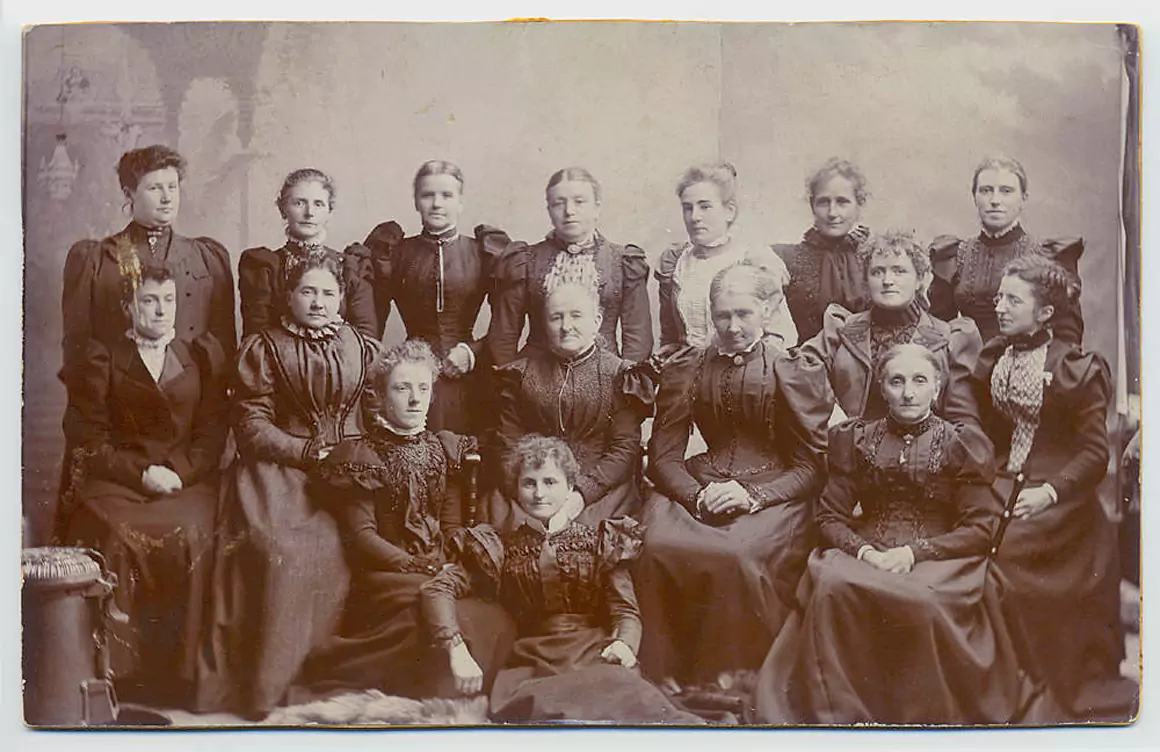
Women's Temperance Union [5]
The success and the excitement of their campaigns gave women the confidence to face other issues, like votes for women. The impact that women like Sarah Rees had therefore was profound and long lasting. Through the Temperance Union women found a voice that would not be silenced.
Her promotion of women’s rights led her to establish a magazine to promote women writers. “Y Frythones” (The Female Briton) was a significant publication, enabling women to participate in public events through the articles that they submitted. The first Welsh magazine for women was “Y Gymraes” (The Welsh Woman) which concentrated largely upon housekeeping issues. Sarah’s magazine appearing a few years later on the other hand, promoted women’s achievements and aspirations, rather than domestic hints and tips. The magazine began in 1879 and Sarah was editor for 12 years. As you can see in other parts of her life, education, both secular and religious, was of the utmost importance. This was reflected in the nature of the magazine. The role of women and their unfulfilled potential was something that she felt passionately about. Through the magazine, women began to find a distinctive voice.
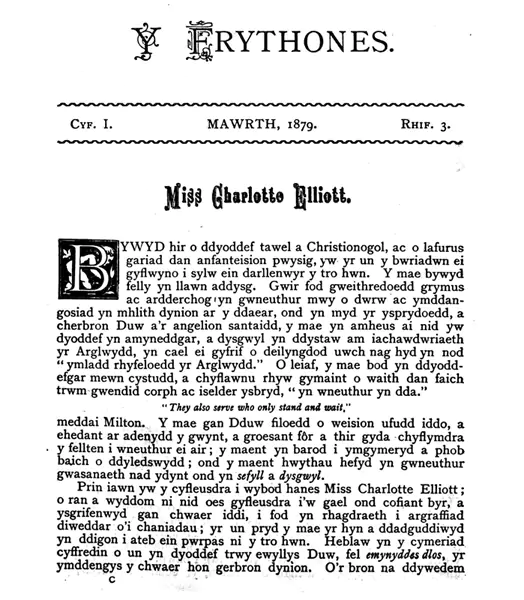
“Y Frythones” (The Female Briton) [6]
She succeeded in her own writing too. In 1865 she was the first woman to be awarded the chair of the Royal National Eisteddfod in Aberystwyth for her poem, “Y Fodrwy Briodasol.” In 1873 she won the chair in Aberaeron. She adopted the Eisteddfod tradition of a bardic name, one which paid homage to the village that made her – Cranogwen.
As she grew older she gained the confidence to travel more widely. She lectured and preached in America. The money she earned was donated to her village community – chapels were built, bridges repaired. She was a woman with purpose and generosity who never forgot where she came from and was determined to throughout her life to put something back.
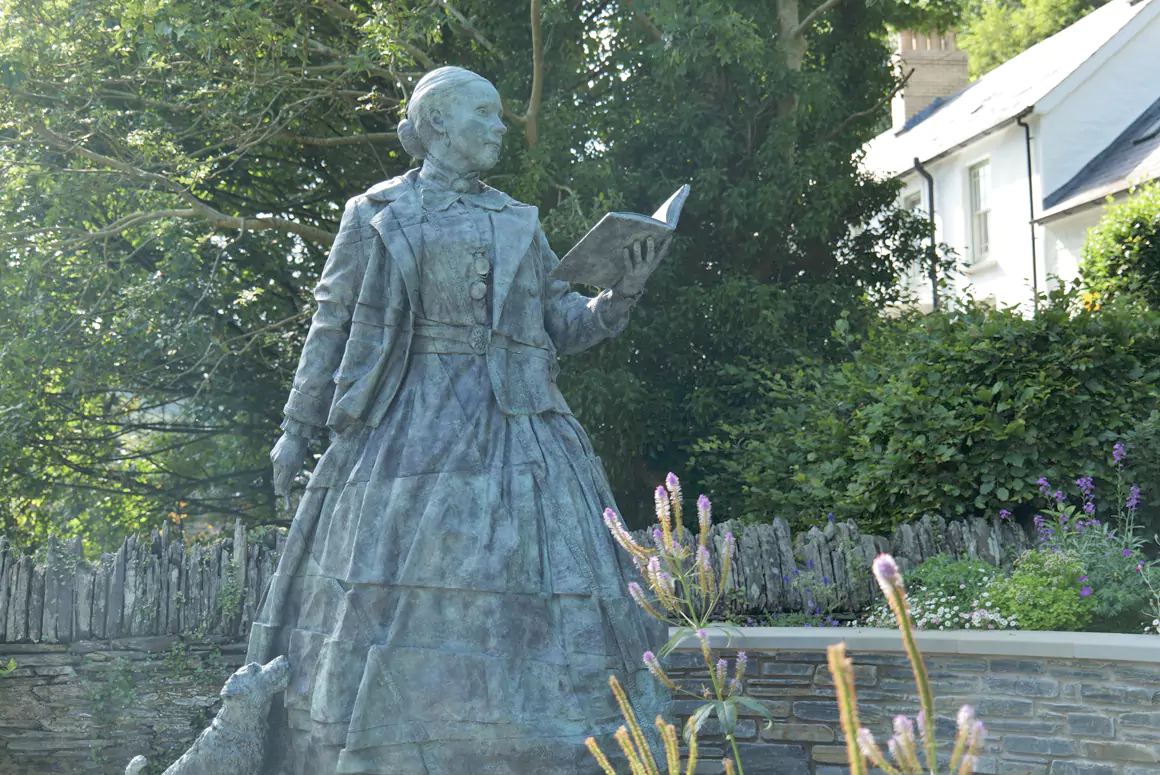
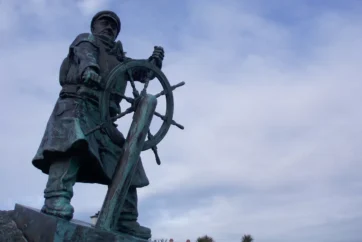
Cranogwen Statue, Llangrannog [7]
Following her death in 1916 a refuge for homeless women and girls in the Rhondda was established in her memory in 1922, Llety Cranogwen. And Aberystwyth University still has an open scholarship available in her memory, the Cranogwen award. Sarah lives on. She was a remarkable and influential woman. And when you look at the black urn on her fine tomb at the back of the churchyard you can only wish that your own life could be half as successful and influential as the life of Sarah Jane Rees of Llangrannog.
Words: Geoff Brookes
Images:
Feature image: John Thomas, Public Domain, Source
[1, 2 & 3] Geoff Brookes
[4] The Peoples Collection, CAL, Source
[5] The Peoples Collection, CAL, Source
[6] Discover this Journal on the Welsh Journals website, Public Domain, Source
[7] Cwmcafit, CC BY-SA 4.0, Source