Karen Foy takes us on a trip to Ruabon, where clues to its long forgotten history are literally waiting to be discovered around every corner.
Six miles south of Wrexham lies the pretty village of Ruabon. There have been various settlements here since 1400 BC, a fact confirmed in 1898 when building work exposed a stone urn – known as a Funereal Cist – containing ancient human remains dating from the Bronze Age. By the early twentieth century, Bronze Age tools and a flint arrowhead had also been discovered in the grounds of the local school. It is believed that community life continued in this area well into the Iron Age – the remains of a hill fort (Y Gardden) have been found – but when the Roman Invasion took place, this significant hamlet was broken up, and surrounding farming communities then occupied the land for over one thousand years.
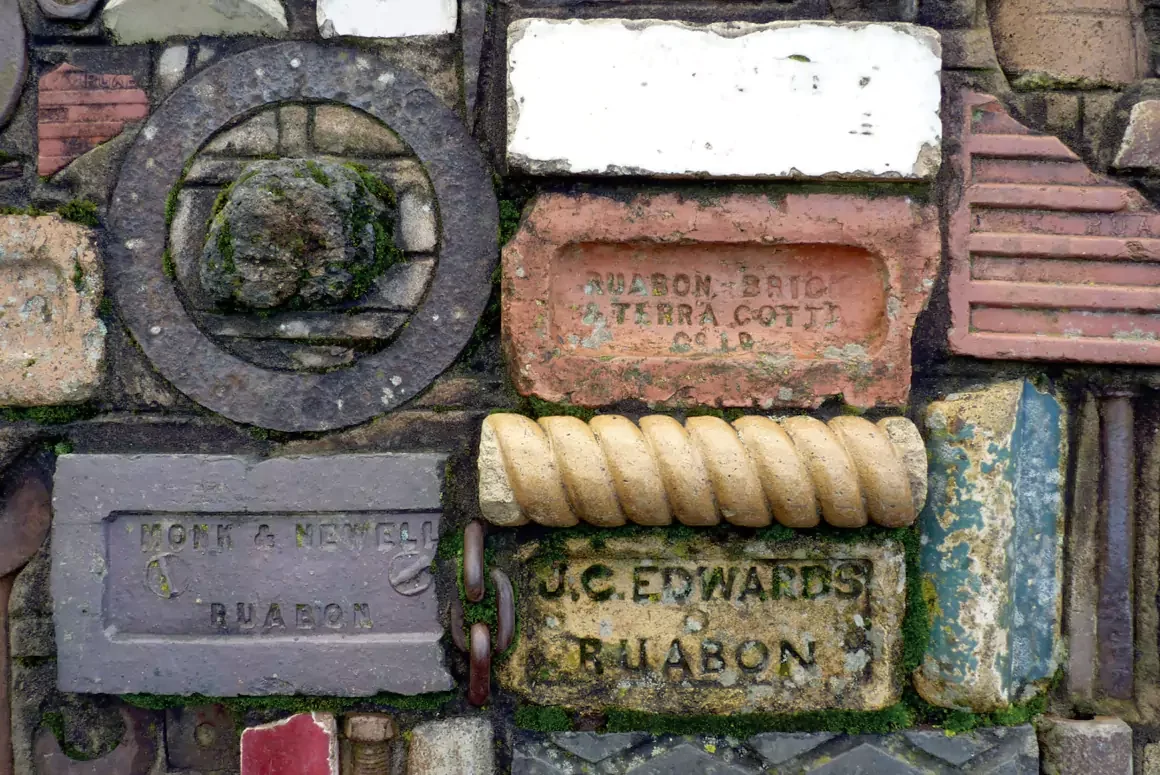
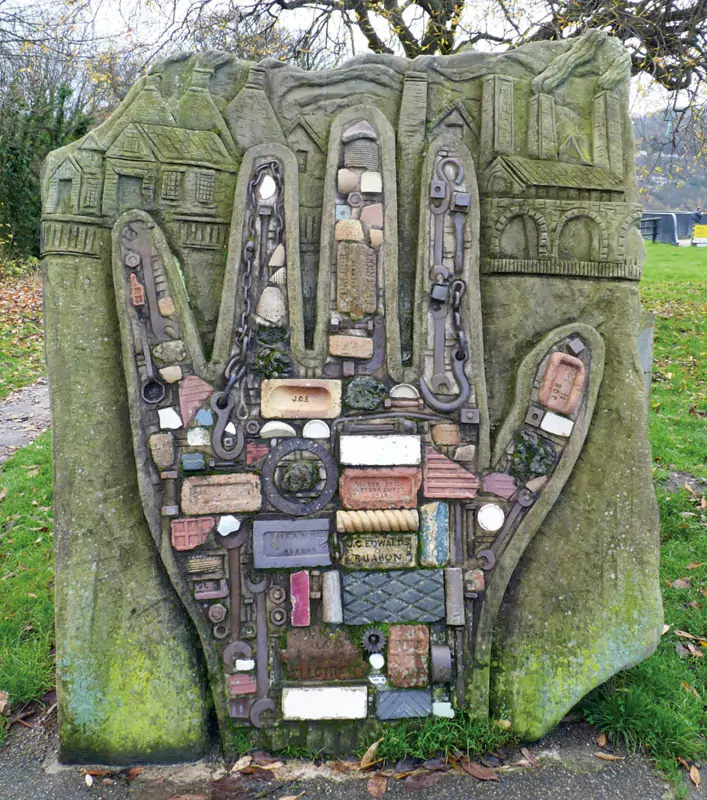
Feature image: Close up of the brick sculture by Anthony Lysycia at Trevor Basin
Changing Times
In 1718, the Williams-Wynn family inherited the Ruabon estate from Sir John Wynn of Gwydir. Each of the descendants added their skills and individual attributes to the creation of the estate. The third baronet – Sir Watkins Williams-Wynn – was MP for Denbighshire, with strong political beliefs, whilst his son amassed a large collection of paintings and antiquities through his love and understanding of the arts. Although the fifth baronet continued the family political traditions, he was more interested in military matters. In 1794 he became colonel of a cavalry regiment known as the Ancient British Fencibles, which later took part in the suppression of the Irish Rebellion.
The Williams-Wynn family were a force to be reckoned with and were major landowners, not only in north and mid Wales but also across the border in England. When they first inherited the Ruabon estate through marriage, the third baronet set about commissioning a new family home which they named Wynnstay. The grounds were landscaped by Capability Brown and at one time were thought to be some of the most highly regarded in Wales, with fine monuments and sculptured gardens. The 1770 stone archway still marks the entrance to the original park, with the addition of gates presented by the Borough of Wrexham in 1912. These lead out to Park Street, where the houses of the estate workers were built in 1840.
Sadly, the original mansion was destroyed by fire in 1858. But, undeterred, the family created a new Wynnstay on the same site and by the Second World War it had been requisitioned as an important base for the British Army and the Royal Engineers, who provided training and surveyed maps for wartime operations.
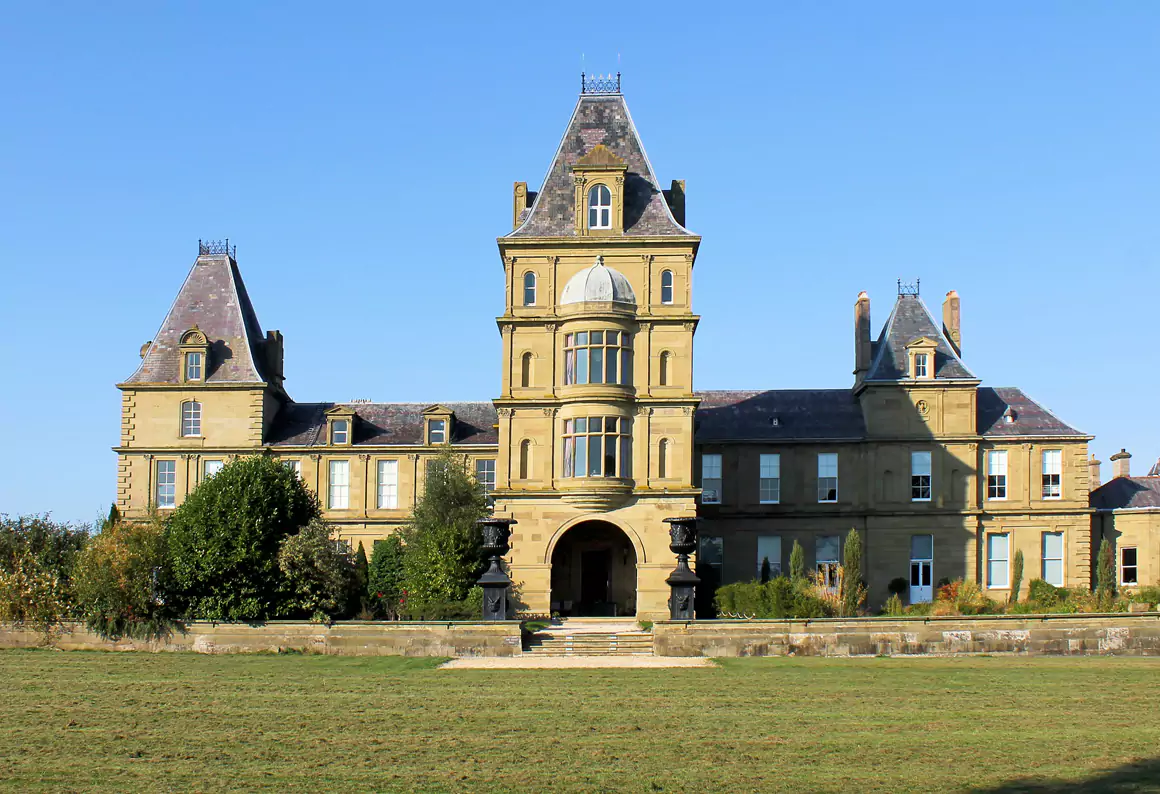
When the army left in 1946, heavy death duties meant that the family finances could no longer sustain the upkeep on Wynnstay, and although they moved to nearby Plas Belan, the Wynns gradually relinquished their hold on Ruabon. The mansion became a private school – Lindisfarne College – and when that went bankrupt in 1994, the building was bought and has seen a new life, converted into luxury flats.
Today, the Williams-Wynn coat of arms can be seen hanging from Ruabon’s Wynnstay Arms Hotel, which was built as a coaching inn during the 1800s as a rest stop for weary travellers making their way across Wales to Ireland. The decorative eagle is symbolic of the Welsh motto Eryr Eryrod Eryri (the Eagle of the Eagles of the Land of Eagles). Snowdonia is referred to as the Land of Eagles, and is where the family had strong ancestral links.
Art, Architecture and Industry
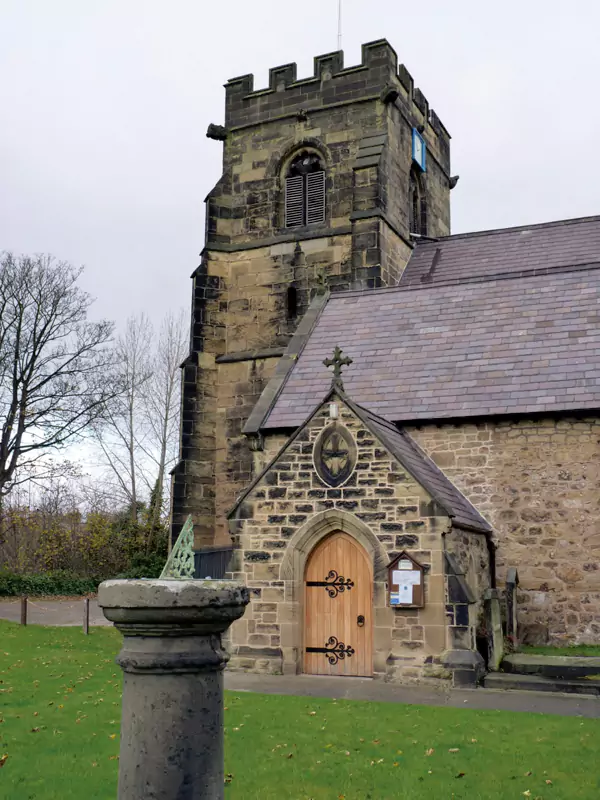
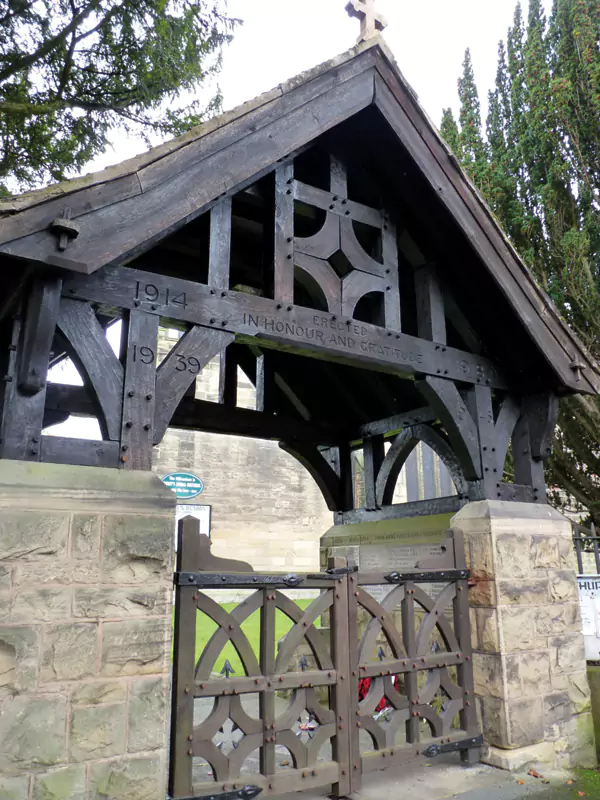
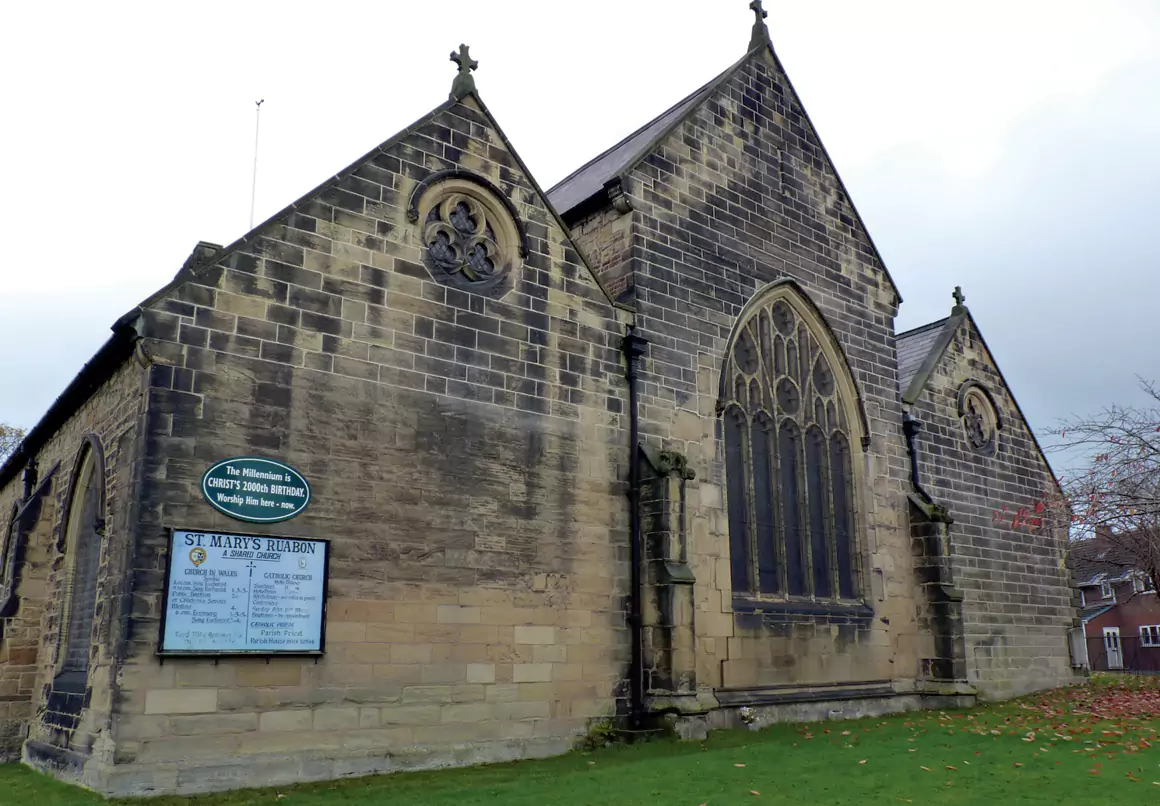
Overlooking the little village is the church of St Mary’s, erected on a pre-Norman site. This shows numerous examples of the changing building styles used throughout the subsequent centuries, but perhaps one of the most significant influences was the medieval period. In 1870, restorer Benjamin Ferrey – a pupil of the famed designer Augustus Pugin – uncovered a fifteenth-century wall painting on the south wall, depicting a set of scenes known as the Works of Mercy. These images represent subjects such as feeding the hungry, clothing the naked, and treating the sick.
Many items were gifted to the church by the Williams-Wynn family, including the oak and marble font designed by Robert Adam, the acanthus carved pulpit, and the organ to mark the fourth baronet’s ‘coming of age’; sadly, this was removed in 1970 and replaced with an electronic device, before the installation of a 1909 pipe organ from the Wrexham parish in 1987.
Today, it is hard to believe that Ruabon was once dominated by the heavy industries of coal and iron, but during the eighteenth and nineteenth centuries they were the biggest employers in the area. The discovery of marl clay in this region saw the rapid growth of tile and terracotta production, earning the village the nickname of ‘Terracottapolis’, and when brick making was introduced, Ruabon soon became a commercial centre, providing its distinctive red bricks for the construction of houses, schools, hospitals and pubs across the country. Ruabon Brick & Terra Cotta works was just one of many competing businesses that boasted encaustic tiles, chimney pots, cornices and finials amongst its additional wares.
Formerly known as the Ellesmere Canal, the Llangollen Canal helped to link the River Severn to the River Mersey and enabled the minerals mined in this region to be accessed and transported further afield. Just outside Ruabon, the Pontcysyllte Aqueduct was built to carry the canal over the River Dee, and where the towpath runs alongside the Trevor Basin you will find a series of unique sculptural art works by the talented artist Anthony Lysycia. Each depicts the history or uses of materials from this area, where industry and amazing feats of engineering went hand in hand.
Perhaps one of the most unusual features in Ruabon is the village lock up or ‘Round House’. These historic buildings, which are dotted throughout rural England and Wales, mainly date from the eighteenth and nineteenth centuries, although they were in use from Medieval times. Built for restraint, they provided a place to detain rogues and petty criminals for short periods before they were either released or sent before the local magistrate. Ruabon’s Round House is constructed of stone with a domed roof, single doorway and a small, barred slit window.
Commonly known as temporary places of detention for drunkards, there are references to these mini jails in the Victorian literature of Charles Dickens; the line ‘Put him in the round house till he gets sober’ appears in Charles Kingsley’s The Water-Babies; and the Oxford English Dictionary claims the first written use of the term ‘Round House’ appeared in 1589.
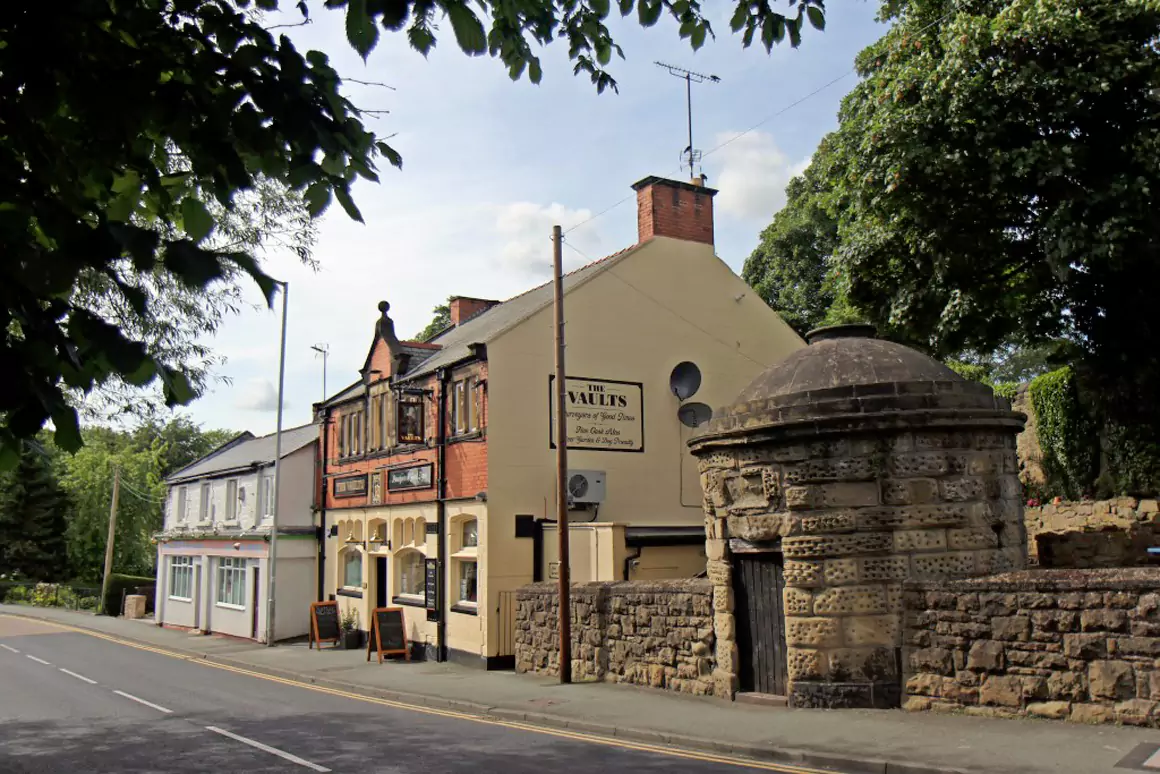
Eventually the Round House fell into disuse when the County Police Act of 1839 ensured that new police stations were built with their own on-site holding facilities. As a result, many were destroyed and those that survive have become local heritage attractions. The Round House in Ruabon was granted Grade II listed building status in July 1963, with the adjacent public house being named in honour of its historical importance.
So, if you ever find yourself in this corner of Wales – perhaps on a fascinating industrial tourist trail through the County of Wrexham – don’t forget to consider wiling away a couple of hours soaking up Ruabon’s history. From the red bricks of the terrace houses to the bells of St Mary’s Church, which have rung out to welcome events and signal the changing fortunes of the village, I can guarantee you won’t be disappointed.
Words: Karen Foy
Image attributes:
All images by Karen Foy except;
Wynnstay Hall, Ruabon – Llywelyn2000, CC BY-SA 4.0, Source
A roundhouse next to The Vaults pub, Ruabon – El Pollock, CC BY-SA 2.0, Source