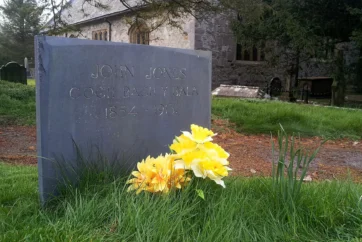
We searched for a long time but with no success. We couldn’t find her grave. Martha Ann Nash, buried in December 1885. Aged 6.
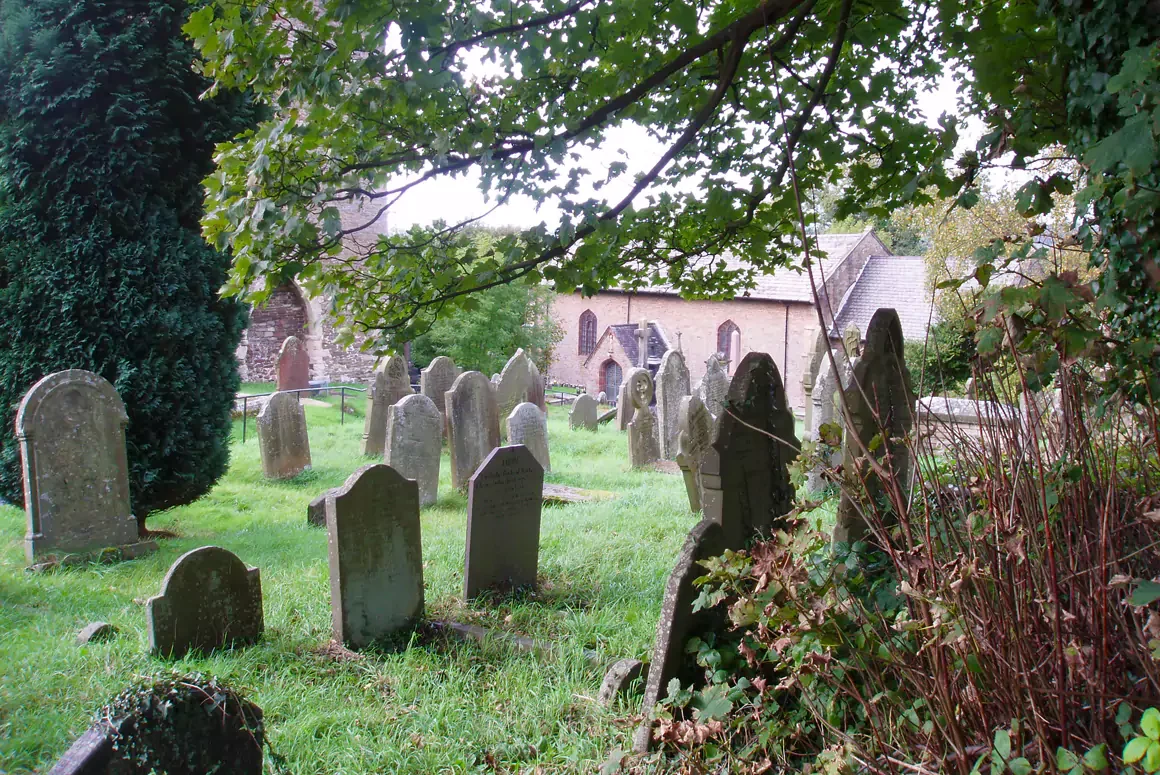
Today Llangyfelach cemetery is tangled and overgrown. It was closed for burials in 1890 because it was full. Since then it has been reclaimed by a green jungle. Impenetrable brambles and weeds reach out and clutch at your clothes. It is not ready to reveal its secrets and the stones themselves are sinking into a lost past. No one seems to know where she is now.
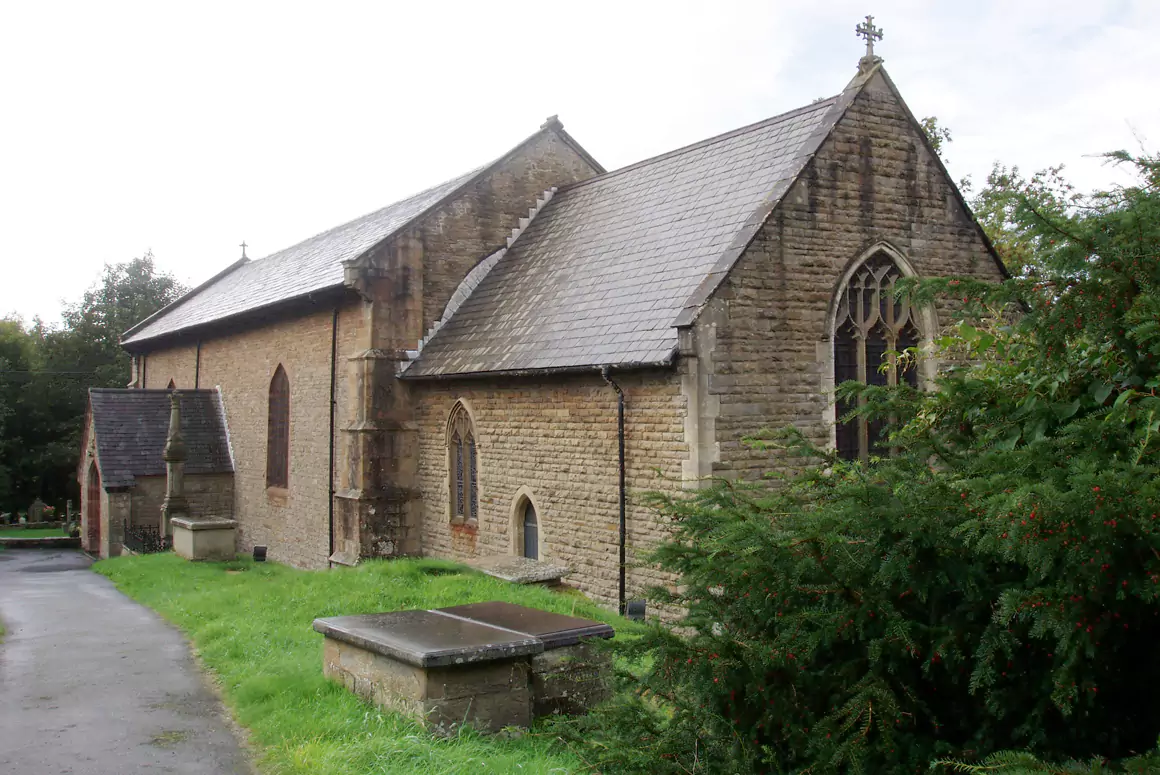
Feature image: St. David’s Church in Llangyfelach, near Swansea.
Poor Martha. Abandoned in death, just as she had been abandoned in life.
There was a moment when it wasn’t like this. For a brief moment she was somebody. When the English Baptist Band of Hope led the funeral procession to St. David’s Church in Llangyfelach, near Swansea. As they left the house, they played “Safe in the arms of Jesus.”
Tragically, Martha hadn’t been safe in the hands of her father.
The charge which is now said to hang over the head of Thomas Nash is one of a peculiarly heinous character. It is that of wilful murder – the murder not of a fellow being who had opposed or angered him and so called forth the madness of hot ungovernable blood, but the murder of his own child – a young, innocent, inoffensive and helpless infant – a child of only six years of age. It is difficult to imagine what could be the motive that could actuate a father to take the life of his female child of such a tender age.
As we look at the facts of this wretched case we can see that whatever Nash did or did not do, he was a confused and desperate man. The details of the case may take up a whole page of densely packed print in “The Cambrian” newspaper, but the facts are simple. He walked on to Swansea pier hand in hand with his little girl in a storm and he returned almost immediately without her. She was washed up, drowned, on the beach a couple of hours later. There were no witnesses but no one worried too much about that. Everyone believed they knew what he had done.

Thomas Nash’s life had become too complicated for him, an ordinary working class man who may have seen only a physical solution to a complex emotional issue.
He was originally from Castle Martin in Pembrokeshire and he had done a number of jobs and lived in a number of places as he worked hard to support his family. In the 1881 census he is described as a “furnaceman”.
By 1885 he was working as a labourer for Swansea Corporation and was living in the Hafod area. Most importantly, he had been widowed a few years earlier. His wife Martha had died, leaving him to care for two daughters, Sarah 17 and Martha Ann who was 6. As often happened in those times he had to find some way of caring for them whilst still going to work himself.
The family lodged with Eliza Goodwin for about three years. She insisted on telling the court, “I do not keep a lodging house but I take respectable men as lodgers.” An important distinction obviously, though she had probably started to change her opinion of Thomas Nash three weeks before the awful incident on Swansea pier.
In early November 1885 Nash moved out of the lodgings without saying where he was going and leaving his children behind. He popped back one night when Eliza was out to collect his things but showed no interest in settling his outstanding bill, which was accumulating steadily. Sarah didn’t have any regular work so the children and Eliza were in a bit of a fix. Eliza told the court.
On the following Tuesday after he left I saw the accused passing the house in a cart and I called him into the house and asked him when he was going to fetch the children and pay me. He said he would come and fetch the children that evening but he never came.
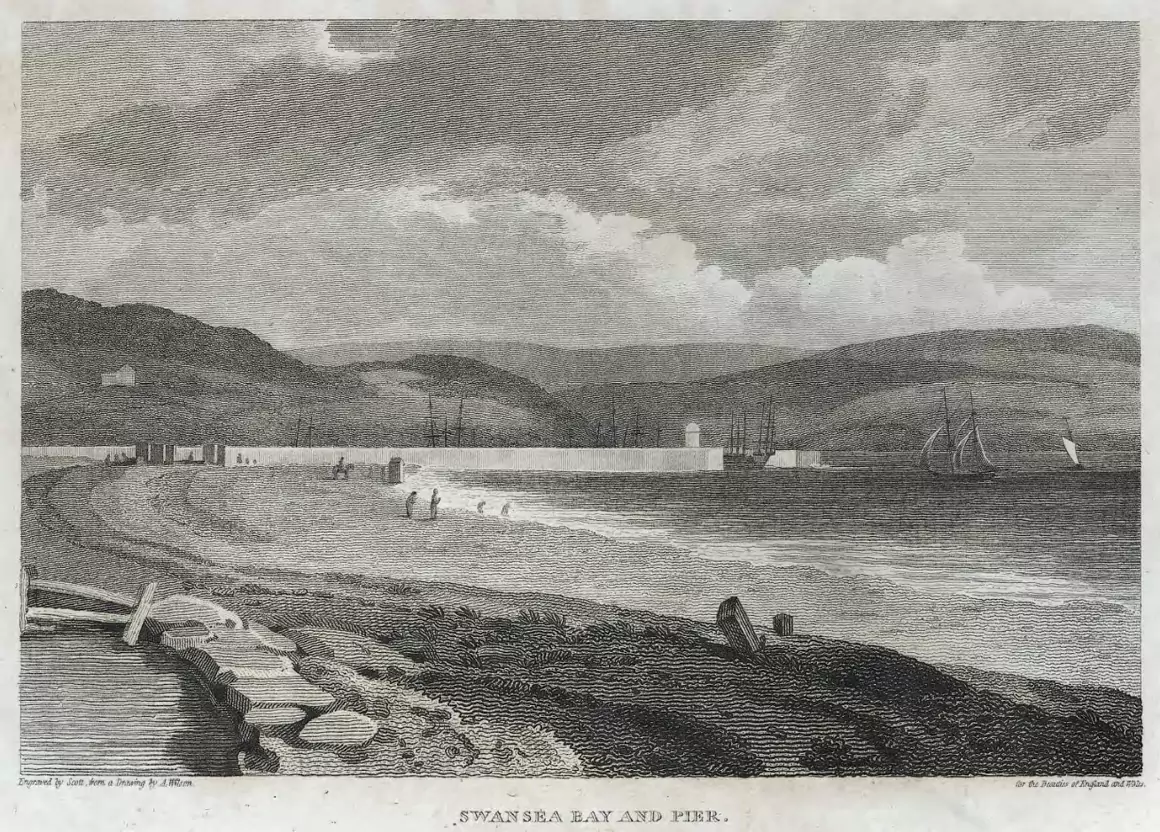
Swansea Bay and Pier in the 19th century – the place where Martha Ann Nash died in December 1885 [1]
Eliza kept on looking after the girls but was getting irritated by Nash’s evasions. She then saw him on the road to Morriston and again he said he would come to fetch the girls. She told him “I can’t possibly afford to keep them. It is more than I can do.”
Again he didn’t collect them, so she decided to take matters into her own hands.
It was 5 December 1885 and Friday was payday for Corporation workers and Eliza took Martha down to the Townhall. Confronting him at the pay office she gave Nash two things – his daughter and a bill for £1 16s 2d. He promised he would pay the bill on Saturday.
“Shall I come home with you Mrs. Goodwin?” asked Martha.
“No my dear. You must go with your father.”
That was the last time Eliza ever saw Martha alive.
Nash’s problem went a little further than mere finance. He’d moved out in order to get married on 16 November 1885. “Margaret Bowen. 27. Spinster.”
He hadn’t told Margaret that he had any children.
Obviously he had no idea how to deal with the situation in which he found himself. It would have been one thing to suddenly admit to a daughter called Sarah who was now out at work. But it would be something else entirely to produce a little six-year old, dressed in “a little red turn-over, straw hat, pinafore”. She was not the sort of detail that you could forget.
You can see that he had no idea what to do.
It was a wild night, with a howling wind and waves crashing over the pier as all the witnesses would testify. Nash left the pay office and walked hand in hand with Martha on to Swansea pier. The tide was high.
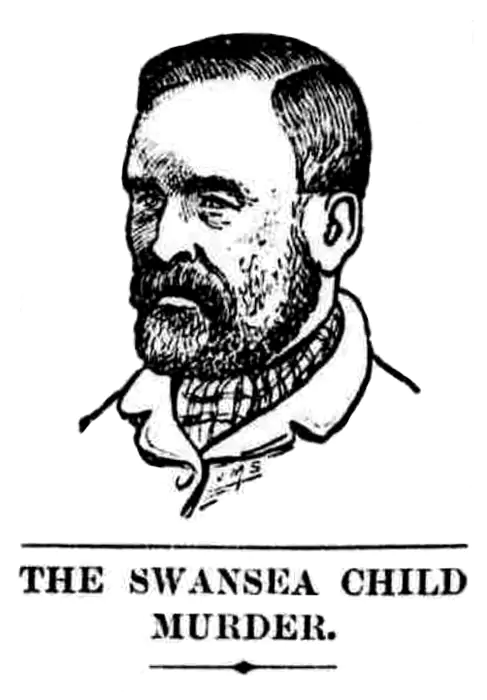
An artists impression of Thomas Nash
Two men, Owen and Fender were watching.
We thought it was strange to see a man and child out on the pier on such a night.
It was not an occasion for taking the view. The only reason they were there was because they were working.
Then moments later they saw Nash alone, jumping down on to the sand.
Where was the child?
They chased after him and asked. “She is on the top” he said.
If this was the case then why he had left her there? Fender and Owen decided they should keep hold of him until the police arrived.
Nash then said that he’d left Martha under the pier.
Clearly suspicions they were starting to form were being re-enforced, especially when Nash himself tried to walk into the sea. They restrained him and Nash became silent and would not speak.
When PC 41 Davies arrived he changed his story once again. He now said he’d put Martha on the rail of the pier in order to carry her on his back and she had fallen off. Then he became silent again.
A short while later they found her, drowned, close by the bathing machines.
There was nothing much else to say. Nash was arrested and searched. In his pocket they found 19s 6d and Eliza’s bill.
The due processes of the law dissected the details minutely but there was little else to be revealed. No one else involved. No other interpretation of events. Open and shut.
Throughout the proceedings Nash said nothing, “maintaining a dejected attitude”. He refused representation at any of the preliminary hearings. Whether he threw little Martha off the pier or not, his reactions to her disappearance condemned him. He hadn’t beaten her – there were no marks on her body – but if he had wanted to put her on his back, he could either have lifted her directly or used the seats on the pier. He had shown no alarm when first confronted about her disappearance, then given conflicting accounts.
It was either murder or it was nothing.
It was murder. He was guilty. He was condemned to death.
There can be no doubt that he was bewildered by the position he found himself in and his behaviour in court would support this.
Who can really say what happened? It is hard to believe he picked her up and threw her into the sea. Perhaps he did sit her on the rail whilst desperately seeking a solution in his mind and she fell off. His explanation is so feeble that it could quite possibly be true. Attempts to win a reprieve were doomed, given the nature of his crime. That picture of a little girl dead on the beach was sufficient. Throughout his imprisonment Thomas Nash received no visitors, other than Sarah. His new wife seems to have vanished. He was a lost and abandoned man.
He was hanged on Monday 1 March 1886, with a crowd estimated at 4000 waiting outside Swansea prison for the black flag to be hoisted, despite a heavy snowfall overnight.
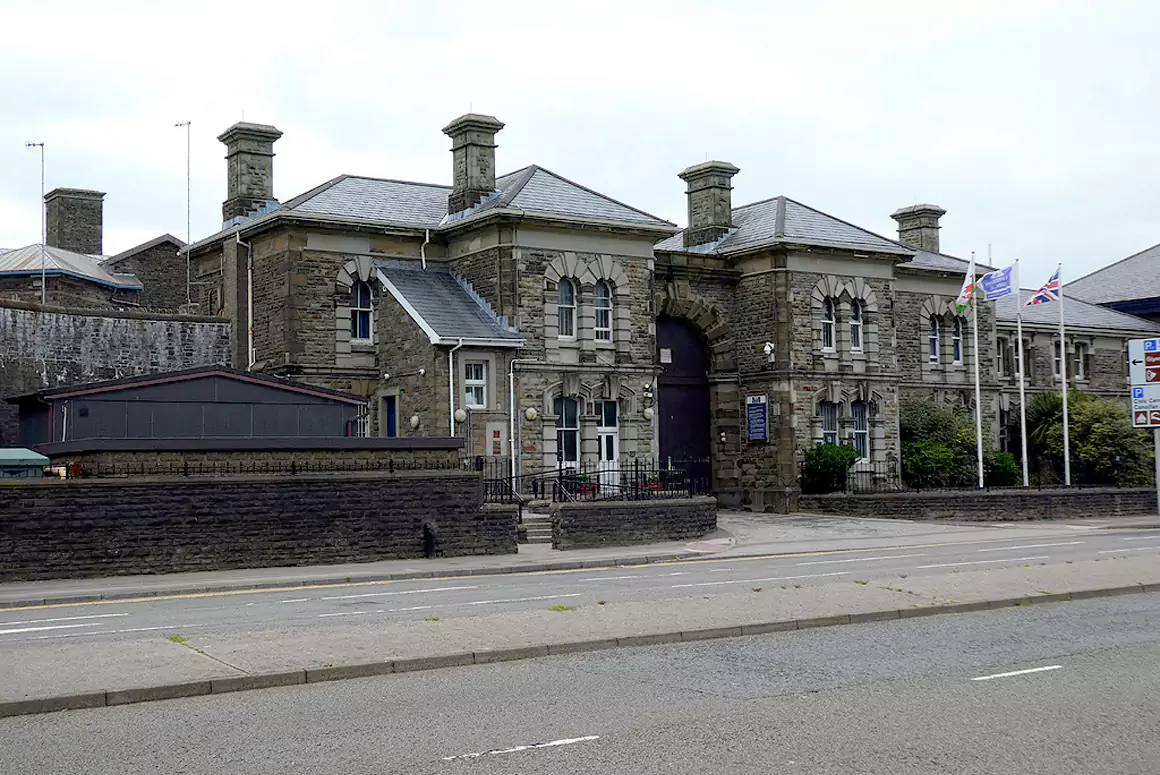
Thomas Nash was executed at Swansea Prison on 1 March 1886 [2]
Nothing marks where Nash was buried. And there is today no sign of where Martha was buried either. Poor Martha, innocent but unwanted, an inconvenience, a victim. She was destined for a pauper’s grave until the neighbours stepped in. “In every sphere of life there beat some noble hearts”. Those who had known Martha Ann’s mother, rallied round. Mrs. Miles and Mrs. Boys collected the money and Mrs. Davies, who lived opposite the grocer Mr. Lewis, “took the little corpse into her house…where dozens of the children who had known the deceased took occasion to look at her in her little coffin where she lay more as if sleeping than the victim of a fearful tragedy.” She then went by procession to Llangyfelach church where she was buried with her mother.
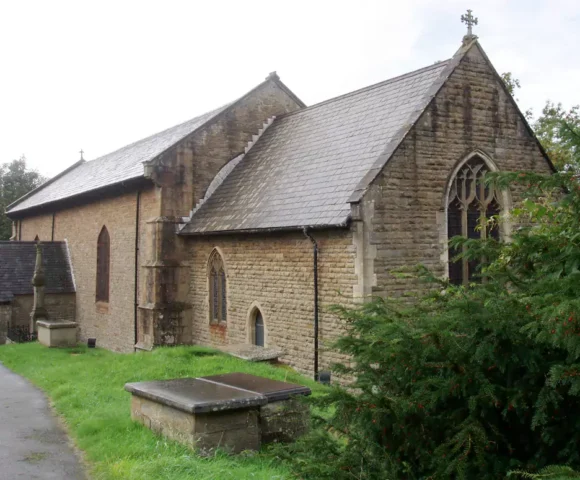
- St. David’s Church in Llangyfelach [3]
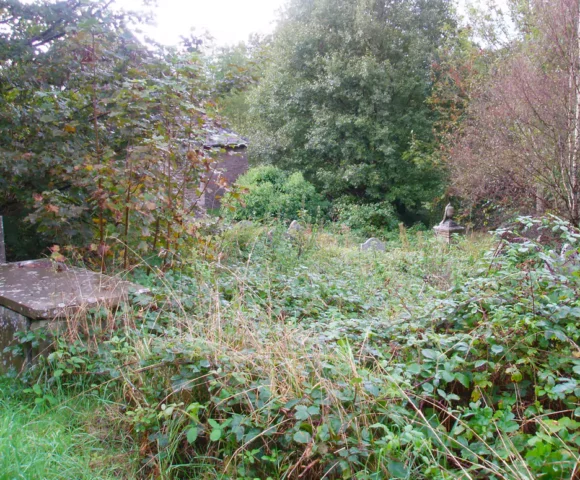
- The overgrown cemetery at St. David’s Church [4]
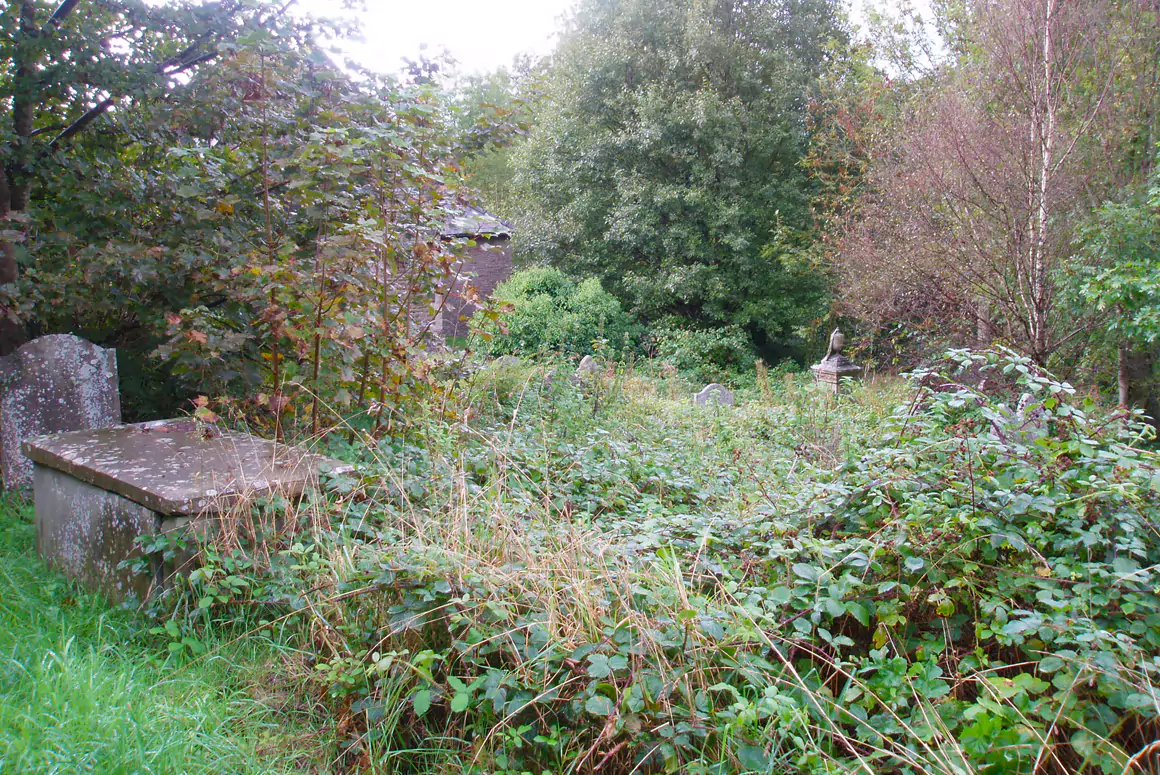
Today the location of both of these tragic figures, father and daughter, has been lost. Swansea Prison can’t be sure where they put Thomas and the vicar of St. David’s in Llangyfelach has no record of where Martha now rests with her mother. Wherever you look in that tangled mass of undergrowth there are crumbling tombstones and unmarked graves. One of them is hers.
Words: Geoff Brookes
Images:
Feature image: St. David’s Church in Llangyfelach, Geoff Brookes
[1] National Library of Wales, Public Domain, Source
[2] HMP Swansea by John Lucas, CC BY-SA 2.0, Source
[3 & 4] Geoff Brookes