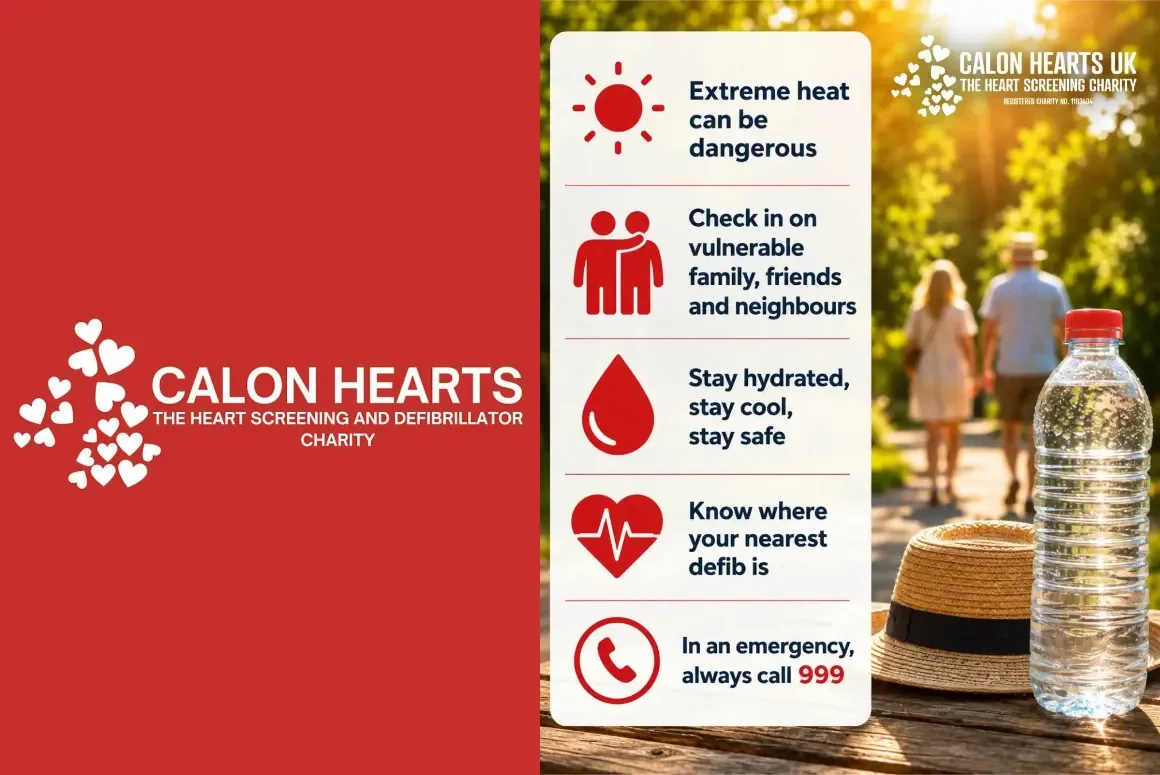
With another spell of hot weather forecast across Wales later this week, Calon Hearts is urging people to take extra care of their heart, reminding the public that high temperatures place additional strain on the cardiovascular system. The warning comes as temperatures in parts of Wales are forecast to exceed 30°C later this week.
While many people think about sunburn or dehydration during a heatwave, fewer realise that the heart has to work significantly harder to keep the body cool.
When temperatures rise, blood vessels widen to release heat through the skin, causing the heart to pump faster and harder to maintain blood pressure. At the same time, sweating reduces blood volume and depletes essential salts, placing further demands on the cardiovascular system.
For most healthy people these changes are temporary. But for those living with heart disease, high blood pressure or an undiagnosed heart condition, prolonged periods of hot weather can increase the risk of complications.
Sharon Owen, Founder and Chief Executive of Calon Hearts, said:
“Most people associate a heatwave with sunburn, dehydration or feeling uncomfortable, but many don’t realise just how much harder their heart has to work in hot weather.
“As your body tries to cool itself, your heart has to pump more blood around your body, your heart rate increases and you lose fluids and important minerals through sweating. For some people, particularly those with underlying heart conditions, that extra strain can become significant.
“The good news is that there are some simple steps people can take to protect themselves and those around them.”
Calon Hearts is encouraging people to:
- Drink plenty of water throughout the day and avoid becoming dehydrated.
- Stay cool by seeking shade or spending time indoors during the hottest part of the day, particularly between 11am and 3pm.
- Wear lightweight, loose-fitting clothing.
- Take regular breaks if exercising or working outdoors.
- Check in on elderly relatives, neighbours, friends and anyone with an existing heart condition or other health concerns.
- Know where your nearest publicly accessible defibrillator is before an emergency happens.
- Always call 999 immediately if someone collapses or is experiencing a suspected cardiac emergency.
The charity is also reminding people not to ignore warning signs.
Sharon added:
“Feeling a little tired in hot weather is pretty normal for most people, but symptoms such as persistent palpitations, chest pain, severe breathlessness, dizziness or fainting should never be dismissed as ‘just the heat’.
“If symptoms are severe or don’t improve, it’s important to seek medical advice. Early assessment could make all the difference.”
Every week in the UK, at least 12 young people lose their lives to undiagnosed heart conditions, while recent research has shown that around one in every 300 young people screened is found to have a potentially life-threatening heart condition that may otherwise have remained hidden.
While most people will never need to use a defibrillator, knowing where the nearest publicly accessible device is before an emergency happens could save valuable time. In the event of a cardiac arrest, early CPR and defibrillation can dramatically improve a person’s chance of survival while waiting for the ambulance service to arrive.
As Wales prepares for another spell of hot weather, Calon Hearts is reminding anyone with a family history of heart conditions, unexplained symptoms or concerns about their heart health is encouraged to seek medical advice and consider a heart screening. The charity provides free heart screening for young people aged 15½ to 26, with subsidised screening available for those aged 27 and over at locations across Wales throughout the year – more details at calonhearts.org