Pembrokeshire Hedgebank could be classed as the ultimate boundary feature, and Meadow Creations create the very best.
As one wanders around the United Kingdom you can see many walls including the Lake District the Cotswolds and indeed North Wales but most of these are drystone walls. Yes they enclose livestock or even people and can look wonderful but lack biodiversity.
The Pembrokeshire Hedgebank also does the job of enclosing or keeping out larger animals be that farm livestock or humans but because of its construction creates a home for a wonderful range of flora fauna and often insects and small animals. They have the most incredible history which we consider later in this article.
The most common construction of the Pembrokeshire Hedgebank is to produce a tapered structure that is ‘battered’ (faced) with stone. Where a drystone wall is layered stone on stone, in a hedgebank the stones are separated by turf bedding. The stone typically gets smaller as you go up the side of the bank.
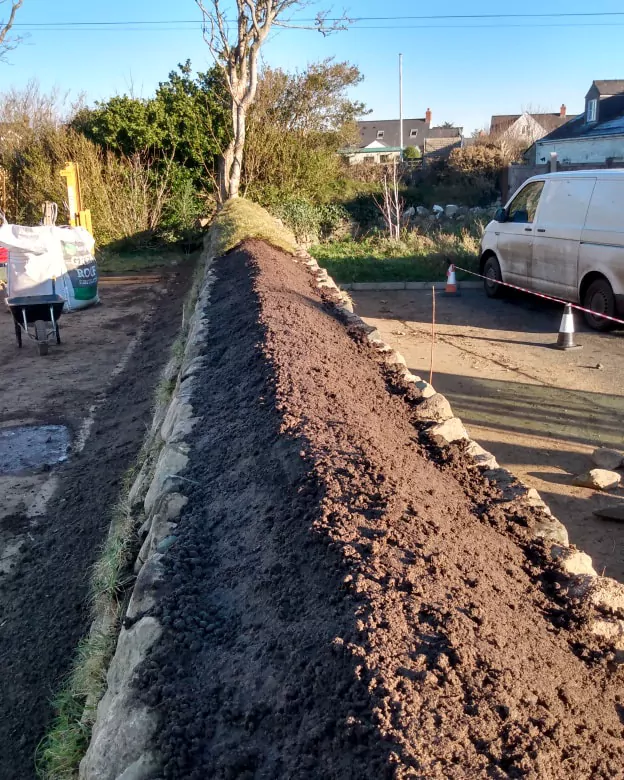
Within the wall itself normally the lower half uses a free draining material with topsoil type aggregate to enable planting of native species along the apex of the bank be that small trees shrubs or in some cases turf.
Meadow Creations carried out a trial for a client to check this biodiversity of a wall helping to create better ecology within a hospitality business, this proved successful and as a consequence work commenced.
Trevor Bendall from Meadow Creations told Welsh Country
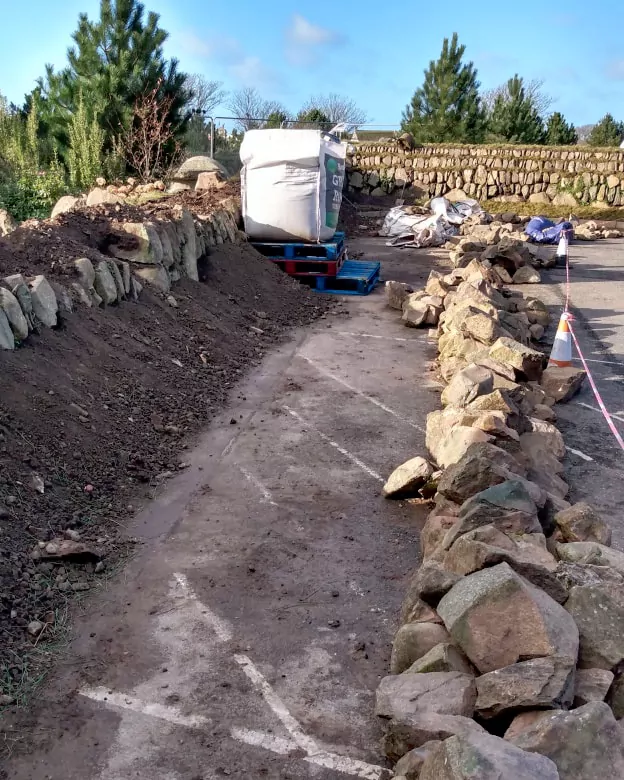
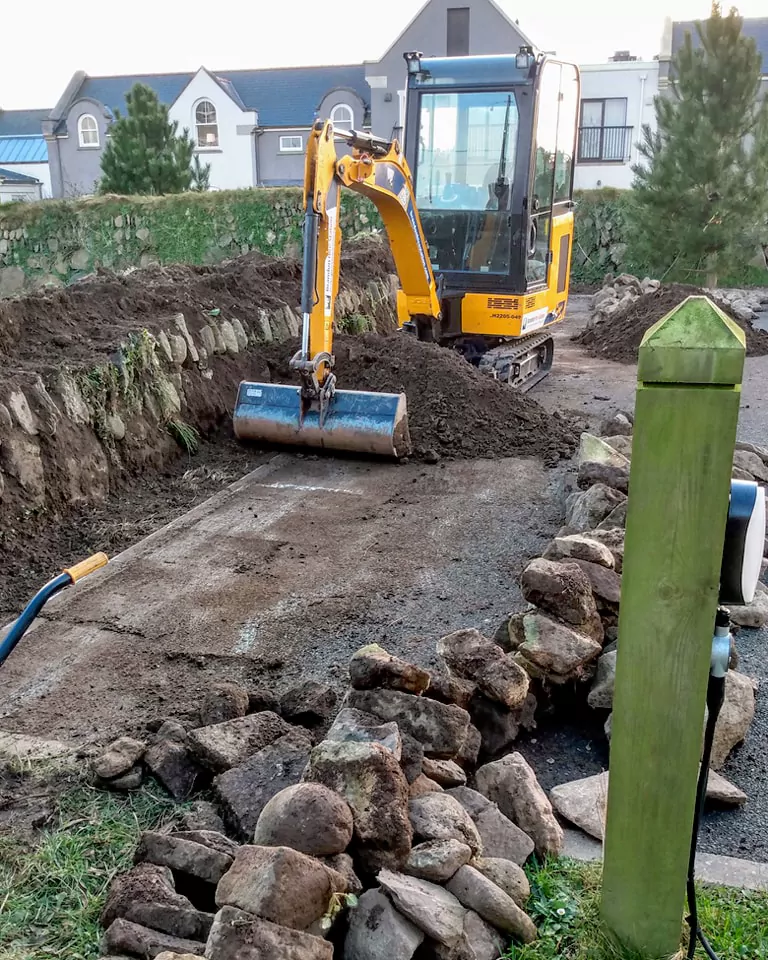
“Work continues on the hedgebanks deconstructing and removing the debris. Debris removed this week has included tarmac, kerbstones and old grease cartridges amongst other things! The centre of the wall is refilled with a substrate suitable for supporting wildflowers
Now we have built probably the best stretch of hedgebank wall in any staff car park in Pembrokeshire! Looking forward to seeing it in flower this summer, though the second stretch is progressing slower owing to the current weather conditions.
Indeed you could say we have torn the rule book up a little! regarding the construction of the walls on the current project at hospitality venue by using the substrate to retain moisture to support the wildflower turf we are installing along the top of the wall.. With the changing climatic conditions these walls are prone to dry out extremely quickly.
Flora does thrive on the traditional hedgebanks where they are situated on the coastal paths around Pembrokeshire you will see Thrift, vetches and other Coastal Wildflowers at their best.”
Just to prove that hedgebanks can come in all different shapes and sizes remember the article about what is really an earth bank that was published on the Welsh Country website at www.welshcountry.co.uk/meadow-creations-pembrokeshire-hedgebank/
Some historical and ecological notes about the Pembrokeshire Hedgebank.
Most hedgebanks are historic boundary features and can be identified on Tithe Maps which were common around the times of the enclosure act in 1845.
But with tithes being used from the dark ages it is assumed that hedgebanks can be much older than the mid 19th Century. This is especially true in Pembrokeshire when considering field sizes before this date.
The structural resilience of Pembrokeshire hedgebanks has resulted in their long-term retention to produce a valuable, interconnected ecological habitat. The establishment of trees and woody species on the banks; are also only a part of the ecological benefit afforded by hedgebanks. When thinking of the native and often used species such as Blackthorn Hawthorn Crab Apple and Holly all have fruits that create food sources for both birds and mammals. The alternative is as shown with the wall construction from Meadow Creations is the use of turf specifically in this case a wildflower turf bringing natural added colour to the hedgebank over summer.
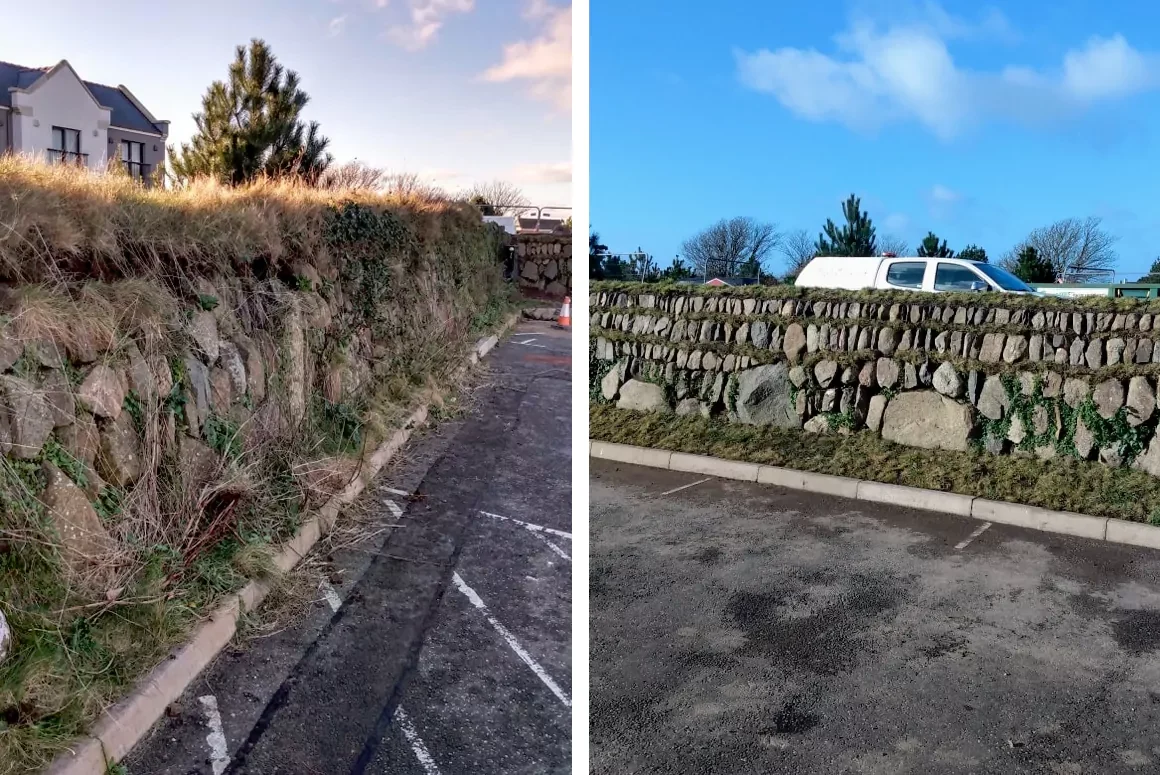
Visit: meadowcreations.co.uk | Feature image: Green Wall before and after.