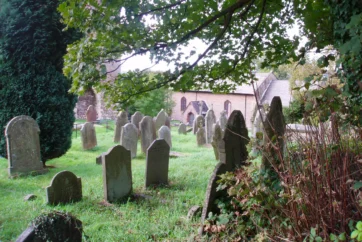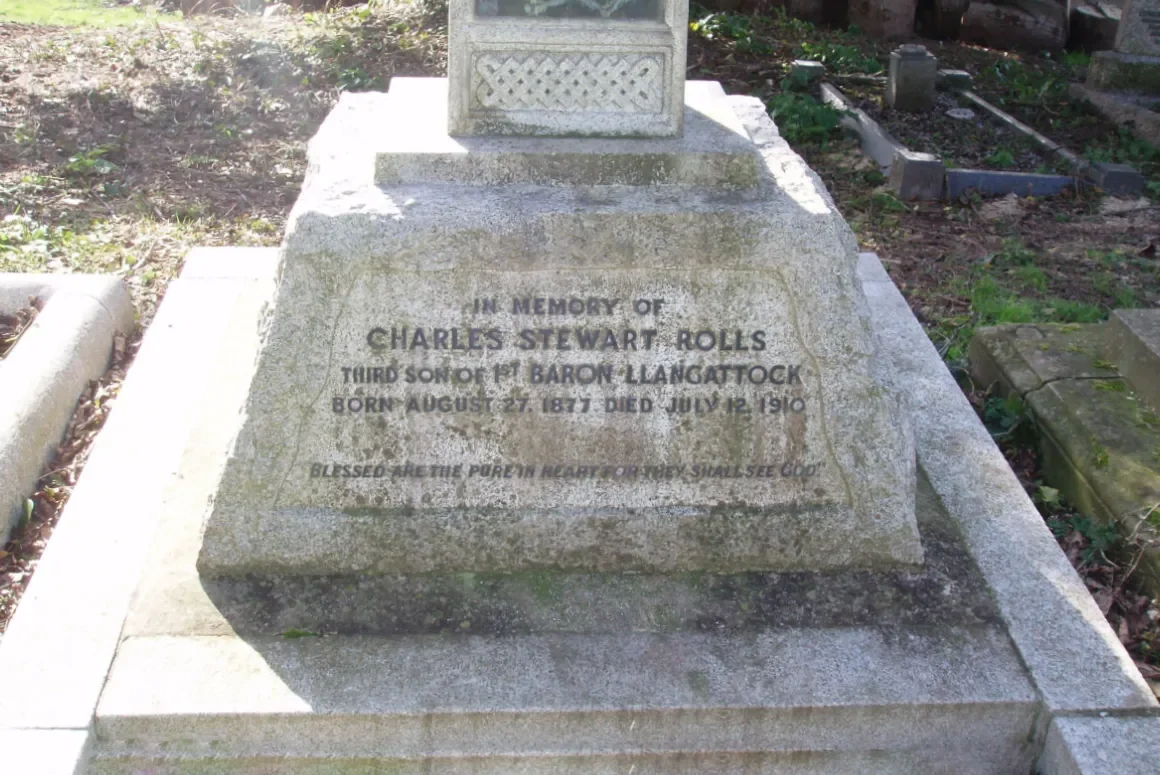
It is a long way down the hill to the stunningly beautiful church of St. Cadoc, just behind the impressive family home, Hendre, the “winter dwelling.” A gentle, prosperous place. Timeless and untroubled. Enter the church yard and look up the hill to the left and you will see three Celtic crosses. Some of the graves here are showing signs of wear but not these three. Mother, father and their son. And when you go up to face them, the one on the right marks the grave of one of the most famous names in British Engineering. Charles Stewart Rolls.
There is also a statue of him in the centre of Monmouth, overlooking the traffic, in front of the statue of Henry V. He stands in the middle of all the bustle, holding an aeroplane, for flying was his last and greatest love. It is also what killed him.
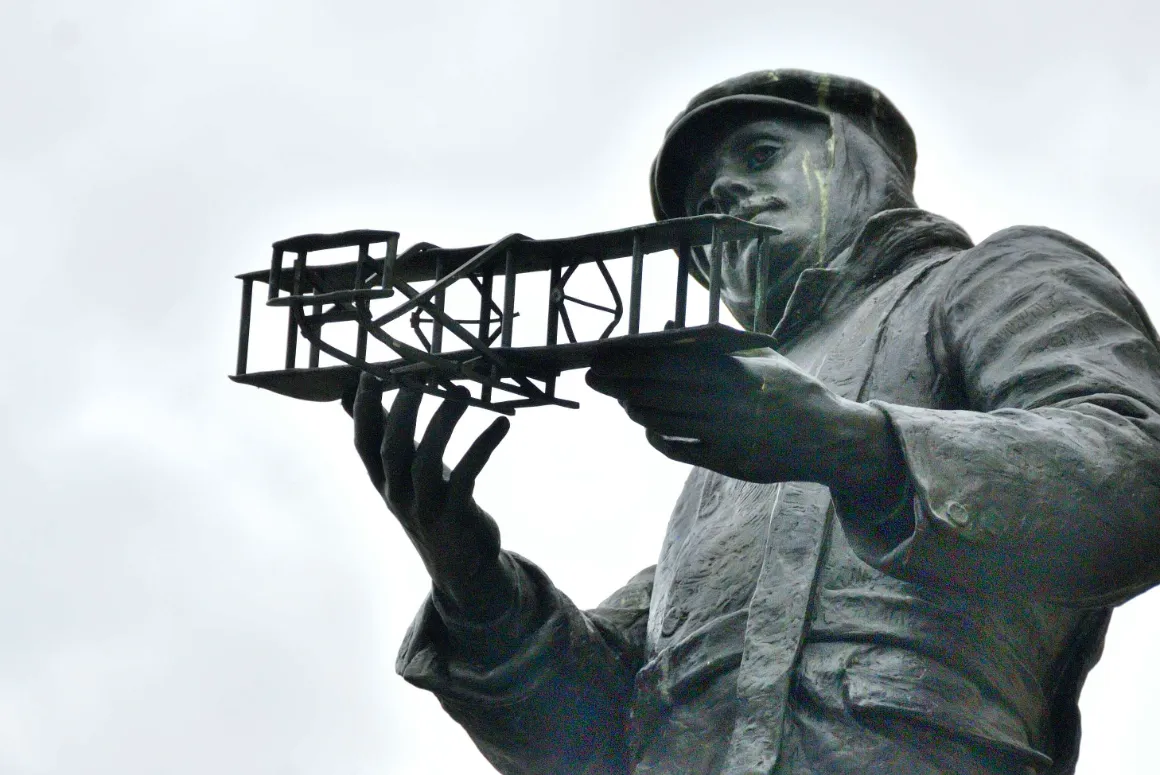
Charles Rolls with a model of his Wright biplane outside Monmouth Shire Hall [1]
He was born into money and privilege, in Berkeley Square in London in August 1877. He was the third son and as such was not set for inheritance. He had to find his own way. And he did. He became a household name, representing daring, excitement and excellence.
There are those who speculate that his future partner, Frederick Royce, actually delivered birth congratulations telegrams to the family since he was working as a post office messenger at the time, but there is no evidence to suggest that this happened. But there is certainly no doubt that Charles had money. His father, John Rolls, was a justice of the Peace and High Sherriff of Monmouthshire. Later he became Baron Llangattock of the Hendre. Like many boys from such a privileged background, Charles went to school in Eton. His interest in technology and engineering was present from an early age. In fact, before he went up to Trinity College in Cambridge he installed a dynamo at Hendre and wired part of the house. He loved boys things. And in October 1896 one of the most significant events in his life took place when he went to Paris. With his father’s help he bought a Peugeot Phaeton, the first car ever in Cambridge. As a result he became known as “Petrolls”, for he couldn’t leave his new toy alone. This enthusiasm was to shape his destiny.
In fact as a student he joined with others across the country to break the law that restricted cars to 4 mph. As a result of this defiance the limit was increased to 12 mph. After his graduation in 1898 he worked in the railway workshops at Crewe but his main passion remained cars. He began importing French cars and in one of them in 1903 he established a world land speed record of 93 mph in Dublin. His company began in Fulham but soon had showrooms in Mayfair. He was described as an “automobilist” and his adventures in these early days of driving included driving overnight from London to Cambridge and then from Knightsbridge to The Hendre in time for Christmas. A day trip for us on motorways. An adventure on coach roads back then.
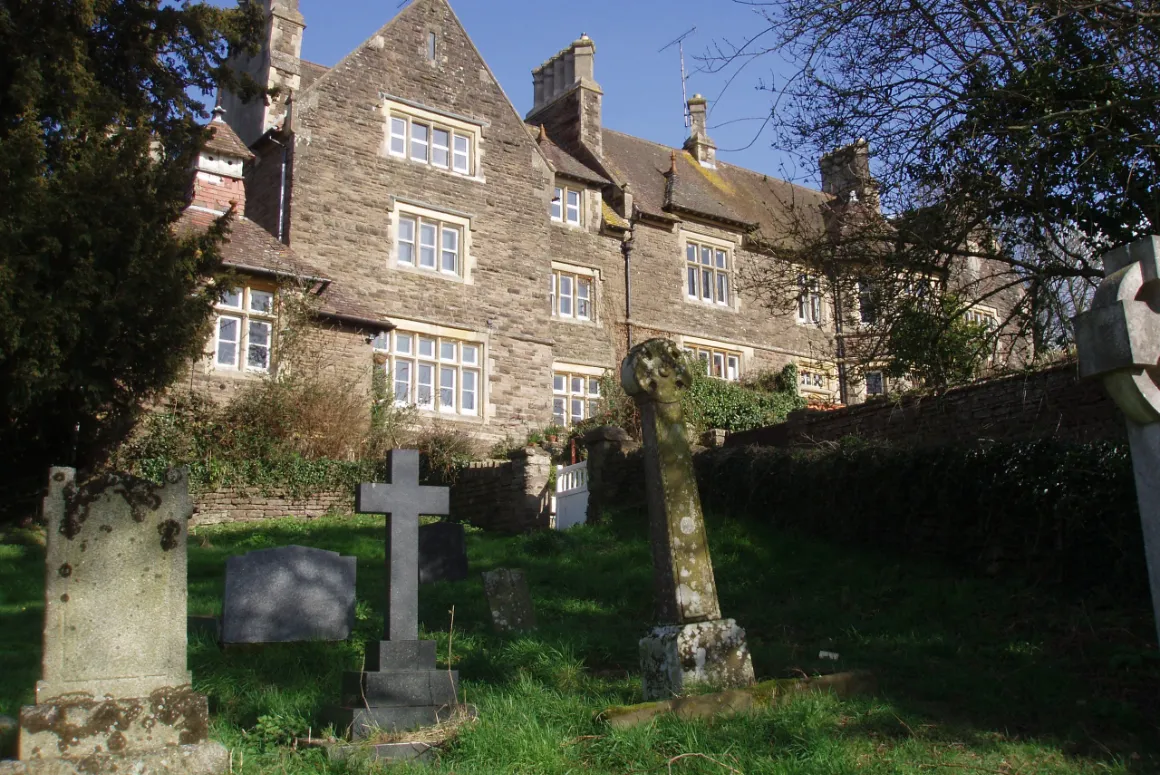
Rolls' House [2]
It was the following year in the Midland Hotel in Manchester in 1904 he was introduced to Frederick Royce. This was a significant and life changing moment. Royce had been Chief Electrical Engineer responsible for a street lighting scheme in Liverpool and had started his own business selling electric cranes and dynamos. But he was looking for a means of expansion into the developing motor industry. He too started with French cars, making adaptations and modifications and was soon making his own. Legend tells us that on his return to London, Charles told his business partner “I have found the greatest motor engineer in the world.” He agreed to take the whole car output of Royce Limited which would then be sold exclusively by Rolls under the name of Rolls Royce. The two men had so little in common. Their backgrounds and their abilities were entirely different and yet they became partners and good friends. Their reputation was quickly established as the manufacturers of high quality cars.
Charles Rolls successes in various motoring competitions promoted the reputation of their cars. The 1907 Scottish Reliability Trial involved driving 15,000 miles after which any worn parts were replaced. The Silver Ghost won with necessary replacements cost just over £2. As a result the motoring press described it as “the best car in the world” and the reputation of Rolls Royce was sealed.
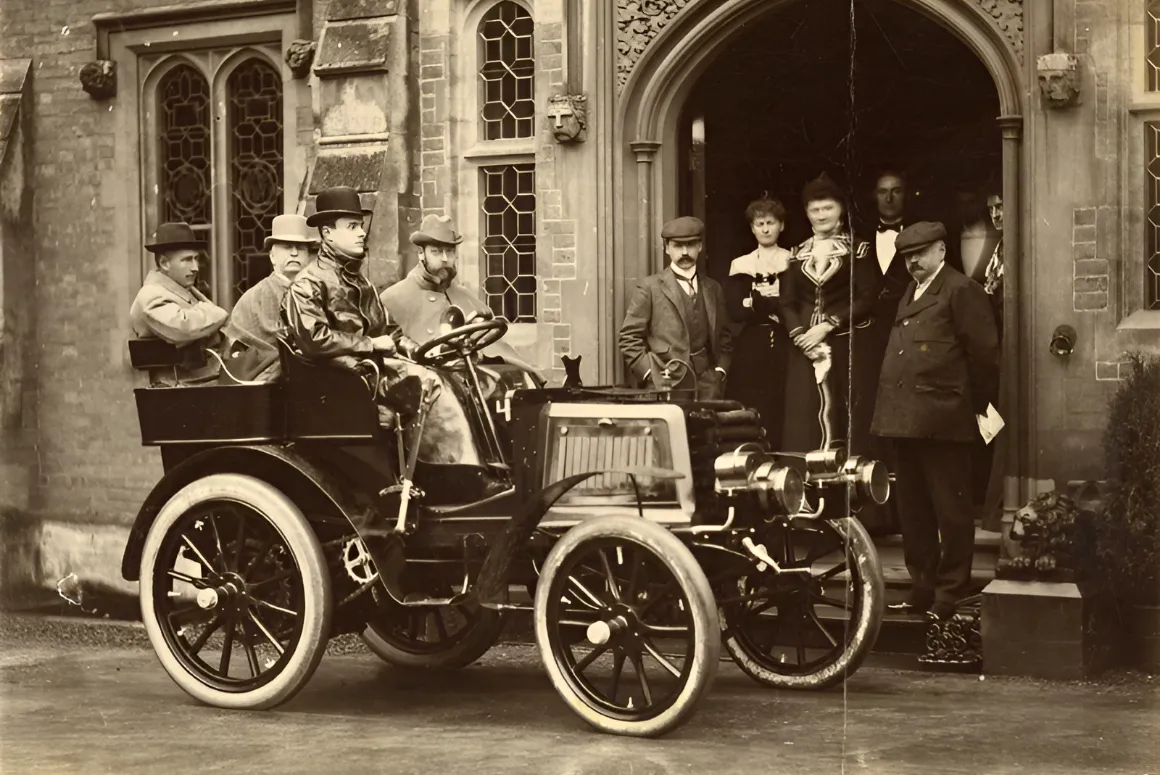
C. S. Rolls driving the Duke of York accompanied by Sir Charles Cust and Rolls' father, Lord Llangattock, at 'The Hendre' [3]
However Charles’ sense of adventure was taking in a new direction. He became very interested ballooning and then in powered flight. He established links with the Wright Brothers and, when he went to Le Mans to meet them in 1908, he was taken up in a plane for the first time. He was hooked. He devoted his time to aviation and was the second person to be awarded a pilot’s licence by the Aero Club in March 1910. His greatest flight was a few months later on 2 June 1910 when he made the first flight from England to France and back again, non stop across the English Channel. He was a national hero, for these things were important in those times. He “electrified the entire kingdom” by his exploits, so the papers said.
But six weeks later he was dead. The newspaper headlines summed it up perfectly.
Daring Aviator Dashed to Death.
Hon. Chas. Rolls Instantly Killed at Bournemouth in the presence of Spectators.
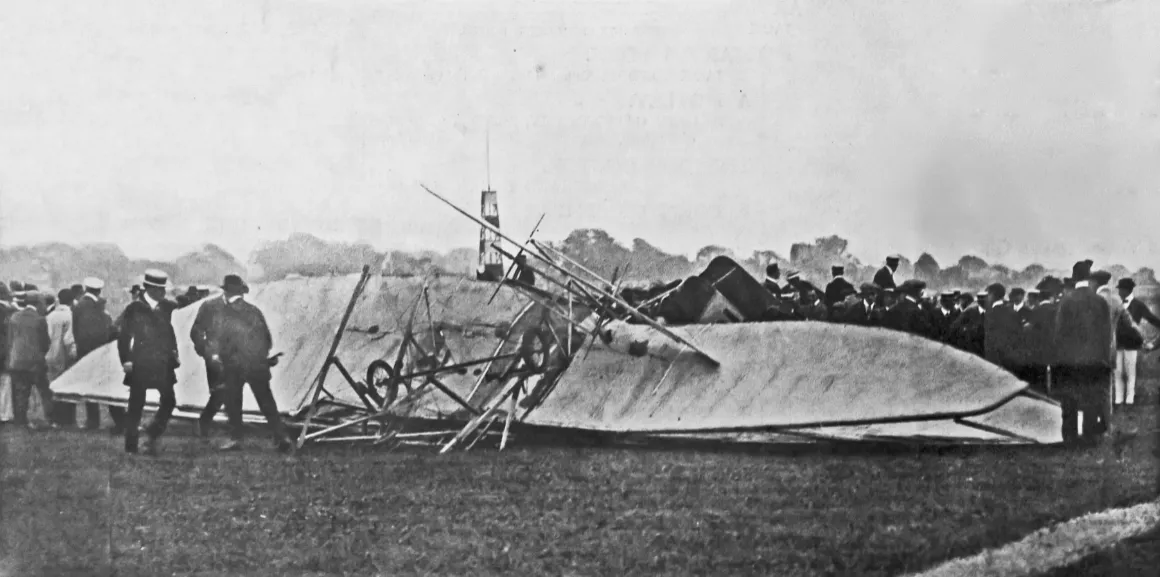
The wreckage of the plane crash which killed Rolls [4]
It was a flying tournament. Who could land their plane nearest to a given mark which was right in front of the grandstand. He was flying a Wright’s bi-plane which had been modified without authorisation. The tail piece snapped off and the framework crumpled. It fell from about 100 feet in the sky and shattered completely on impact. When they eventually dragged him from the tangled wreckage they found that Charles had fractured his skull. Such was his fame that speeches were interrupted in the House of Lords to announce his death.
The press indicates that he is the twelfth victim of the “Science of Aviation”. He was also the first Briton to die in an air accident. Unfortunate claims to fame that he would not have welcomed.
The link between Rolls Royce and the aeronautics industry that has always flourished was created by Charles Rolls. His aristocratic sporting enthusiasm shaped the future of the company and established the importance of the industry. His achievements were immense.
In his short life Charles Rolls gave a tremendous boost to both motoring and aviation. Furthermore he contributed significantly to the belief that the Government needed to invest in the aeroplane technology in order to guarantee national security. He could see the possibilities as early as anyone else.
This is one of the graves that we have found that truly represents a lovely day out. It is in a wonderful location. It is ironic but it is only the recognition of death that takes you out into the life enhancing beauty of the countryside.
Leave Monmouth on the B4233 towards Rockfield and then follow the B4347 towards the village of Newcastle. It is an unspoiled part of the country., peaceful and green and these are narrow quiet lanes. About two miles out of Rockfield there is, on the left of the road, a simple wooden signpost indicating “Church”. Park here carefully, for the road is narrow, and then walk down the path, past the house and down to the sheltered church. The link between house and church are clear.
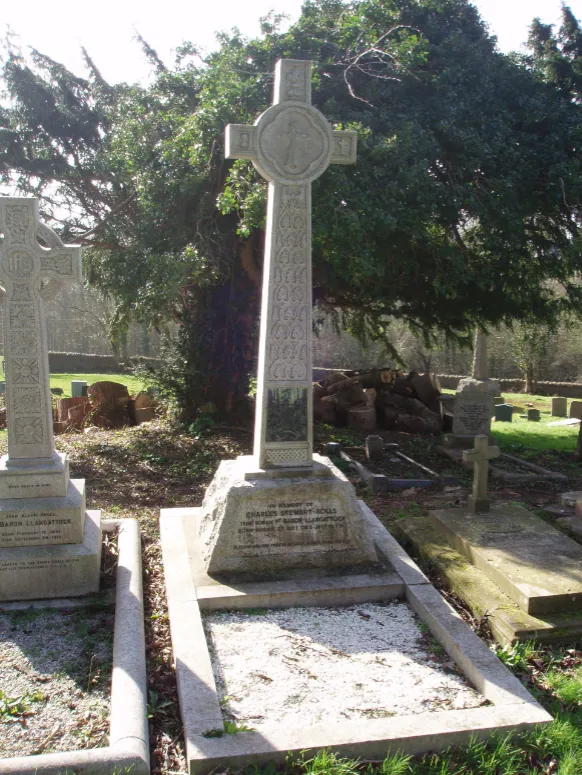
Rolls grave [5]
There is a little white gate in the wall through which the family would walk down easily from Hendre to the services, past the place where they now rest.
The views here are beautiful and the church has a long and distinguished history. It is hard to imagine that in this isolated spot you will find the grave of a pioneer, a man famous throughout the world. The constant peace of this house must have been a huge contrast with the noise and excitement of the aeroplanes that he flew.
He died too young. There were so many other things that he wanted to do. There is real sadness in this too-early death, but his place in history is assured.
Inside the porch of the church there is a stone in memory of John Powell who died in 1816 aged 73. And the words on the stone are highly appropriate.
Praises on tombs
Are trifles vainly spent.
A man’s good name
Is his own monument.
Charles’ tomb has a simple inscription.
“Blessed are the pure in heart for they shall see God.”
And Charles was pure. Pure and faithful to his spirit of adventure. And his name, forever associated with the very best of British engineering, has indeed been his most significant monument.
Words: Geoff Brookes
Images:
Feature image: Geoff Brookes
[1] Bob Crowther – Monmouth Shire Hall, CC BY 2.0, Source
[2] Geoff Brookes
[3] The National Archives UK – Flickr: The Original Rolls, Public Domain, Source
[4] The Illustrated London News – From a newspaper displayed in the Monmouth Museum, Public Domain, Source
[5] Geoff Brookes