Welsh farmers invited to share their experience of artificial intelligence and digital technologies with researchers in the net zero transition
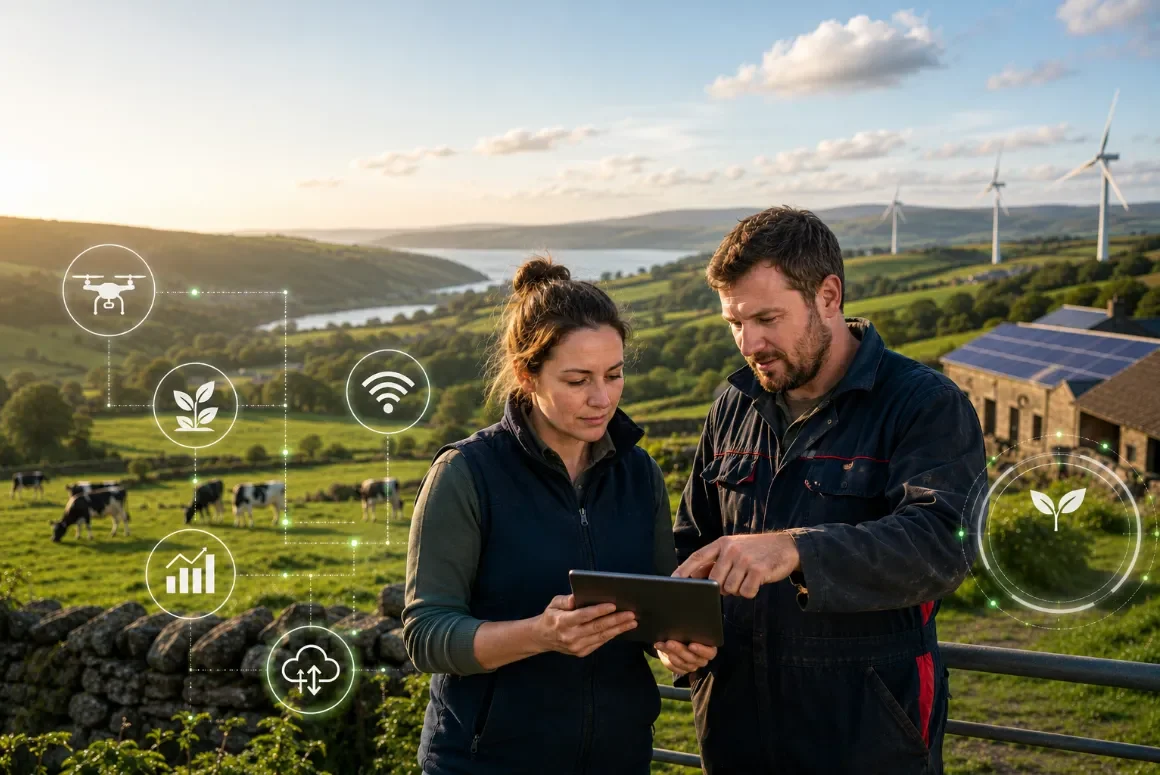
Farmers, land managers and industry stakeholders across Wales are invited to take part in new research exploring how artificial intelligence (AI) and digital technologies can support the transition to net zero agriculture.
Led by Bangor University and the Countryside & Community Research Institute (CCRI) at the University of Gloucestershire, the study aims to better understand how digital tools are shaping everyday farming practice and how they might contribute to improving sustainability across Welsh agriculture.
The project forms part of the Cymru Wledig LPIP Rural Wales (Local Policy and Innovation Partnership), a collaboration between universities, communities and stakeholders working to strengthen the evidence base for more inclusive and sustainable rural development.
The research, which is funded by UK Research and Innovation (UKRI), will explore how AI and other technologies are currently being used on farms in Wales, as well as the opportunities and challenges they present.
It will also examine the skills, knowledge and support that farmers and land managers may need to make effective use of these tools, and how emerging forms of digital expertise sit alongside long-standing practical and experiential knowledge within agriculture.
Participants can take part in a number of different ways, including joining:
- An online focus group for industry stakeholders on July 1, between 2pm and 3.30pm;
- An in-person focus group for farmers at the Royal Welsh Show on July 22, from 9.15am – 11.00am;
- An online focus group for farmers on August 4, from 12pm and 1:30pm
The team is particularly keen to hear from farmers who are already using digital tools or AI in their day-to-day work and may be willing to host a visit. These walk-and-talk interviews will provide an opportunity to explore how technology is used in real-world settings and how it fits within everyday decision-making on farm.
Sophie Wynne-Jones, Senior Lecturer in Human Geography at Bangor University, said:
“This research is about learning directly from farmers and land managers about what is already working in practice, as well as understanding the challenges. Their insights will play a vital role in shaping future support and policy.”
The findings will contribute to future policy and support for the agricultural sector in Wales, helping to ensure that the transition to net zero is grounded in the experience and knowledge of those with practical and lived experience.
Farmers who take part in focus groups will be offered a small token of appreciation in recognition of their time.
Those interested in taking part or finding out more are encouraged to contact the research team directly, either by contacting Aimee Morse, amorse1@glos.ac.uk or Elen Bonner, elen.bonner@bangor.ac.uk