The grave of Henry Marten is just inside the door of St. Mary’s Church in Chepstow. As you walk in, his gravestone is under your feet, hidden by a red carpet, as if his presence were an embarrassment; as it might well be, for this is a man who killed his king.
You can stand alongside the notices and the cards and the chest collecting donations for church funds and you can roll back the red carpet. Underneath, you will find that his inscription is rather worn, but you can work it out, with patience: ‘Here was buried a true Englishman, who in Berkshire was well known…’ And in Chepstow, too; the notable resident of its castle; a man who turned a castle into a home.
In good seventeenth-century tradition, his epitaph is a bit of a joke, an acrostic poem. The first letter of each line spells out his name. He probably enjoyed working it out like this. It was clearly worked out a long time in advance, for death took him completely by surprise, at dinner. He probably wouldn’t have minded too much. Henry Marten was always a man for enjoying himself.
Here or elsewhere (all’s one to you, to me,)
Earth, air or water, gripes my ghostless dust,
None knows how soon to be by fire sett free,
Reader, if you an oft tryed rule will trust,
You’ll gladly do and suffer what you must.
My life was spent with serving you, and you,
And death’s my pay (it seems) and welcome too,
Revenge destroying but itself, while I
To birds of prey leave my old cage, and fly,
Examples preach to th’eye, care then (mine says)
Not how you end but how you spend your dayes.
He had an eventful life and a dramatic one, for what he did put him and others beyond redemption. Yet Henry Marten got away with it. Everyone knew him. He never hid himself away. Everyone had an opinion about him. And he was a survivor when he had no right to be.
He was never Welsh. He was an Englishman, through and through, and played a huge part in one of the most significant events in our past. Yet he is buried in Wales. We have a responsibility to remember the remarkable part that he played in history, for it was this that brought him to us. Marten was a man who lived through tumultuous times, times that he graced with his forthright opinions and his free spirit, unmoved by public opinion.
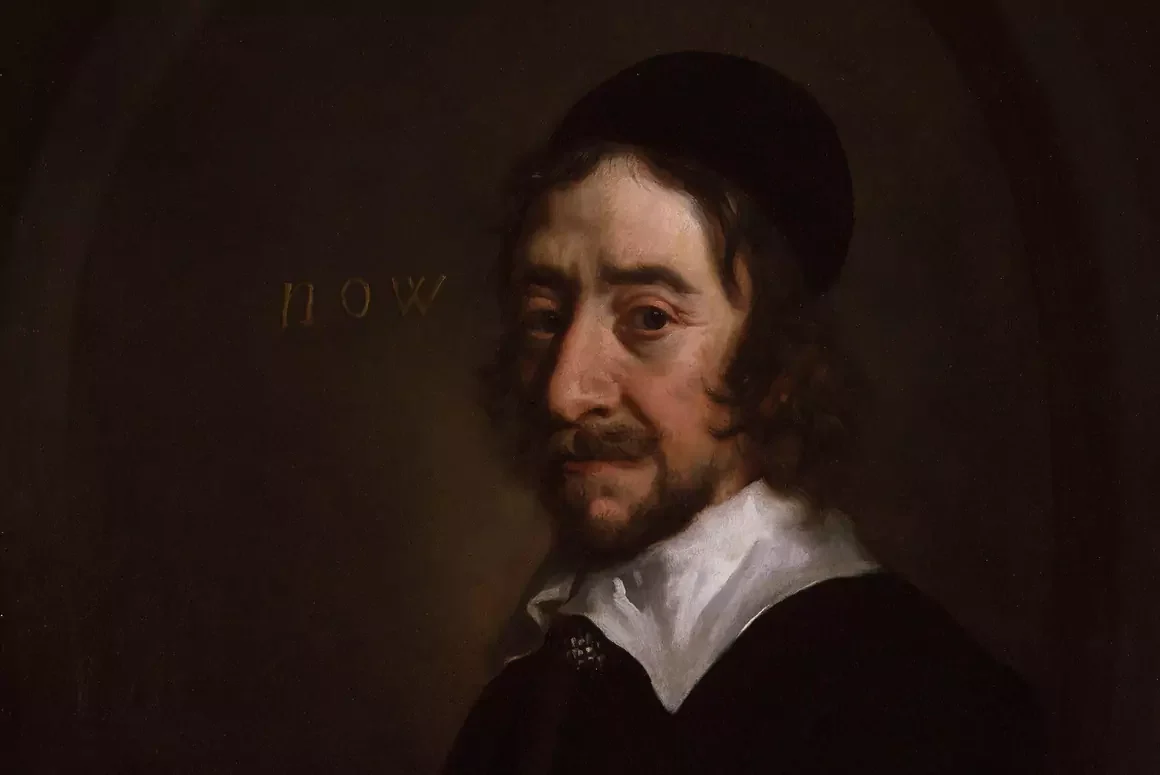
He was born in Oxford in 1602 and his father was a prosperous lawyer, providing the sort of prosperity upon which Marten could base the rest of his life. He certainly indulged himself. It was said that his company was ‘incomparable’ but that he ‘would be drunk too soon’.
He was educated at University College, Oxford and entered Parliament as member for Berkshire. This was to be the arena where he created his little place in history, though it is said that he spent much of his time there, asleep. When he was awake, he was outspoken and opinionated and was deeply in tune with the spirit of his times. It is ironic that one of his homes, the Rectory in Hinton Waldrest, is quintessentially English. You can go there and see a beautiful house that speaks of wealth and privilege and centuries of history, and yet he did his very best to overturn the status quo that had created him. He was one of the first to call openly for the overthrow of the monarchy. He was a leader for all manner of extremists.
-
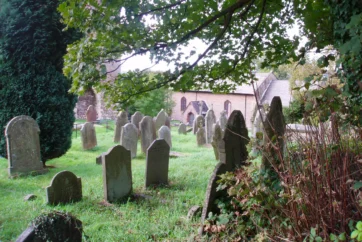
![St. Mary’s Church, Chepstow [1]](https://www.welshcountry.co.uk/wp-content/uploads/2026/04/geograph-8232870-by-Jonathan-Billinger-580x740.webp "Henry Marten")
- St. Mary’s Church, Chepstow [1]
![St. Mary’s Church, Chepstow [1]](https://www.welshcountry.co.uk/wp-content/uploads/2026/04/geograph-8232870-by-Jonathan-Billinger.webp "Henry Marten")
-
![St. Mary’s Church, Chepstow [2]](https://www.welshcountry.co.uk/wp-content/uploads/2026/04/geograph-8152528-by-Phil-Brandon-Hunter-580x740.webp "Henry Marten")
- St. Mary’s Church, Chepstow [2]
![St. Mary’s Church, Chepstow [2]](https://www.welshcountry.co.uk/wp-content/uploads/2026/04/geograph-8152528-by-Phil-Brandon-Hunter.webp "Henry Marten")
His contemporaries regarded Marten as immoral and such was his reputation that he united all shades of opinion against him. The King (Charles I) and Cromwell separately described him as a ‘whoremaster’. Charles I once ordered him to leave a race meeting in Hyde Park because his presence was offensive: “Let that ugly rascal be gone out of the park.” His private life was certainly colourful. His father, in an attempt to control a wild and promiscuous son (“a great lover of pretty women”), arranged for him to marry a rich widow, Margaret Staunton. He even bought them a house in Shrivenham in Oxfordshire, as a wedding present. Margaret moved in, but Henry didn’t. He stayed in London with his mistress, Mary Ward, with whom he lived quite openly and had three daughters. Yet he was not altogether a neglectful husband, because Margaret apparently had at least seven children. At the end of his life they spent a happy and contented imprisonment together – but more of that later.
His relationship with Mary was celebrated in his letters to her, which were published in 1662 under the title ‘Henry Marten’s Familiar Letters to his Lady of Delight’. It is a very nice title, but its publication was probably an attempt to discredit him. It didn’t work, and he enjoyed the publicity, for Marten was a man without shame.
Neither was he a person to mince his words. In Parliament, some of the things he said about the King were so extreme that Charles demanded his arrest and trial for high treason. At one point, Marten spoke of preparing the King for heaven! In August 1643 he was expelled from Parliament and imprisoned in the Tower of London, for saying that the destruction of one family was preferable to the destruction of many families. He had strong views about most things and was a man of little compromise. He was a committed republican and his beliefs were unshakable. He had the King’s statues pulled down. He seized the royal regalia in Westminster Abbey, saying that there would be no further use ‘of these toys and trifles’. During the Civil War he was made governor of Aylesbury and raised a regiment of troops in Berkshire, proclaiming that they fought: “for the people’s freedom against all tyrants… whatsoever.” He obtained horses by stopping travellers on the highways. His regiment marched around the country, seemingly at random and independently of army command. In any circumstances, he always believed that he was completely right. He doubted the sincerity of Oliver Cromwell, arguing that he was undermining the establishment of a true republic. Indeed, he claimed to be planning Cromwell’s murder, with a pistol and dagger always ready for such a purpose. Yet he acted together with Cromwell in bringing Charles I to trial, helping to draft the charges against him.
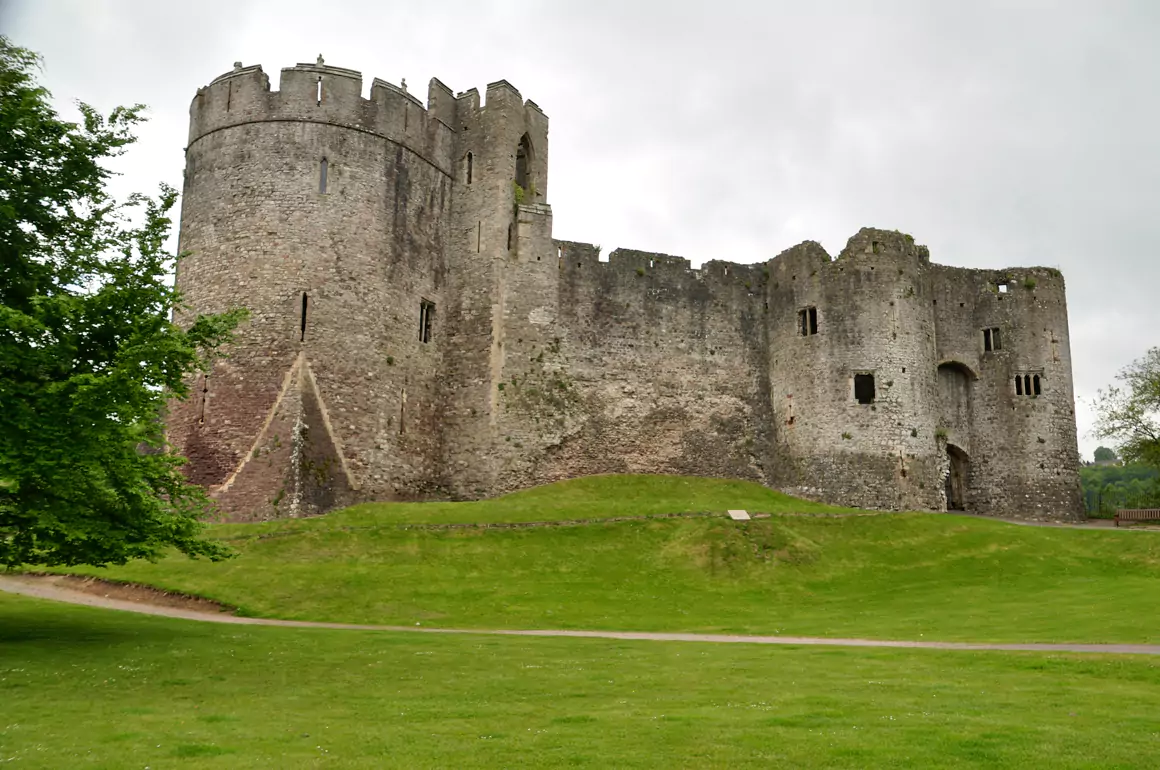
Chepstow Castle with Marten's Tower to the left [3]
It was a key moment in European history, and those involved seemed to recognise this. Marten and Cromwell had a fit of the giggles when it came to signing the King’s death warrant, and began to flick ink at each other, like guilty school boys. But like all the signatories, Marten had no second thoughts.
The King was executed because they believed it right and necessary. And it was done in broad daylight, with the full majesty of the law. Cromwell said, “It was not a thing done in a corner.” But there would be a price to pay, and a very heavy price, for those who signed the death warrant.
Marten worked to establish the English Commonwealth which was so important to him. He was a member of the committees that supervised the abolition of the monarchy and the House of Lords, and he was granted land as a reward for his services in overthrowing the King. However, he could not manage with any success the lands he was given, and found himself heavily in debt. He was forced into retirement from politics in 1653 and spent some time in prison – this time, for debt.
Some regarded him as an atheist, but in fact he argued for toleration, showing equal contempt for most shades of religious opinion. As far as he was concerned, religious toleration should be extended to Roman Catholics, because they were just as wrong as any other faith.
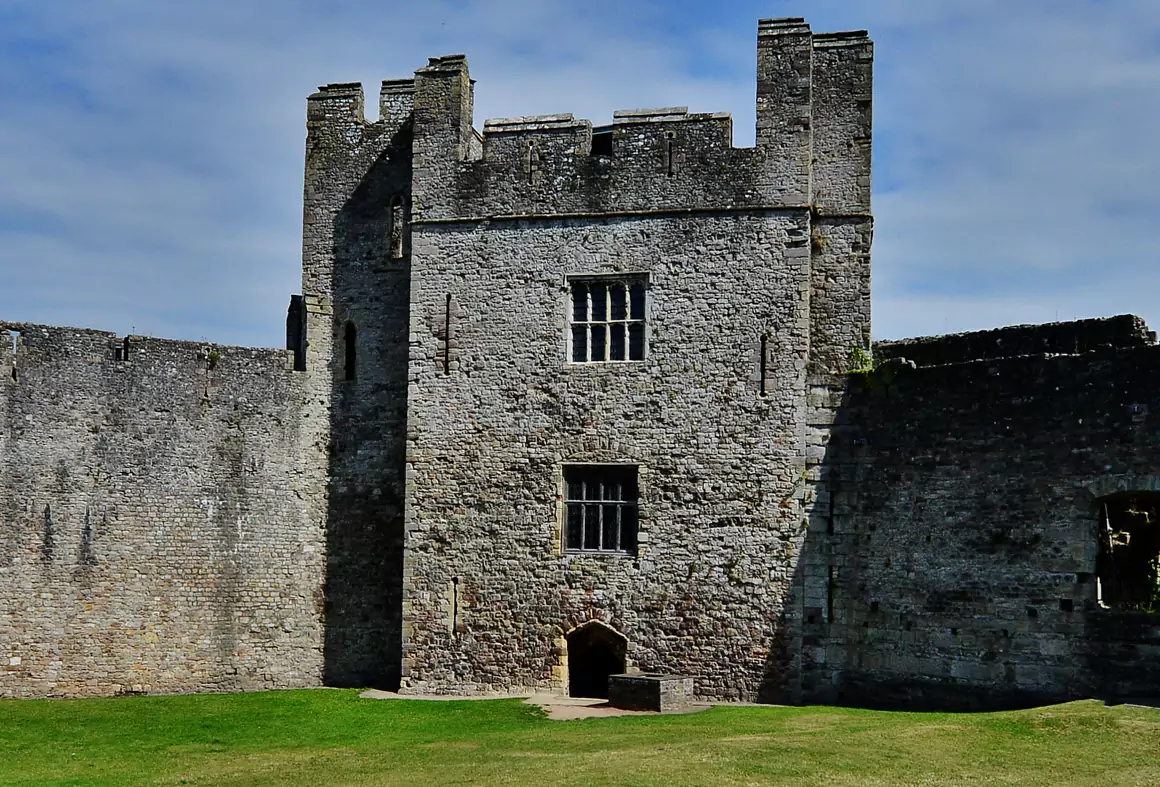
Chepstow Castle: The rear face of Marten's tower showing Henry Martens rooms [4]
On the Restoration of the monarchy, he made no attempt to escape and was tried for his part in the King’s death. He was sentenced to death by the Commons, but spared by the House of Lords. So, he escaped the death penalty, unlike many of the other regicides, who were executed as an act of revenge. Marten’s escape may have been recognition of the fact that he had protected Royalists in the 1650s. He certainly argued against the execution of the royalist poet Sir William Davenant, on the grounds that he was too rotten a rogue to be turned into a sacrifice. Oh yes, he was inconsistent, but only because he was true to his own opinions. The sentence was commuted to life imprisonment and he was imprisoned in Chepstow Castle. The part of the castle where he had rooms became known as Marten’s Tower and he seems to have had a comfortable existence there, enjoying the freedom of the town. With his wife, Margaret, he occupied one apartment and his servants had the one above. He received visitors and was a welcome guest at neighbouring mansions. In this comfortable and untroubled style he lived for almost eighteen years. He died on 9th September 1680, having choked while eating his supper.
Marten was a character, a significant part of our history. He says on his tomb, “My life was spent with serving you, and you,” and that was fine, just as long as you agreed with him. Yet, in the eighteenth century, his grave was an embarrassment. His actions and the part he had played in executing his king were unforgivable. So his stone was moved from the chancel to his current location, where he is now – trodden – unseen – underfoot.
Words: Geoff Brookes
Images:
Feature image: Henry Marten, Peter Lely, Public Domain, Source
[1] St Marys Church, Chepstow © Jonathan Billinger (CC BY-SA 2.0)
[2] St Marys Church, Chepstow © Phil Brandon Hunter, (CC BY-SA 2.0)
[3] Chepstow Castle with Marten’s Tower to the left: Nilfanion, CC BY-SA 4.0, Source
[4] Chepstow Castle: The rear face of Marten’s tower showing Henry Martens rooms: © Michael Garlick (CC BY-SA 2.0)