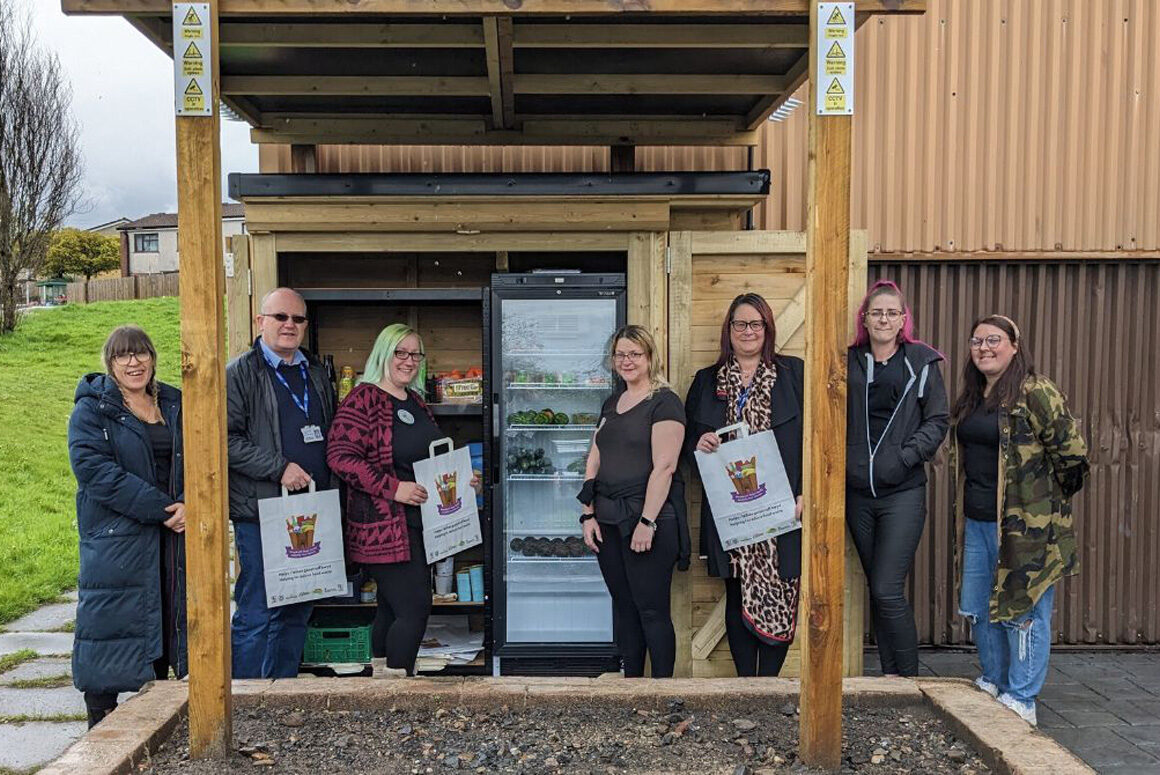
Graig-y-Rhacca Community Centre has become home to Caerphilly County Borough’s first outdoor Community Fridge.
The Fridge, which is re-stocked daily, includes household staples such as milk, fresh fruit and vegetables and even baby food, and is available for residents completely free of charge.
The Fridge is stocked through donations from Fair Share and local businesses including food that is close to its expiry date from the Co-Op Food, Machen, which in turn helps to reduce food waste.
The Community Fridge is housed in a bespoke cabinet outside of the Community Centre which is locked nightly by the volunteers of the Graig-y-Rhacca Community Association and is powered completely by solar energy.
The initiative is in response to the growing pressure of the Cost-of-Living Crisis and was funded by the Caerphilly County Borough Council Cost-of-Living Budget and the Community Empowerment Fund.
Councillor Chris Morgan said:
“We are thrilled to announce the opening of Caerphilly’s first outdoor Community Fridge. Whilst we have food banks in operation throughout the borough, this Community Fridge is the first of its kind in that it is accessible outside of the Community Centre’s opening hours so is ideal for those with busy work schedules or other commitments.
“I would like to thank everyone who has been involved in making this project possible, including the Graig-y-Rhacca Community Association and the local businesses who have volunteered their services to a very worthy cause.”
Councillor Amanda McConnell said:
“With the raising pressures of Cost-of-Living Crisis we hope that the Community Fridge can be a source of comfort and relief for our residents during this time.”
A community fridge is a refrigerator (colloquially “fridge”) located in a public space. Sometimes called freedges, they are a type of mutual aid project that enables food to be shared within a community. Some community fridges also have an associated area for non-perishable food. Unlike traditional food pantries, these grassroots projects encourage anyone to put food in and take food out without limit, helping to remove the stigma from its use. The fridges take a decentralized approach, often being maintained by a network of volunteers, community members, local businesses, and larger organizations. Food in community fridges is primarily donated by individuals or food rescue organizations and can be sourced from a variety of places. Large shops donate large amounts of excess foods to food rescue organizations that then donate to these fridges. The food donated would have otherwise been thrown out.
The main aim of community fridges is to reduce food insecurity, while also mitigating food waste. They enable people facing hardship to have easy access to fresh, nutritious food. Fridges offer a wide range of food from canned goods to fresh produce to pre-cooked meals. Pre-cooked meals are required to be labelled when donated. Many fridges also accept household items, sanitary goods, and during the COVID-19 pandemic, offered masks and other PPE. Community fridges can also serve as social spaces that enable people to connect to their communities.