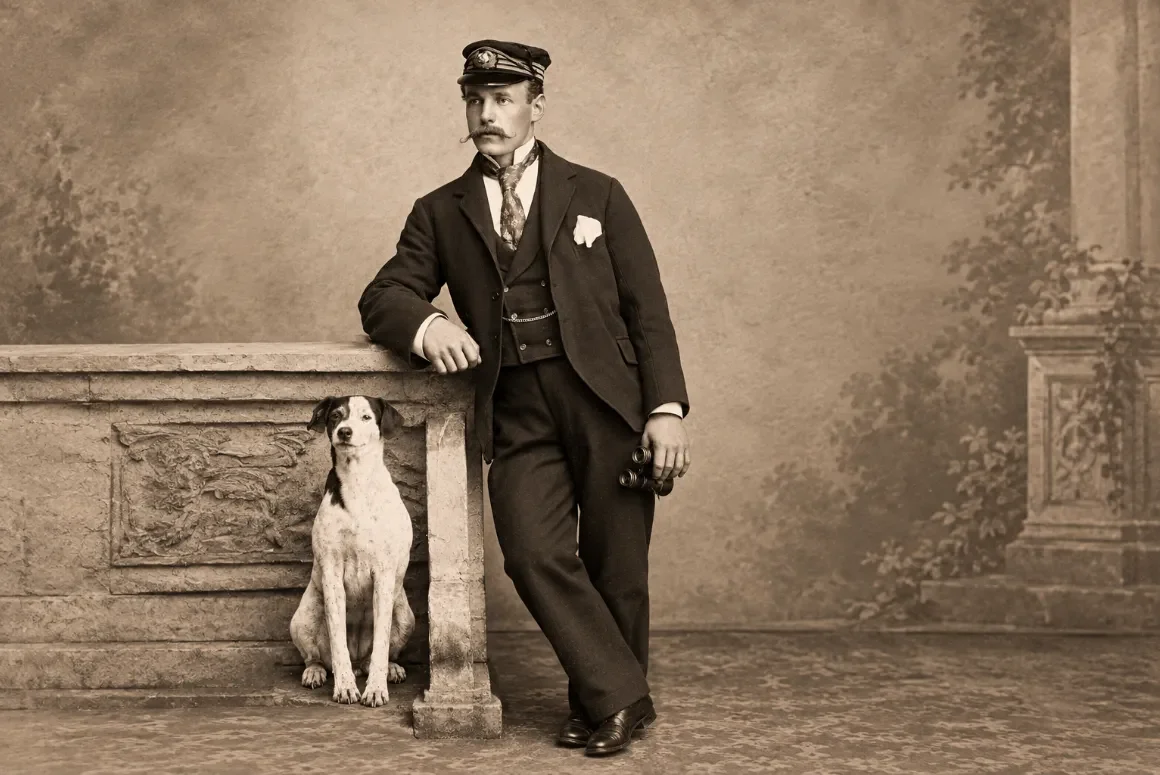
The story of my great-grandfather, Captain Richard Phelps Gough, one of Swansea’s Cape Horners, whose extraordinary life at sea inspired Storms and Whispers: The Captain’s Legacy more than a century later.
One evening in 1883, fourteen-year-old Richard Phelps Gough was sent out from his Swansea home to fetch some bread.
He never came back.
Or rather, he did — briefly. According to the story Richard himself would later enjoy telling, he slipped back into the house, put on a bowler hat in an attempt to make himself look older, despite the Eton-style collar he was still wearing, and headed for Swansea docks.
There he stowed away aboard the Wenona, a barquentine belonging to T. P. Richards. By the time the stowaway was discovered, the ship was already off Worm’s Head, and it was too late to turn back. He suddenly found himself among tough, experienced sailors, in a world he barely knew, with no choice but to earn his place aboard and become as little a burden on the crew as possible.
Richard was growing up in an industrial Swansea where the sea, the docks, the copper works and the mines shaped the lives of working families. Childhood itself could be precarious. His parents had nine children, but six died young; four of those deaths occurred during Richard’s own childhood.
Against that background, the sea offered a route into a much wider world.
The boy who had gone out for bread was going to sea.
There is something almost Stevenson-like about the story: a runaway boy, sailing ships, distant ports and Cape Horn. Yet for Richard, it was the beginning of a life at sea that would last for decades — and there was little romantic about many of the dangers that came with it.
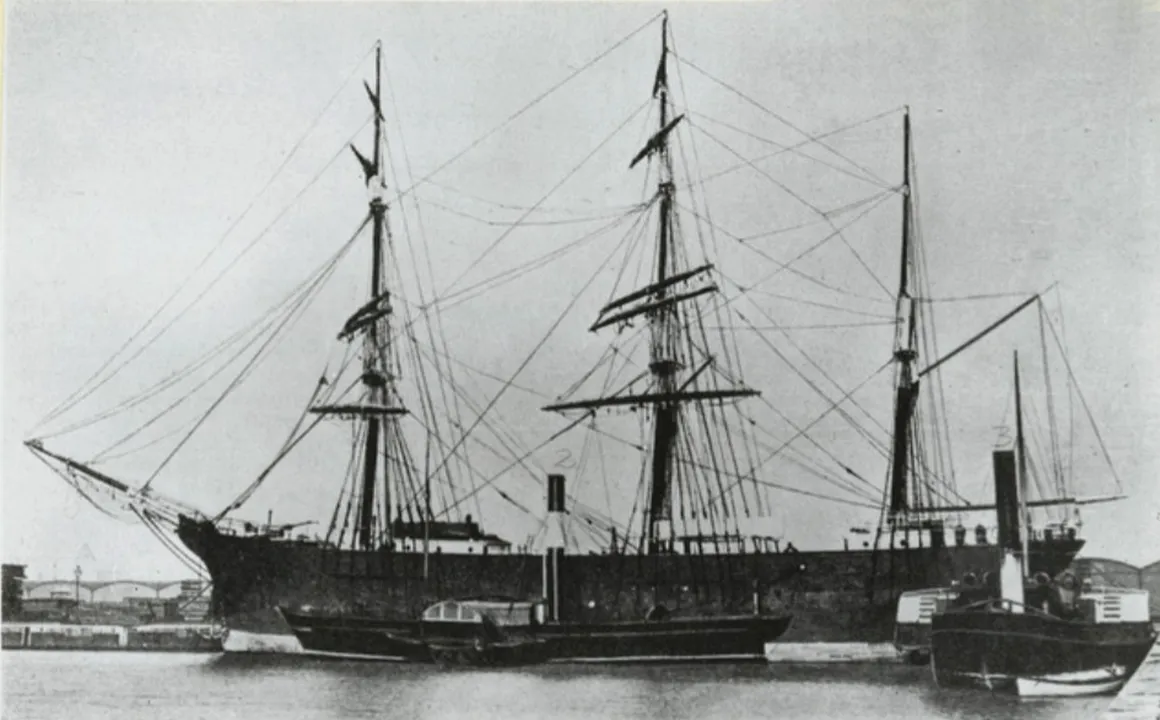
The Wenona [1]
Swansea’s Cape Horners
Richard became one of Swansea’s Cape Horners, the sailors who took the great sailing ships around the southern tip of South America on voyages linking Wales with ports thousands of miles away.
Swansea was then at the heart of the world’s copper industry — so closely associated with the metal that it became known as “Copperopolis.” Ships left its docks carrying Welsh coal and other goods and returned with copper ore from places such as Cuba and Chile, to be smelted in the Swansea Valley.
“Coal out and ore in, deep-loaded both ways,” as Joseph Conrad later put it.
It was global trade long before the word “globalisation” became commonplace, linking distant mines and Swansea’s furnaces through ships and the men who sailed them.
The human cost could be considerable, both at home and overseas. Copper smelting brought prosperity to Swansea, but also smoke, fumes and industrial pollution that scarred parts of the Lower Swansea Valley. Across the Atlantic, at El Cobre, near Santiago de Cuba, where copper was mined for the Swansea trade, outbreaks of yellow fever took such a toll on Swansea miners and sailors that there was even a burial ground known as “Swansea Cemetery.”
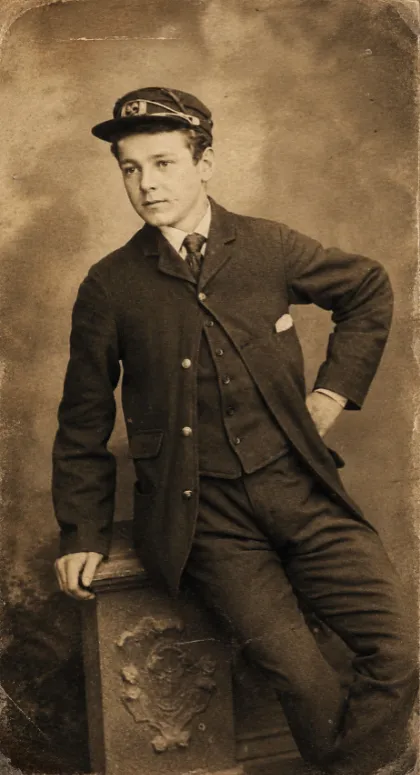
Richard Phelps Gough as a young man
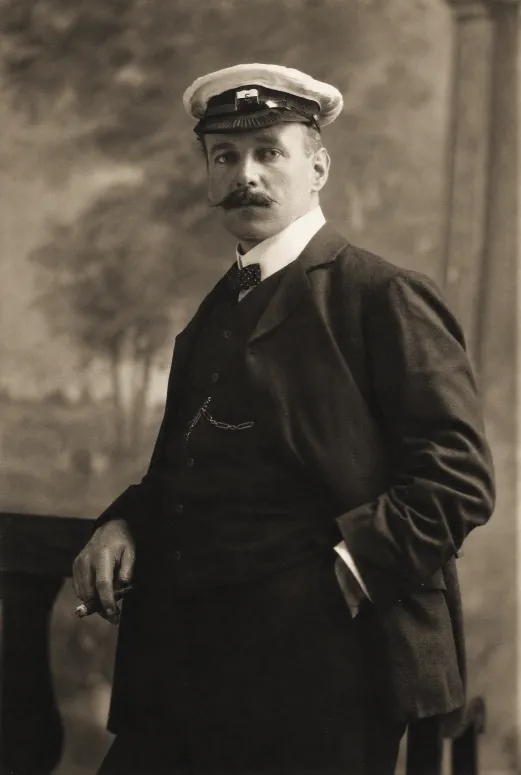
Portrait of Captain Gough, Sea Pilot 1908
These sailing ships had no engines to fall back on, navigating by sextant, sun and stars, dependent on wind and canvas and ultimately at the mercy of the elements. Before the Panama Canal, reaching the Pacific meant rounding the Horn, notorious for its violent westerly winds, enormous seas, snow, icebergs and treacherous currents. Men could be swept overboard, ships could disappear, cargoes of coal could catch fire, and disease remained a constant threat in distant ports.
A Swansea-Chile round trip could keep a sailor away from home for almost a year.
Richard made ten return voyages around Cape Horn — twenty passages through some of the most dangerous waters in the world. These were working sailors, human cogs in the machinery of an emerging global economy, carrying Welsh coal out across the oceans and bringing copper ore back to Swansea.
From runaway boy to captain
Richard’s career carried him far beyond Cape Horn. He sailed to Valparaíso, San Francisco, Rangoon and Rio de Janeiro, among other ports, gradually rising through the ranks of the Merchant Navy.
One episode gives some idea of the responsibilities sailors could face at a remarkably young age.
In 1893, aged only twenty-four, Richard was serving as first mate aboard the Sumbawa on a voyage between Rangoon and Rio when the captain died at sea. Richard took charge of the vessel.
The ship’s managing owner, Peter Denniston of the Scottish Ship Company, later recorded that Gough had proved himself a capable and reliable officer and had acted to the company’s entire satisfaction while in charge.
The fourteen-year-old stowaway had become a captain.
After more than twenty years in the Merchant Navy, Richard returned to Swansea in 1904 and became a sea pilot. In 1908, he married Winifred Bright. For the next twenty-six years he guided vessels through the Bristol Channel and the approaches to Swansea docks, serving aboard the pilot cutters Beaufort and Roger Beck.
During the First World War he continued to serve and, in 1921, was awarded the Mercantile Marine War Medal and British War Medal. In 1925, when the United Kingdom Pilots’ Association held its conference in Swansea, contemporary reporting singled out Captain Gough’s Cape Horn record.
He died in Swansea on 12 October 1930, aged sixty-one.
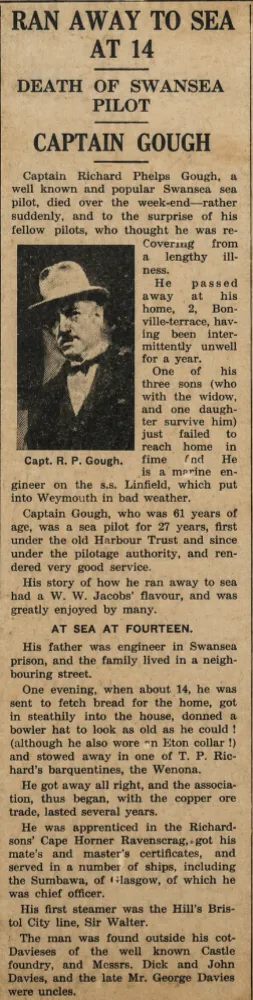
The following day, the same report of his death appeared in both the Herald of Wales and the South Wales Daily Post. On its front page, the South Wales Daily Post returned to the story with which it had all begun, under the headline “Ran Away to Sea at 14.”
Remarkably, his name had not disappeared from Swansea’s memory even sixty years later, when the South Wales Evening Post remembered him as “one of Swansea’s best-loved seamen.”
Finding Captain Gough again
I grew up knowing that there had been sailors in my Welsh family. My grandfather told stories, as grandfathers do, and there were old photographs and papers that had survived from another age.
But Richard remained, to me, largely the captain in an old photograph.
Then, while my own son was studying in Swansea, I returned to the city and began looking more deeply into my family’s history. I spent time in the local archives and revisited the streets and places connected with them.
There I came across the 1930 newspaper article recounting the incredible story of the evening when, at fourteen, he had run away to sea.
Suddenly the captain in the photograph was a fourteen-year-old boy again, wearing an Eton-style collar and a bowler hat and heading down towards the docks. I could almost hear his footsteps on the cobbles and his quickened breathing as he set off, there and then, towards an adventure whose course he could never have imagined.
Back in France, I began going through an old shoebox of family photographs and papers that had been kept for generations. I researched Richard’s ships, voyages and newspaper reports. One discovery led to another, and gradually a forgotten world began to emerge.
Not only Richard’s world, but Swansea’s: docks crowded with masts, the smell of coal smoke, tar and salt water, the clang of metal and the cries of dockworkers, copper barques preparing for voyages that could last a year, coal going out and copper ore coming home, and families waiting for ships whose return could never be taken for granted.
I have since written about Captain Gough’s maritime career for the Swansea History Journal (Minerva). But the more I researched him, the more I wanted to bring that vanished world back to life in another way.
It inspired a novel.
Storms and Whispers: The Captain’s Legacy
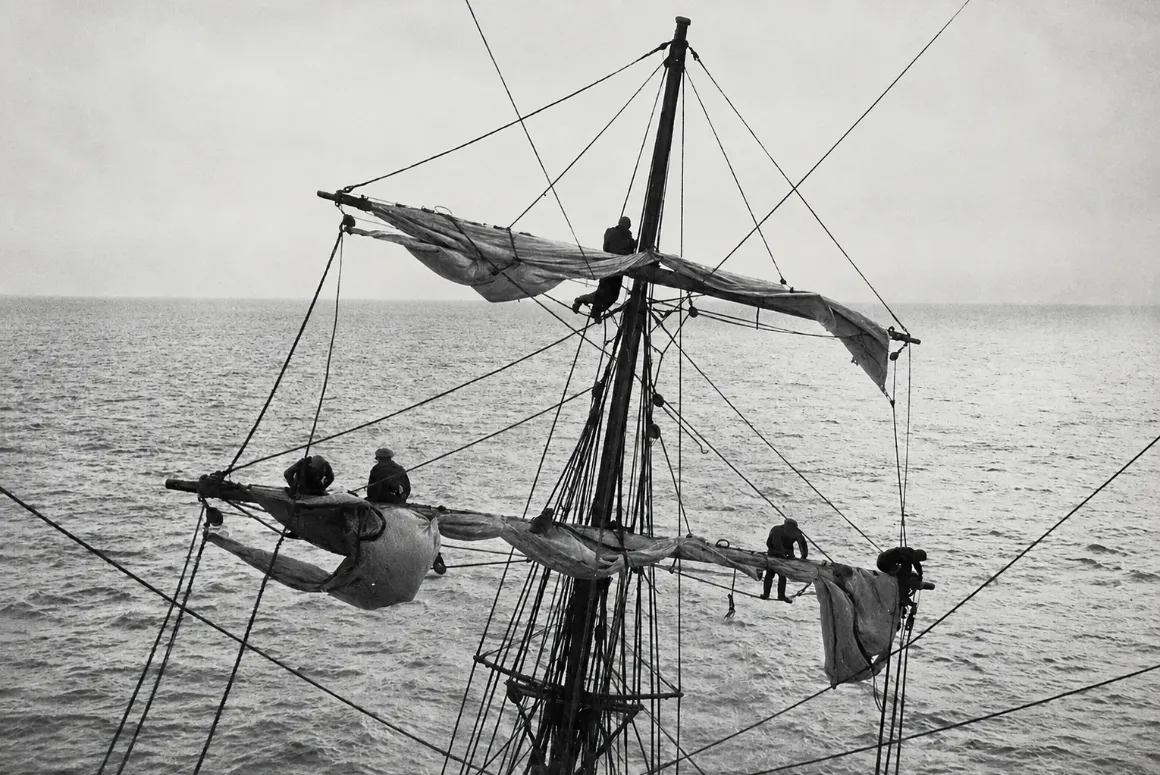
Sailors in the rigging [2]
My as yet unpublished novel, Storms and Whispers: The Captain’s Legacy, is a dual-timeline YA coming-of-age adventure with crossover appeal, moving between Swansea in 1982 and the world of the late-Victorian Merchant Navy.
At its centre is fourteen-year-old Patrick, who comes to Swansea to spend the summer with his grandparents and discovers the journal of his great-grandfather, a Welsh sea captain who first went to sea at the same age. Together with Angharad, his friend, Patrick begins following a trail of clues left behind by the captain.
As Patrick reads the journal, vivid visions begin to draw him into the past and the boundary between the two worlds starts to blur. He no longer simply reads about his great-grandfather’s voyages: he experiences them, finding himself aboard sailing ships, rounding Cape Horn and crossing paths with a remarkable cast of rogues, villains and assorted criminals in nineteenth-century American ports, before eventually coming face to face with the captain himself.
Through fiction, I could make possible something that time had made impossible: a great-grandson could meet his great-grandfather.
Meanwhile, back in 1982, Patrick and Angharad follow a trail of clues of their own, leading them towards a hidden treasure and an oath kept secret for generations.
The novel is fiction, not Captain Gough’s biography. But the world behind it is real, rooted in the maritime history of Swansea and in the lives of the men who sailed from its docks.
Perhaps that is what has stayed with me most throughout the research and the writing.
More than 140 years ago, a fourteen-year-old Swansea boy went out to fetch some bread.
Instead, he went to sea.
He eventually became a captain.
And more than a century later, I returned to Swansea and found his story waiting for me.

About the author
Patrick Bordes-Gough is a Franco-British writer based near Toulouse in southern France, where he works as a project manager in employment and inclusion policies. A lifelong interest in writing and his Welsh family history led him to research the life of his great-grandfather, Swansea master mariner Captain Richard Phelps Gough. His first novel, Storms and Whispers: The Captain’s Legacy, has been completed in both English and French, the French version bearing the title Le Serment du Capitaine.
Email: patrick-bordes@club-internet.fr
Photograph: Alexis Frespuech
Image attributes:
Feature image: Captain Gough with dog. Bordes-Gough family collection.
[1] The ‘Wenona’ in an unidentified port, State Library of South Australia [PRG 1373/20/20] | Source
[2] Sailors handling canvas high in the rigging, c. 1930, offering a glimpse of the physically demanding world of sailing ships that Gough had known during his years at sea. National Maritime Museum, flickr-foto:, No restrictions, Source