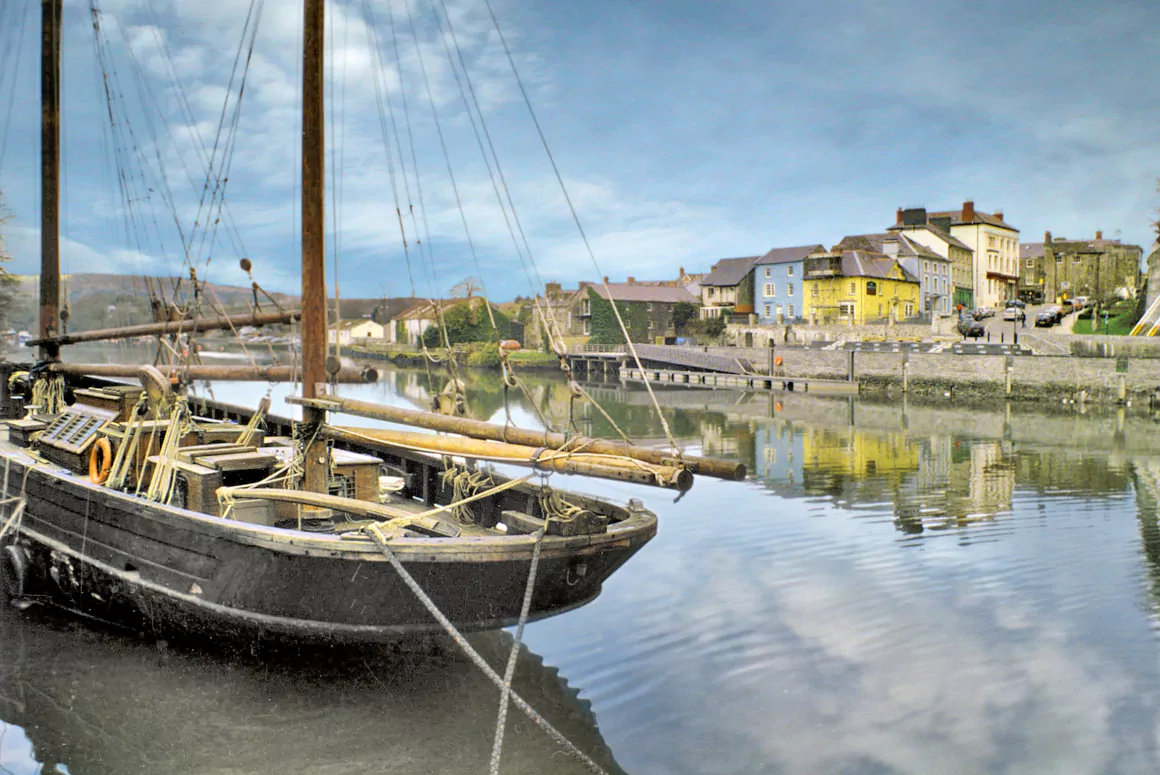
The fortunes of Cardigan Harbour are turning full circle. Its downfall dating back to the end of the 18th century, with the arrival of steam on both land and water, has been put in reverse. Today pleasure boats of all shapes and sizes are re-creating Cardigan as a maritime centre. Tourists are replacing fish and agricultural produce giving a new lease of life to the elegant former commercial buildings lining the banks of the River Teifi.
It has always been a resilient spot. Cardigan had been a busy port since the Middle Ages, with the wide river below the castle forming a commercial and strategic gateway to the fertile Teifi Valley further inland.
The vast expanse of water below the old bridge was perfect for maritime development. Thus in mediaeval times Cardigan’s became a pre-eminent trading centre. The long standing export of fish was soon augmented by local farm produce, oak bark, salted herrings and Cilgerran slates to both Ireland and the western shores of England.
In Tudor times, ships from France and Spain regularly tied up alongside those from England and Ireland. On arrival their holds were always full of imports such as pottery, coal, building materials and fruit.
These international trade links brought unprecedented prosperity to the area. In the early 1800s over 300 ships were registered at Cardigan, employing 1000 men. Surpassing Bristol in importance for a time at one time, ships regularly sailed as far afield as Argentina, the Canary Islands and Canada. A customs house had to be built in St Mary’s Street opposite Chancery Lane to cope with the increased trade.
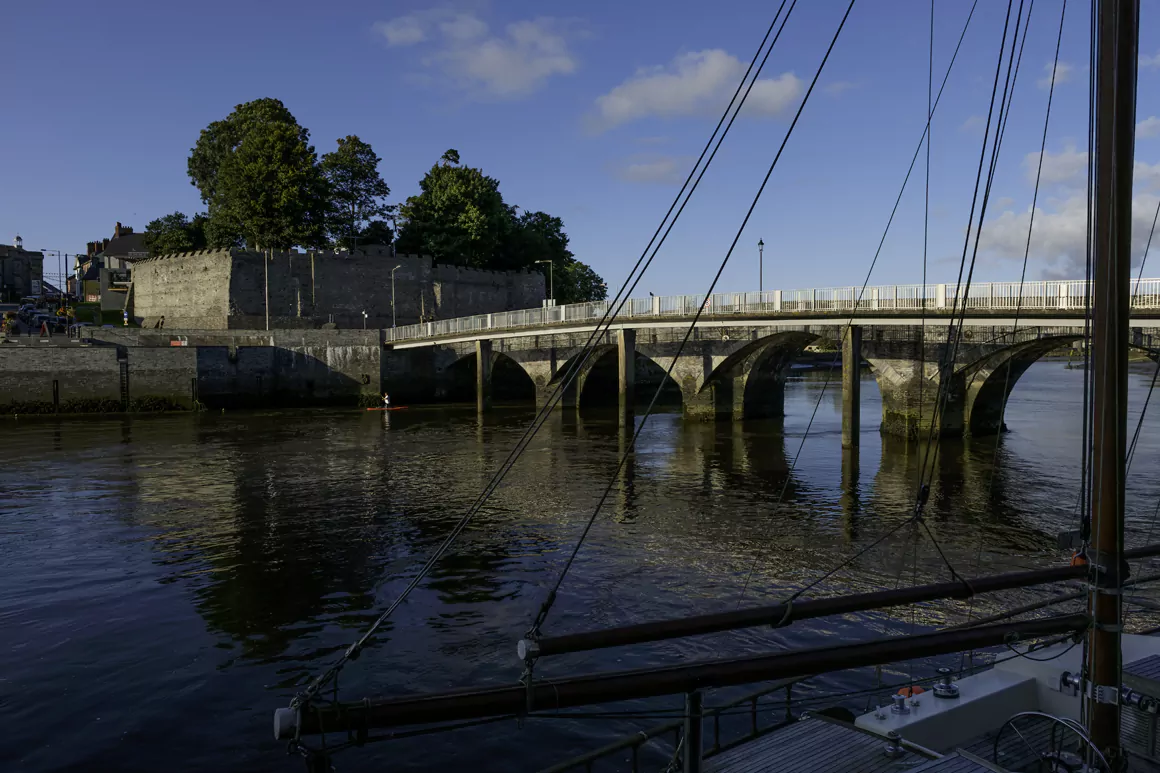
River Teifi, Cardigan [1]
It also became the centre of a flourishing ship building industry concentrated both at Netpool (where a beautiful park now stands) and further downstream at St Dogmaels. In the early years local timber was used, in particular wood from the Coedmor estate, near Cilgerran. But by the start of the 19th Century, the demand was so great the builders had to import wood from the Baltic and Nova Scotia. In all over 200 ships were built on the banks of the Teifi. Three shipyards were active in 1850, and the final Cardigan ship was launched in 1877.
Some of the vessels were large, up to 400 tonnes, and were passenger ships making Cardigan one of the country’s largest ports for transatlantic emigration, sending ships like the Active and Albion to New Brunswick in Canada and the Triton to New York.
However, by the end of the 18th century, dark clouds were appearing on the Cardigan horizon. The replacement of the sailing ship by steam ship, together with the silting up of the river and the arrival of the railway in 1885, all contributed to its eventual downfall as an international port. Despite efforts at reviving its prosperity after the First World War, its decline continued, until by 1942 commercial vessels, no longer visited the town.
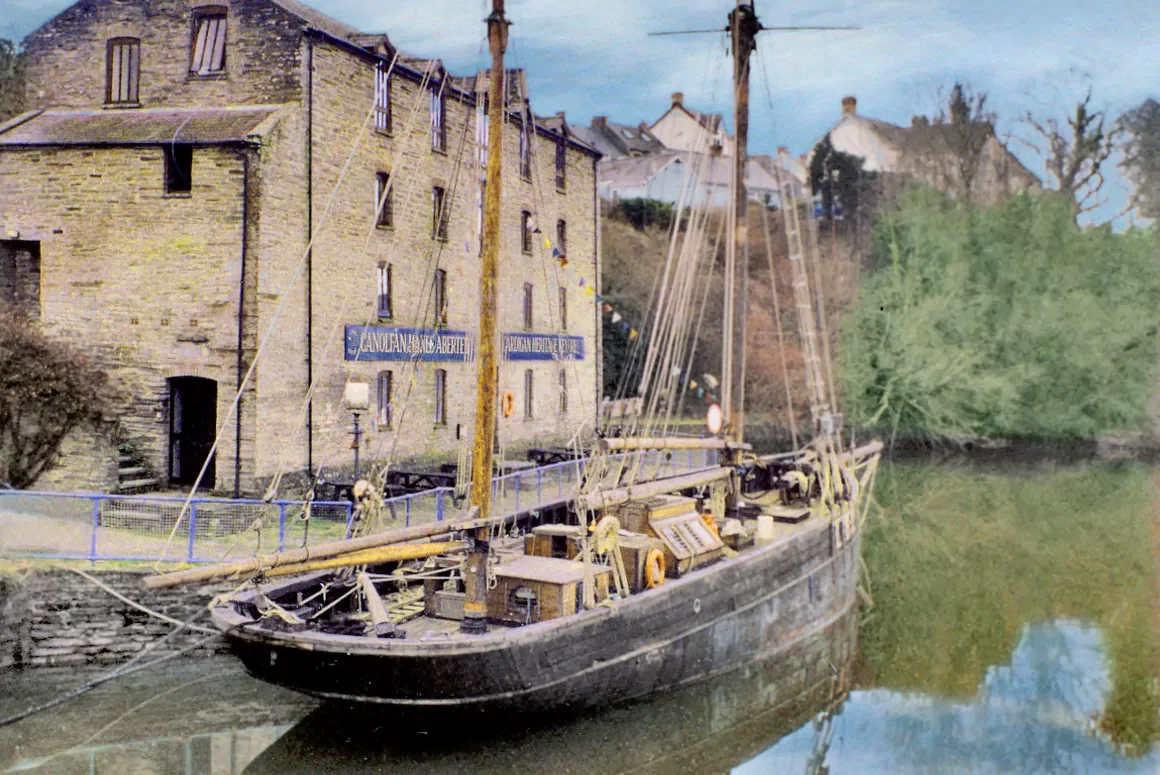
Although the large cargo ships may have gone forever, pleasure ships are now replacing them bound for an ever increasing number of destinations in nearby Cardigan Bay. In 1996 the tourists were being magnificently catered for by the new Cardigan Heritage Centre housed in an 18th century Grade 2 listed warehouse at Teifi Wharf. Managed by Cardigan’s historic society, Hanes Aberteifi, it traces the history of Cardigan from pre-Norman times to the present day. Hanes Aberteifi is a charitable organisation registered with the Civic Trust and the Civic Trust for Wales It also organised a range of changing exhibitions on local themes.
Books on local history, souvenirs, postcards and other heritage related items were on sale in the small gift shop. There is also a cafe with a river terrace and picnic area. Entrance was free but there was a small charge for access to the exhibitions. There was full disabled access and toilets at the rear of the building.
The building itself is redolent with history. It was erected in 1745 and subsequently bought by the Davies brothers in 1785. They were heavily involved in the export of slate and the import of limestone. Seven lime kilns were built at the rear of the building.
Later one of the warehouse’s main uses was as a sail making loft which was established upstairs. As the town and port of Cardigan prospered so did the brothers, their magnificent home overlooked the Heritage Centre, and is now the Grosvenor hotel.
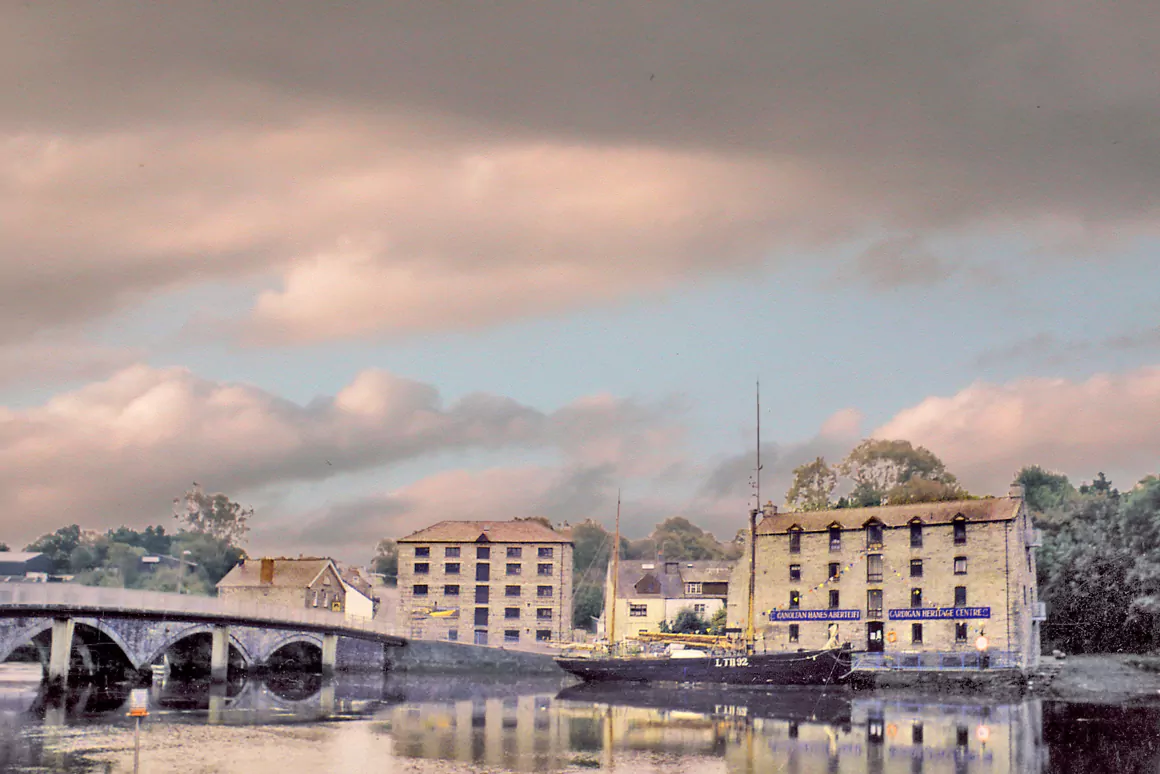
In addition the Heritage Centre is now The Albion a 12 bedroom maritime hotel. The name Albion celebrates a historic ship. It was on April 11th 1819 the brig Albion set out from Cardigan, a ship carrying 27 families from the local area to a new life in New Brunswick, Canada. Approximately 150 persons proceeded to Fredericton, where they took up tickets-of-location for forest land between Madam Keswick and Nashwaak, founding almost certainly the first Welsh settlement in Canada.
On the opposite bank to the Albion is to be found a life sized bronze otter beautifully sculpted on a rock base now stand on the quay, a striking monument to the Teifi – one of the last strongholds of the river otter in Great Britain. This was unveiled by Dr. David Bellamy on Prince Charles Quay in 1988.
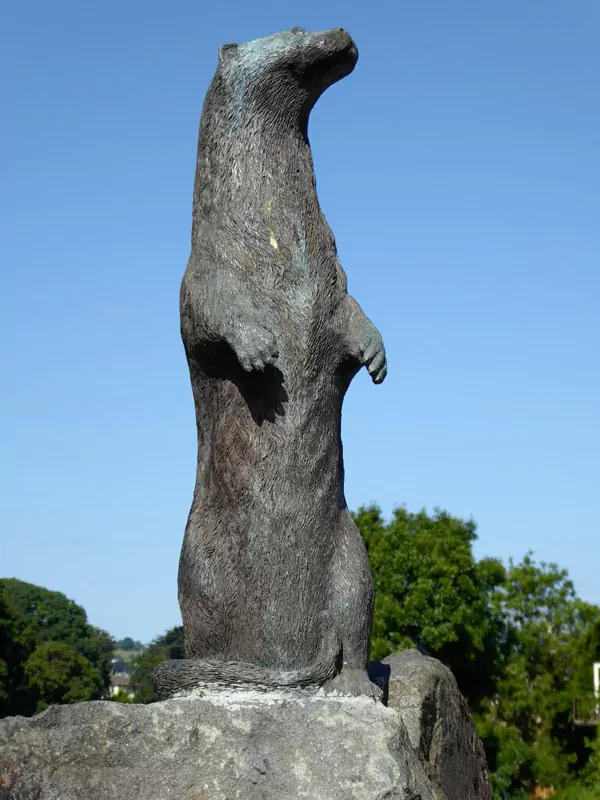
The Teifi Otter [2]
Adapted & updated from an article by Michael Boyd
Images:
[1] © Jeff Gogarty and licensed for reuse under this CC BY-SA 2.0, Source
[2] © Philip Halling and licensed for reuse under this CC BY-SA 2.0, Source