


Rainfall, exposure and ground conditions vary across Wales. A driveway in a wet upland location can need a different drainage design from one on free-draining ground elsewhere. The useful starting point is a site assessment, not a generic national specification.
Getting your driveway surface right in a wet climate is less about aesthetics than it is about drainage, sub-base specification, and how well a material handles repeated freeze-thaw cycles. The surface you see is the last decision you make. What goes beneath it is what determines whether the whole thing is still performing in fifteen years.
This guide compares the main driveway options for wet conditions and explains why the surface, supporting layers and drainage need to be designed together.
Why the Welsh climate changes the calculation
Consider the amount of rain the site receives, whether water already collects there, and where it can safely go. Annual rainfall figures alone cannot determine the right surface or sub-base depth.
The problems water causes to driveways fall into two categories. The first is surface saturation: water sitting on a poorly drained surface, running where it should not, and creating the damp, mossy conditions that make surfaces slippery and unpleasant. The second is sub-surface movement: water getting into the ground beneath the surface, saturating the sub-base, then freezing in cold weather and expanding. That expansion is what causes surfaces to crack, lift, and shift.
Both problems are manageable with the right specification. They are very difficult to fix after the fact. A driveway laid without adequate sub-base depth and drainage on Welsh clay soil will give you problems. The only question is how soon.
Block paving: practical and repairable
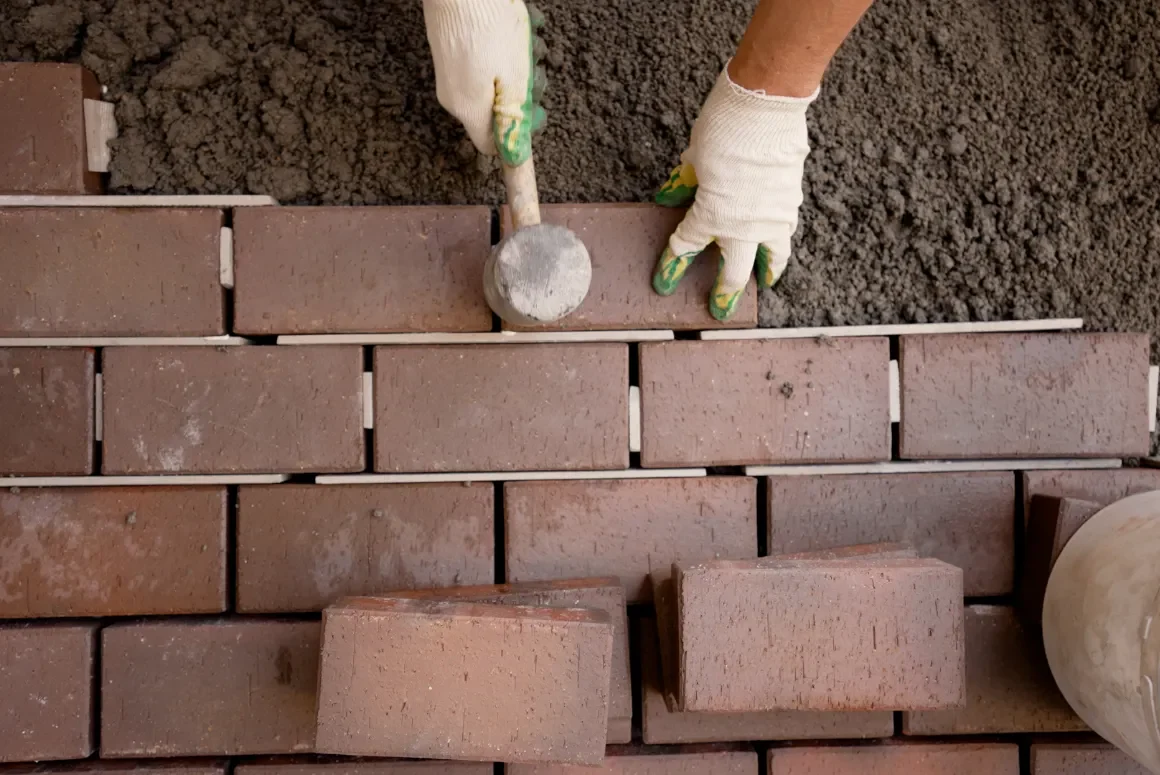
Block paving is one of the most popular driveway surfaces in the UK and performs well in wet conditions when it is installed correctly. The interlocking structure of individual blocks distributes load across the surface and, critically, allows individual sections to be lifted and relaid without disturbing the whole driveway. On a property where tree roots, utility access, or ground movement create localised problems over time, that repairability is a significant practical advantage.
Conventional block paving often uses a compacted Type 1 sub-base. Permeable block paving needs a compatible open-graded sub-base and bedding system so water can move through it. Specify the complete build-up for the ground and vehicle loads, rather than applying one construction method to both systems.
Permeable block paving uses a designed system of blocks, joints and supporting layers to manage water. Check local planning requirements and whether separate sustainable drainage approval is needed before starting work in Wales; a permeable surface alone does not settle every approval question.
Choose blocks or setts with declared performance suitable for the intended traffic and weather exposure. Concrete and natural stone both vary by product, so price or material name alone is not enough. A guide to block paving costs and build options can help explain the specification decisions to discuss before requesting quotes.
Resin bonded and resin bound: knowing the difference
Resin driveways divide into two distinct types that look broadly similar from a distance but perform very differently in wet conditions.
Resin-bound surfacing mixes aggregate with resin before laying. A suitable system can be permeable, but it also needs a compatible permeable base and a designed route for water. Putting a permeable wearing course on an impermeable base does not make the entire driveway drain through.
Resin-bonded surfacing scatters aggregate onto resin applied to a prepared base. It is generally impermeable and needs surface-water drainage. Check the manufacturer’s preparation, curing and maintenance requirements.
Both types require a sound, stable base. A resin surface laid over a weak or cracked sub-base will reflect those problems through to the surface quickly. The resin itself is not structural; it relies entirely on what is underneath it.
Maintenance for resin surfaces is generally low. They do not require sealing, weeds have less opportunity to establish than in block paving joints, and the surface cleans easily. The trade-off against block paving is repairability: a section of resin surface that fails cannot be opened and relaid the way block paving can.
Tarmac: reliable but limited
Asphalt, often called tarmac, can be a cost-effective driveway option. Installed price depends on preparation, access, area and drainage. A conventional impermeable asphalt surface needs designed falls and a suitable drainage route.
Asphalt offers a different appearance from block paving or resin, with some coloured products and contrasting edging available. Like other surfaces, it can weather and may need repair over time.
In very cold Welsh winters, tarmac can crack. A properly compacted sub-base reduces the risk, but the material is less forgiving of sub-base failure than block paving, where individual blocks can be relaid. A cracked section of tarmac typically requires patching that is visible even when done well.
Compare asphalt, block paving, resin and gravel using complete quotes and expected maintenance. No one material offers the best long-term value for every property.
Gravel: the permeable option with trade-offs
Gravel can allow water through, but its performance depends on the base and underlying ground. Saturated or poorly draining ground can still produce puddles and runoff. Gravel does not remove the need for a drainage assessment.
The trade-offs are practical. Gravel migrates. In areas of vehicle turning, near gates, or on any incline, gravel spreads beyond the driveway edge over time. In Wales, where heavy rain also moves loose material, this is a more persistent problem than in drier areas. Gravel containment edging helps but does not solve it entirely.
In wet conditions, clay sub-bases can push up through gravel over time if the membrane and base layer are not correctly specified. A properly installed gravel driveway has a compacted sub-base, a weed-suppressing membrane, and a sufficient depth of stone. Done correctly it performs well. Done without that preparation it becomes muddy and patchy quickly.
Maintenance is ongoing: raking, topping up, and managing migration are all regular tasks. For properties where a softer, rural aesthetic suits the setting, gravel works well and the maintenance is manageable. For a family home with children, dogs, and heavy daily use, the practicalities push most homeowners toward a bound surface.
Drainage: the decision that sits below everything else
Consult the Welsh Government’s sustainable drainage guidance and the local authority about the approvals that apply to your project. Planning permission and sustainable drainage approval are separate matters. The appropriate drainage solution depends on the scale of the work, the ground and the available discharge routes.
For driveways, this means thinking about where the water goes before choosing the surface. A permeable surface that allows infiltration on free-draining ground is straightforward. A property on clay where infiltration is limited needs a different approach: a drainage channel, a soakaway in a permeable part of the garden, or a connection to a suitable outfall.
Drainage needs to be designed for the site and maintained after installation. Even a well-designed driveway cannot be described as immune to flooding regardless of rainfall.
What to ask any contractor
Before committing to any driveway contractor in Wales, ask these questions. What sub-base depth are they proposing, and why? What drainage solution are they designing in? What freeze-thaw rating does the block or surface material carry? Can you see a completed project on similar ground conditions?
A contractor who can answer those questions clearly and specifically is one who understands what a wet climate requires. One who gives vague answers or cannot explain their sub-base specification is one worth treating cautiously regardless of price.
The best driveway for a Welsh property is the one that was specified for Welsh conditions. Everything else is a compromise that tends to show up sooner than expected.
Permeable paving can help manage surface water when used as part of a suitable drainage design. Ask the contractor to explain how water passes through the full construction and where it goes if the ground cannot absorb it.