Every church has a story to tell. But with one in 20 UK churches not knowing if they will still be here in five years’ time, we risk losing so much. These buildings are not just bricks and mortar, they are memory, and places of connection and refuge. Beauty, faith and hope. It falls onto the shoulders of local people to fundraise for repairs to churches. But thanks to you – our supporters and Friends, those who leave a legacy to the National Churches Trust and our partner organisations – 77 more churches have been saved for the future thanks to a grant.
Here are just seven wonderful things that your generosity is making possible:
- Fixing a Grade I Listed rare early British timber church in Shropshire
- Restoring a crumbling bell tower to make it safe to use again in Powys
- Making urgent repairs to a rare ironstone spire in Leicestershire
- Enabling a catholic church in Leeds, which has been closed for almost a year, to reopen in time for Easter celebrations
- Supporting seven churches on Historic England’s Heritage at Risk Register, which need urgent repair work
- Bringing a Norman doorway back into use at a City of London church
- Funding urgent repairs to a heavily-storm ravaged and iconic Inverness church
Visit: National Churches Trust
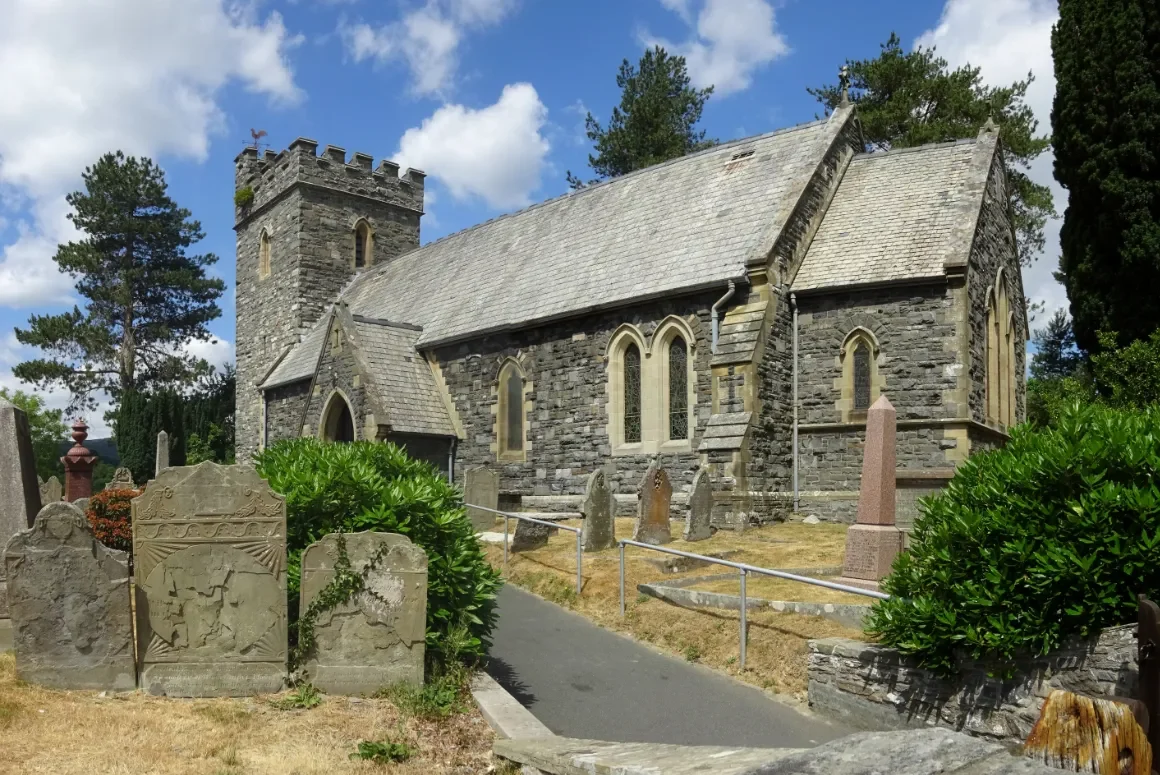
St Clement’s Church Rhayader
St Clements Church Rhayader lies between the River Wye and the relatively modern market to the west of the town but is in need of some repair especially the tower.
When one thinks of church towers together with Saint Clement, those of us of a certain age often remember the nursery rhyme “Oranges and lemons, say the bells of St. Clement’s”.
The nursery rhyme though is likely to refer to either St Clement Eastcheap or St Clement Danes both in London. First published in 1744 it is thought that the rhyme symbolized the arrival of citrus fruits being landed on the docks of the Thames.
So geographically St Clements Rhayder does not fit but much more than that the present church was only completely rebuilt over the period 1887 – 1897. Also St Clements Rhayader was previously dedicated to St Cynllo but the date at which the name changed is unclear.
St Clements Church, Rhayader is occasionally known as the “Giants church”. Why?
This really is a corruption of the phrase giant grave, in that it refers to the mass grave thought to be of the garrison of Rhayader Castle killed by Llywelyn ap Iowerth who captured it in 1231.
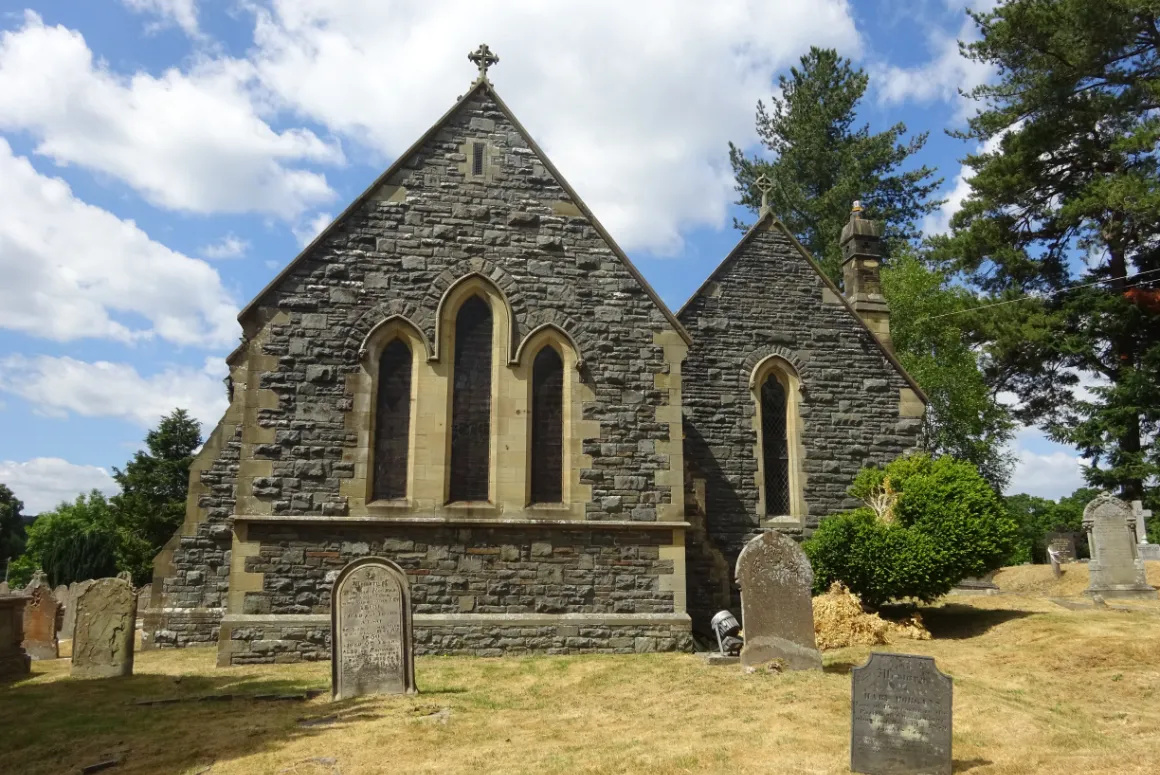
The organisation Caring for Gods Acre describes the churchyard as “ a ‘herb-rich grassland’ with 11 high quality species identified with 49 species in total. Species such as mouse-ear hawkweed, germander speedwell, ribwort plantain and common cats ear are present throughout. Other nice acid grassland species are also present in small patches including heath speedwell and heath bedstraw. The policy of the church’s congregational meeting is to mow the grass bi-annually leaving several unknown patches to allow flowering and pollination.”
The graveyard is now closed to interments.
But as with all old buildings they need care and maintenance and the National Churches Trust has recognised this issue commenting:
“The tower at St Clement’s church Rhayader is rotting and in danger of falling down unless action is taken. Water is seeping in through cracks, damp has set in and foliage is growing inside. The floorboards are so beset with dry rot they are unsafe to walk on. The church has been forced to close the tower due to safety concerns. Unless it is fixed soon, the church tower could be beyond repair.
Fortunately help is at hand.
On the recommendation from the National Churches Trust, St Clement will receive a £22,610 grant from the Jane Hodge Foundation.
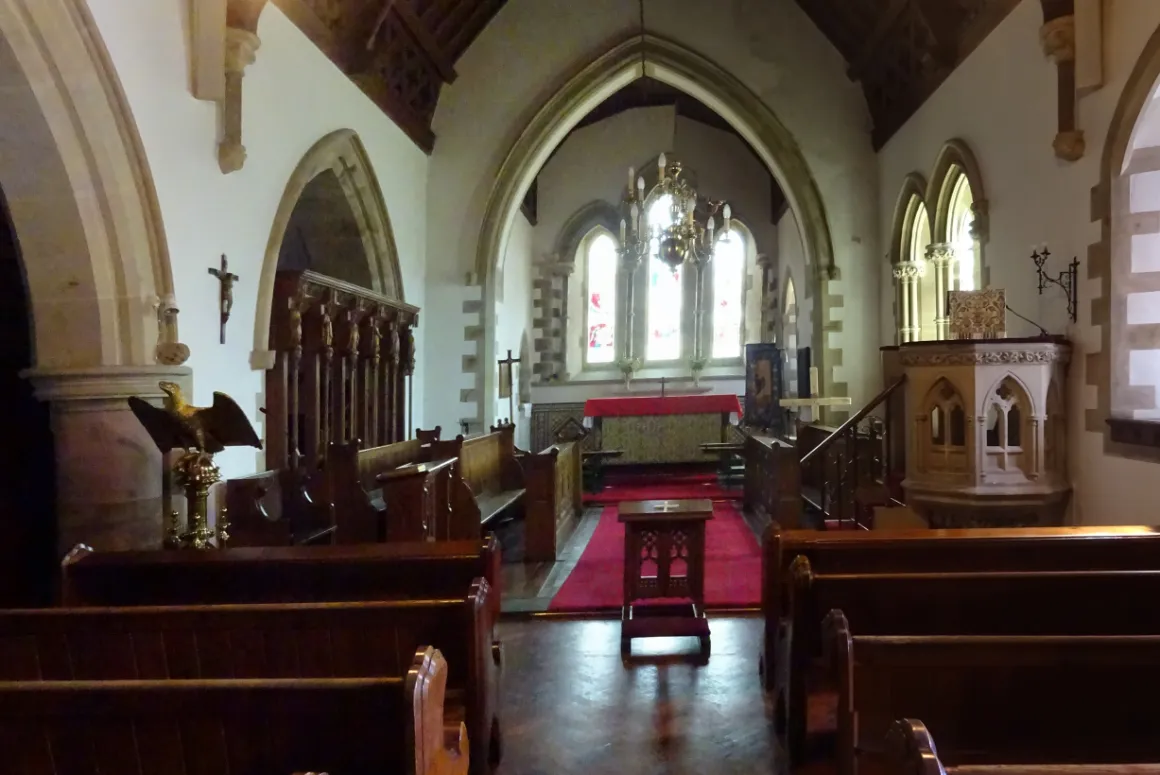
Once these repairs have taken place, not only will it save the tower, but there’s something else exciting in store: the church is making plans to be open to the public on a regular basis, so that everyone can enjoy the heritage and social space the church has to offer.
There has been a church present on the site, serving local people, since medieval times. The current church building dates back to the 18th century.
One of the surprising things you will find at St Clement is a Giant’s Grave. During the rebuild of the church in the 18th century, a number of skeletons were found including one with a huge thigh bone – one of giant proportions. They are believed to have been the result of an attack on the nearby castle’s English garrison or victims of the plague. The mass grave can still be seen today and is named ‘the Giant’s Grave’.
“As with so many other churches, keeping the fabric of such historic buildings safe and in good condition is a massive challenge for congregations. This is even more the case in rural areas such as Mid-Wales,” says Gafyn Blakeway, Lead Grant Officer and Chair for St Clement’s Church Committee.
“We are thrilled and very grateful to have received this grant from the National Churches Trust. Thank you!”
“Without such support we would have been forced to close the church, while the future of a historic building in the heart of our town would have become deeply uncertain. The service that St Clement’s has provided the town for hundreds of years would also have come to an end.”
Words: Welsh Country
All images by Llywelyn2000, CC BY-SA 4.0, Source